
A shiatsu massage chair is designed to imitate parts of shiatsu-style bodywork through moving rollers, air cells, heat, and reclining positions. Rather than delivering one broad vibration across the body, it typically uses slower, more focused pressure along the back, shoulders, hips, legs, and feet.
The feeling can range from gently stretching and soothing to surprisingly firm, depending on the chair’s settings and your body shape. A shiatsu program often feels more deliberate than a basic vibrating massage chair: rollers travel up and down the spine, pause at tight areas, press or knead muscles, and may combine that movement with compression around the arms, calves, or feet.
Understanding what each setting does makes it easier to choose a comfortable program, avoid excessive intensity, and get more from the chair’s features without expecting it to replace medical care or hands-on treatment.
What “Shiatsu” Means in a Massage Chair
Traditional shiatsu is a Japanese form of bodywork that uses finger, thumb, palm, and sometimes elbow pressure, along with stretching and joint movement. A massage chair cannot reproduce the judgment, touch, or adaptability of a trained practitioner. It can, however, use mechanical movements that resemble certain sensations associated with shiatsu.
In a shiatsu massage chair, the term usually refers to programs that combine focused roller pressure, kneading, tapping, compression, and stretching. The goal is usually relaxation and temporary relief from everyday muscular tension, especially in areas such as the upper back, shoulders, lower back, calves, and feet.
The label is not a standardized guarantee that every chair performs the same movements. One model’s “shiatsu” mode may emphasize deep back kneading, while another may include air compression and a full-body stretch. It is more useful to examine the chair’s actual massage functions than to rely on the program name alone.
How a Shiatsu Massage Chair Works
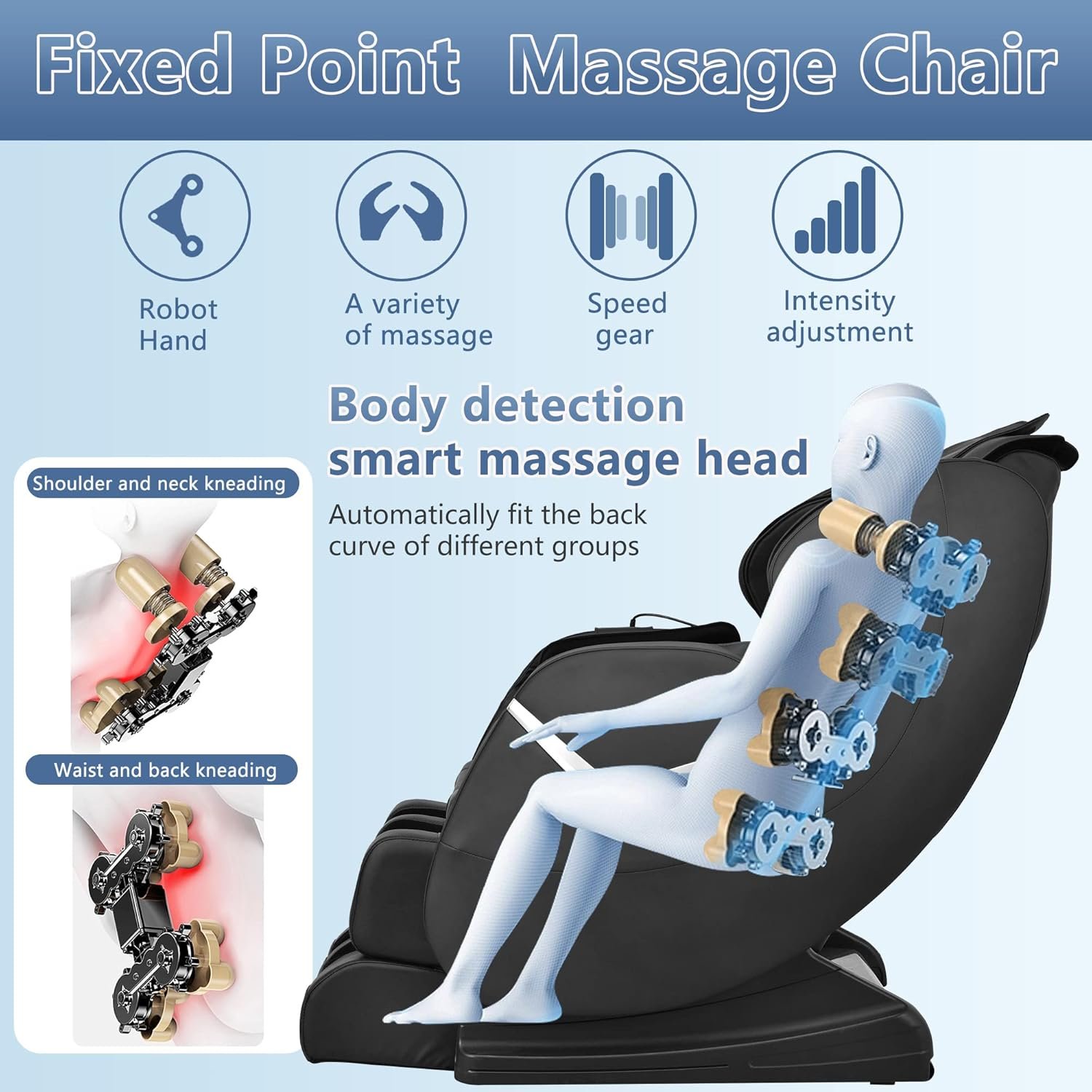
Most shiatsu massage chairs rely on a coordinated system of rollers, motors, airbags or air cells, sensors, and controls. The chair’s programming changes the speed, direction, width, and pressure of these components to create different massage styles.
Back rollers create the main massage motion
The most important component is the roller mechanism behind the backrest. In many chairs, a set of rollers moves vertically along a track, working from the neck and shoulders toward the lower back. Depending on the chair, the rollers may also move outward and inward across the back or extend forward to create a more pronounced pressure sensation.
Common roller actions include:
- Kneading: Circular or alternating motions that can feel like two hands working alongside the spine.
- Tapping: Light, rhythmic contact that often feels like quick percussion.
- Rolling: Smooth movement up or down the back, usually gentler than kneading.
- Pressing: A slower, more concentrated hold or push at selected points.
- Combination modes: Programs that blend kneading and tapping or alternate broad and focused movements.
Rollers should work beside the spine, not directly on the spinal bones. The backrest padding, your seated position, and the chair’s body scan all influence where the pressure lands.
Body scanning adjusts the massage area
Many shiatsu massage chairs begin a program with a body scan. The chair moves its rollers across the upper back to estimate shoulder height, back length, and sometimes body contours. It then positions the massage range based on that scan.
This feature can improve fit, but it is not perfect. If the rollers stop below your shoulders or press too high into your neck, use the shoulder-position or massage-position controls if available. Sitting fully back in the seat before starting the scan also helps the chair measure you more accurately.
Air compression adds a wrapping sensation
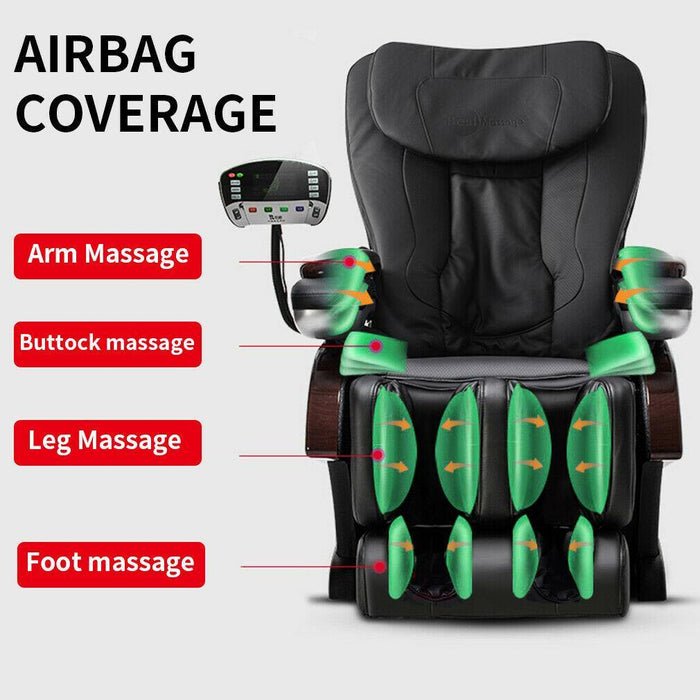
Airbags, often called air cells, inflate and deflate around selected body areas. They may be placed in the shoulders, arms, hips, seat, calves, ankles, or feet. Instead of rubbing the muscles as rollers do, they create a squeezing, holding, or rhythmic compression feeling.
In a shiatsu program, air compression can make the massage feel more complete. For example, shoulder airbags may hold the upper body in place while the back rollers knead. Calf airbags may gently compress the legs while foot rollers work underneath the soles.
Compression should feel secure but not painful, numb, or restrictive. If it feels too tight, reduce the air intensity or turn off that zone.
Recline positions change pressure and body support
Reclining redistributes your body weight and changes how firmly the rollers contact your back. In an upright position, a massage can feel more direct because your back presses firmly against the chair. A deeper recline often feels more relaxing and may reduce the sense of concentrated pressure.
Some chairs offer a near-weightless recline position, commonly described as zero gravity. In this posture, the legs are raised and the body reclines so weight is spread more evenly across the chair. It may make a massage feel less harsh for some users, but it does not automatically make a program gentle. Roller depth and intensity still matter.
Heat provides warmth, not deep mechanical massage
Heat is commonly offered in the lower back, seat, calves, or feet. It usually feels like mild, steady warmth rather than a hot compress. Heat can make a massage feel more comfortable, particularly during slower kneading or rolling programs.
Because heat sensitivity varies, start cautiously. Do not use a heated setting if you cannot reliably sense temperature, and stop if the area becomes uncomfortably hot. The chair’s manual should explain its heat function and any model-specific precautions.
Foot rollers and calf massage target the lower legs
A shiatsu massager chair may include textured rollers beneath the feet, air cells around the calves, or both. Foot rollers can feel like small rotating knobs or ridges moving under the arches and heels. This is often one of the most intense features because the feet have less cushioning than the back.
Calf massage tends to feel different: more like alternating squeezes, pulses, or holds. Some leg units also stretch the ankles gently by holding the feet while the chair reclines or changes position.
What a Shiatsu Setting Feels Like
A shiatsu setting generally feels more structured and point-focused than a vibration-only setting. Instead of a uniform buzz, you may notice distinct motions traveling through specific parts of the body. The experience changes throughout the program as rollers move, airbags inflate, and the chair adjusts its recline.
Credit: snailax.com
The first few minutes: scanning and settling in
At the beginning, the chair may recline slightly and run the rollers upward to find your shoulder line. This can feel like a slow roll along the back. Once the scan ends, the massage usually begins with broad rolling, gentle tapping, or light kneading.
If the rollers feel misaligned from the start, do not assume the discomfort will improve later. Pause the program and adjust the shoulder level or your seating position. Good alignment is especially important for the upper back and neck area.
Back kneading: alternating pressure beside the spine
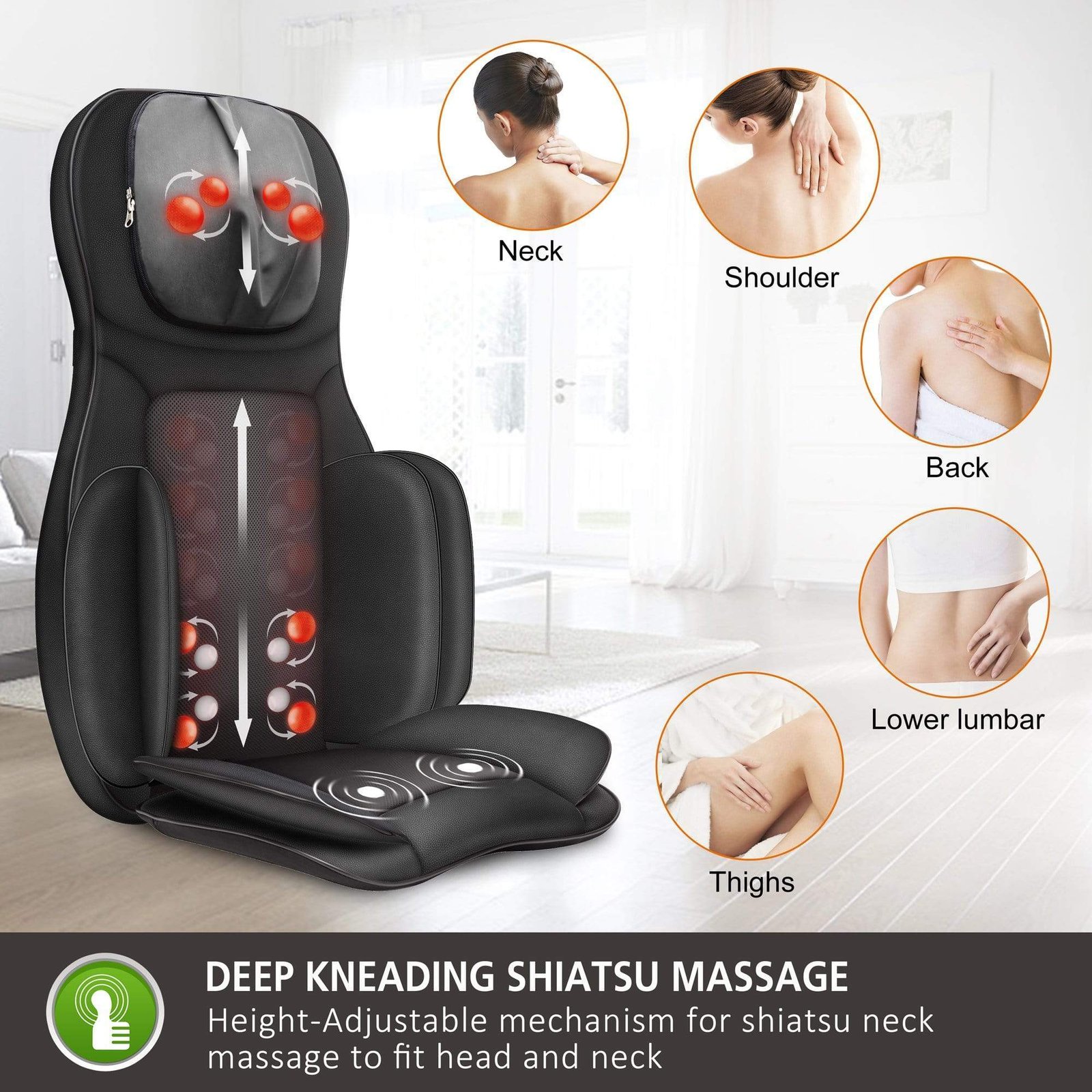
Kneading is often the signature sensation of a shiatsu massage chair. It may feel as though two rounded pressure points are working in small circles on either side of the spine. Some chairs alternate left and right; others make both rollers move together.
At a low setting, kneading can feel steady and calming. At higher depths, it may feel firm and highly targeted, especially around the shoulder blades and lower back. A pleasant “good pressure” should not become sharp, pinching, burning, or painful.
Tapping: quick rhythmic pulses
Tapping feels lighter and faster than kneading. It may resemble a series of small, repetitive pats along the upper or middle back. Some people find it invigorating; others prefer it only briefly because the rhythm can feel too stimulating.
Tapping is often combined with kneading. In that case, you may feel circular pressure followed by rapid pulses, rather than one consistent movement. This combination can be useful when you want variety, but it may be too busy for someone seeking a quiet, slow massage.
Focused pressure: the most intense part for many users
Some programs pause the rollers at selected points or move them in narrow patterns. This is the part most likely to resemble the idea of thumb pressure. It can feel satisfying around tight upper-back muscles, but it can also be intense if you are slim, sensitive to pressure, or seated with poor alignment.
Focused pressure should feel like firm contact in soft tissue, not force against bones. If the rollers dig into the shoulder blades, spine, tailbone, or neck, use a lower intensity, add the supplied pad if your chair has one, or choose a rolling program instead.
Airbags: squeeze, release, and stabilization
Air compression creates a different kind of comfort from roller massage. Around the arms and calves, it feels like a cuff gently inflating and releasing. Around the hips or shoulders, it can make you feel held in the chair while the rollers work.
The cycle is usually gradual: pressure builds, holds briefly, then releases. A higher setting can feel surprisingly strong, particularly around the calves and forearms. People who dislike confined sensations may prefer lower air intensity or selective zone control.
Stretch programs: a slow pulling and opening sensation
Stretch modes use the recline function, airbags, and sometimes the leg rest to hold parts of the body while changing your position. A typical program may secure the shoulders or ankles lightly, recline the chair, and create a gentle lengthening sensation through the back and legs.
This should feel controlled and gradual, never abrupt. The stretch is generally milder than a hands-on assisted stretch, but it is not suitable for everyone. Anyone with a recent injury, significant joint instability, severe osteoporosis, or a condition affected by traction should seek appropriate medical guidance before using stretch functions.
How Settings Affect the Experience
Two people can use the same shiatsu massage chair and describe it very differently. Body size, muscle sensitivity, clothing, posture, and the selected program all affect the result. The most useful controls are usually intensity, roller position, speed, width, air pressure, and recline angle.
| Setting | What It Changes | What You May Feel |
|---|---|---|
| Roller intensity or depth | How firmly the rollers press forward | From light contact to deeper, more concentrated pressure |
| Speed | How quickly kneading, tapping, or rolling moves | Slow and calming or faster and more stimulating |
| Width | Distance between roller contact points | Narrow work near the spine or broader coverage across the back |
| Air intensity | How firmly airbags inflate | A light hug-like compression or a stronger squeeze |
| Recline | Body angle and weight distribution | More upright and direct or reclined and cradled |
| Heat | Warmth in designated zones | Mild warmth that may make slower programs feel more relaxing |

Credit: walmart.com
Why roller pressure can feel stronger on some bodies
A chair is built around a fixed mechanical path, while human bodies vary considerably. Taller users may find that the rollers stop too low for the neck and shoulders. Shorter users may feel the rollers reach too high. People with less natural padding over the back may notice firmer contact than those with broader or more cushioned backs.
Even clothing matters. Thick layers can soften roller pressure slightly, while thin clothing makes the massage feel more direct. Do not use bulky items, hard objects, or anything in your pockets that could interfere with the chair.
Choosing a Comfortable Shiatsu Program
The best starting point is rarely the strongest preset. Start with a gentle or automatic full-body program, then adjust one variable at a time. This makes it easier to identify whether the discomfort comes from roller depth, air pressure, foot massage, or the recline position.
- Sit fully back with your hips against the rear of the seat and your feet placed as intended.
- Run the body scan and check the shoulder position before the main massage begins.
- Choose low or medium roller intensity for the first session.
- Keep air compression low until you know how the arm, hip, and calf zones feel.
- Use a shorter session at first rather than selecting the longest automatic program.
- Increase only one setting if the massage feels too mild.
- Stop or reduce intensity if any movement becomes painful or causes tingling, numbness, dizziness, or discomfort that persists after use.
Manual controls are often more useful than automatic programs when you have one specific area of everyday tightness. For instance, you may prefer slow rolling across the mid-back with low air compression instead of a full-body routine that includes strong foot rollers and stretching.
Common Reasons a Shiatsu Chair Feels Uncomfortable
Discomfort does not necessarily mean the chair is defective. Often, a small adjustment can make the experience much more pleasant. However, persistent pain is a reason to stop using that setting rather than push through it.
The rollers are hitting the wrong area
If you feel pressure on the neck, shoulder blades, spine, or tailbone, the scan may be misaligned. Reposition yourself, adjust the shoulder height, or use manual roller controls. If the chair cannot fit your height or torso length well, no setting adjustment may fully solve the issue.
The intensity is too high for the selected technique
A setting that feels comfortable for rolling may feel excessive for kneading or focused pressure. Reduce roller depth before deciding that the entire chair is too strong. Some models also include removable back pads that soften the massage.
The foot massage is too aggressive
Foot rollers can be intense even when the back massage is gentle. Try socks, lower the foot setting, turn off the rollers while keeping calf compression, or choose a program that excludes the foot section if the controls allow it.
The air cells are overinflated for your comfort
High air pressure can cause an unpleasant squeezing sensation, especially around the calves and arms. Lowering the air setting often preserves the relaxing rhythm without making you feel restricted.
You are using it when your body needs a different approach
A massage chair is not appropriate for every type of pain. Stop and seek advice from a qualified healthcare professional if you have unexplained or severe pain, recent surgery, a fracture, a blood clotting concern, significant circulation problems, or symptoms that worsen with massage. Follow the chair manufacturer’s safety guidance as well, particularly if you are pregnant or have an implanted medical device.
What a Shiatsu Massage Chair Can and Cannot Do
Shiatsu massage chairs can provide a convenient way to relax, loosen up after sitting, and enjoy repeated massage-like movements at home. They can be especially appealing to people who want adjustable back, leg, and foot massage without scheduling an appointment.
They also have clear limitations. The chair cannot feel muscle texture, identify the cause of pain, modify its technique with human judgment, or provide a medical diagnosis. Its rollers follow programmed tracks, and its pressure options are limited by the chair’s design.
For that reason, it is best to think of a shiatsu setting as a comfort feature rather than a treatment plan. Use it within your comfort level, maintain realistic expectations, and address ongoing pain or functional problems with an appropriate health professional.
Credit: relaxingrecliners.com
FAQ
Is a shiatsu massage chair supposed to hurt?
No. Firm pressure can be normal, particularly during kneading or foot massage, but sharp pain, pinching, numbness, burning, or lingering soreness are signs to reduce the setting or stop. Proper roller alignment and lower intensity usually make the experience more comfortable.
How long should a beginner use a shiatsu massage chair?
Start with a short session at a gentle setting and see how your body responds. The appropriate duration depends on the chair’s instructions, the program used, and your individual comfort. Longer sessions are not automatically more beneficial.
Can you use a shiatsu massage chair every day?
Many people use massage chairs regularly for relaxation, but frequency should be guided by comfort and the manufacturer’s recommendations. If you notice soreness, skin irritation, increased pain, or fatigue after use, take a break and reduce the intensity or session length next time.
Do shiatsu massage chairs work through clothing?
Yes. Most are intended to be used over normal light clothing. Thin, flexible fabric allows you to feel the rollers more clearly, while thicker clothing can soften the pressure. Avoid clothing with hard objects, thick seams, or items in pockets.
What is the difference between shiatsu mode and vibration mode?
Shiatsu mode usually uses moving rollers, kneading, tapping, compression, and sometimes stretching. Vibration mode creates a more uniform buzzing sensation through part of the chair. Vibration may feel gentler, but it is generally less targeted than roller-based massage.