
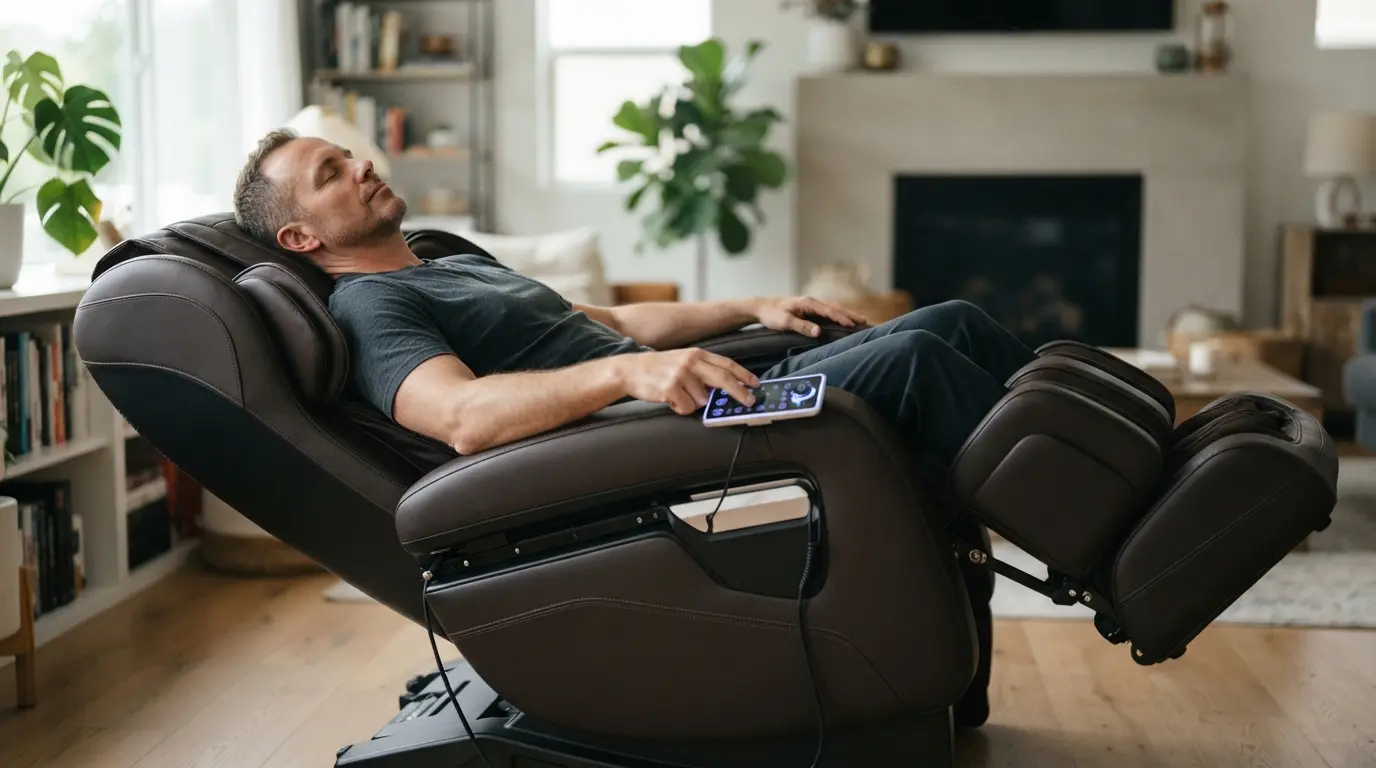
The massage chair features that matter most are the ones that determine how well the chair fits your body, targets your preferred areas, feels during a session, and works in your available space. A long feature list can look impressive, but not every function improves comfort or makes a chair a better choice for you.
When deciding what to look for in a massage chair, start with the massage mechanism, track length, recline position, intensity controls, and body-size fit. These fundamentals shape the actual experience far more than decorative extras, preset names, or built-in entertainment features.
This guide explains the most important massage chair features, how they work, and when they are worth prioritizing. It also separates genuinely useful functions from options that may be convenient but should not drive the purchase decision.
Start With the Massage Mechanism
The massage mechanism is the chair’s core system. It controls how the moving rollers travel, where they can reach, and the type of pressure they can provide. Two chairs can have similar-looking programs but feel very different because of their mechanisms.
2D, 3D, and 4D roller systems
These labels generally describe the range and control of roller movement. They are useful terms, but manufacturers may use them differently, so the specific functions matter more than the label alone.
| Mechanism | What it generally does | Who may prefer it |
|---|---|---|
| 2D rollers | Move up and down the track and side to side across the back. | People who want straightforward rolling, kneading, tapping, or shiatsu-style programs. |
| 3D rollers | Add forward-and-back movement, allowing the rollers to extend farther toward the user or retract. | People who want adjustable depth and potentially more focused back pressure. |
| 4D rollers | Usually add changes in speed, rhythm, or timing to make movements feel less uniform. | People who value varied, slower, or more detailed massage patterns. |
A 3D or 4D chair is not automatically better. If you prefer gentler sessions, a well-designed 2D system with reliable intensity adjustment may be more comfortable. Conversely, users who want firmer pressure often benefit from rollers with adjustable extension.
Look for clear controls that let you reduce roller depth or intensity. Strong rollers without meaningful adjustment can make a chair unsuitable for smaller-framed users or anyone sensitive to deep pressure.
Massage techniques and programs
Common roller techniques include kneading, tapping, rolling, shiatsu-style pressure, knocking, and combinations of these movements. Some chairs also offer stretching, recovery, relaxation, or full-body programs.
Program names are less important than what the program actually does. A useful program should state which body areas it covers, whether it uses rollers or airbags, and whether you can adjust speed, width, intensity, and duration. More presets do not necessarily create a better massage if the settings cannot be tailored to your comfort.
Track Design Determines Where the Rollers Reach
The roller track is the rail system that guides the massage mechanism. Track length affects coverage, especially below the lower back.
S-track, L-track, and hybrid tracks
An S-track follows the natural curve of the spine from the neck toward the lower back. It is designed to maintain roller contact along the back’s contours.
An L-track continues from the back down into the seat area, typically reaching the glutes and upper thighs. This is one of the massage chair features worth prioritizing if you spend long periods sitting, want broader lower-body coverage, or simply enjoy massage in the hip and seat region.
Some chairs describe their rail as an SL-track or hybrid track. In practical terms, the question is simple: does the roller system follow your back comfortably and reach the areas you care about? Do not assume a longer track will feel better if the chair’s body scan, seat dimensions, and roller intensity are poorly matched to you.
Body scanning and shoulder detection
Many massage chairs use a body scan at the start of a session. The chair attempts to identify shoulder height, back shape, and sometimes body position so the rollers can begin in a more suitable location.
This feature is useful, especially in a household where more than one person uses the chair. However, scanning is not always perfect. The best chairs make it easy to manually adjust the roller position, usually by moving the shoulder setting up or down. Manual correction is particularly important for very tall, short, broad-shouldered, or narrow-shouldered users.
Air Compression Matters for Full-Body Coverage
Rollers focus mainly on the back and, depending on the track, the seat. Airbags or air cells provide compression massage to other areas, such as the shoulders, arms, hips, calves, feet, and sides of the legs.
Air compression works by inflating and deflating chambers around parts of the body. It can create a squeezing, holding, or rhythmic compression sensation rather than the pressing and kneading feel of rollers.
Where airbags are most useful
- Shoulders and upper arms: Useful for a more enclosed, full-body feel and for holding the body in position during stretch programs.
- Arms and hands: Helpful if you want coverage beyond the back. Check whether the arm wells fit your forearms comfortably.
- Hips and seat: Can add side-to-side compression around the pelvis and upper legs.
- Calves and feet: Often a priority for people who stand for long periods or simply prefer lower-leg massage.
More airbags are not automatically better. What matters is placement, pressure control, and whether the chambers fit your body without pinching or feeling restrictive. Ideally, you should be able to adjust air intensity separately from roller intensity.
Stretch programs: useful, but not for everyone
Stretch programs usually combine recline, airbags, and controlled leg or shoulder holding. The chair may gently shift the body’s position while the rollers work along the back. Some people find this relaxing and enjoy the opening sensation through the hips, back, and legs.
However, stretching programs can feel intense, especially if you have limited mobility, recent injuries, pain that is not yet evaluated, or discomfort when reclining. Use a low setting first and stop if the movement feels sharp, unstable, or unpleasant. A massage chair is a comfort product, not a substitute for diagnosis or treatment from a qualified healthcare professional.
Recline and Zero Gravity Change the Feel of the Massage
Recline is more than a luxury feature. By changing your position, it can affect pressure distribution, roller contact, and how easy it is to relax into the chair.
What “zero gravity” usually means
In massage chairs, zero gravity generally refers to a reclined position with the legs elevated. The goal is to distribute body weight more evenly and reduce the feeling of being upright in the seat. Some chairs offer one position, while others provide multiple recline angles.
A zero-gravity position can help rollers maintain contact with the back and may make deeper massage feel less harsh for some users. It is not a medical treatment, and comfort remains highly individual. The recline range, seat shape, and head pillow thickness all affect whether the position works for you.
Wall-hugging and space-saving recline
Traditional massage chairs may need substantial clearance behind them. Wall-hugging or space-saving designs slide the seat forward as the back reclines, reducing the amount of wall clearance required.
This is an important practical feature for apartments, bedrooms, and smaller living rooms. Before buying, check the manufacturer’s required clearance in both upright and fully reclined positions. Also account for the chair’s width, extended footrest length, doorway access, and enough surrounding space to use the controls comfortably.
Leg, Calf, and Foot Massage Features Need Close Attention
Lower-body massage is one of the biggest differences between basic and more comprehensive massage chairs. It can also be one of the most personal aspects of fit.
Foot rollers, airbags, and vibration
Foot massage systems may use rollers under the soles, airbags around the feet, vibration, or a combination of these. Foot rollers can feel pleasantly stimulating to some people and uncomfortably intense to others.
Look for independent foot-roller controls when possible. Being able to turn off rollers while keeping calf compression active gives you more flexibility. Thick socks or removable foot pads may soften the sensation, but a chair should still be comfortable at its lowest useful setting.
Calf wells and extendable ottomans
The lower-leg section must fit your height and leg shape. Some chairs use enclosed calf wells, while others use open leg rests or separate foot sections. Enclosed designs can feel secure but may be restrictive for people with larger calves.
An extendable ottoman can improve fit for taller users by allowing the footrest to slide outward. Still, do not rely on an extension feature alone. Review the stated user-height guidance when provided, and consider whether the chair supports your knees and calves without forcing your feet into an awkward position.
Adjustability Is More Valuable Than Maximum Intensity
One of the most overlooked massage chair features is the ability to control each function separately. A chair that offers several kinds of intensity adjustment is usually more useful over time than one designed only to deliver a powerful massage.
Controls worth looking for
- Roller intensity or depth adjustment
- Separate airbag pressure settings
- Massage speed adjustment
- Roller width adjustment for upper-back techniques
- Manual selection of neck, shoulders, full back, lower back, or seat zones
- Foot roller on/off control
- Session timer options
- Memory settings for preferred positions or programs
Independent controls matter because comfort needs can change. You may prefer gentle full-body compression after a tiring day but a firmer lower-back roller program at another time. A chair that lets you combine these choices is more adaptable than one that locks every feature into a preset.
Remote controls, touch panels, and voice controls
A large, readable remote with plain labels is often more useful than an elaborate touchscreen. Check whether the controls are easy to reach from a reclined position and whether the display clearly shows the active program and intensity level.
Voice commands, Bluetooth speakers, ambient lighting, and app control can be enjoyable conveniences. They should be considered secondary unless they solve a specific accessibility or usability need. If the massage controls are confusing, entertainment features will not make up for that limitation.
Body Fit Is a Non-Negotiable Feature
A massage chair cannot perform well if its proportions do not suit the user. Fit affects roller placement, shoulder compression, neck support, arm comfort, calf positioning, and the effectiveness of every program.
Check the chair’s user range and physical dimensions
Manufacturers may list recommended user height, maximum user weight, seat width, shoulder width, and calf or footrest range. Treat these as starting points rather than guarantees. Body proportions vary: two people of the same height can have very different torso, leg, and shoulder measurements.
Pay particular attention to these fit points:
- Neck and shoulders: The rollers should reach the upper back without pressing uncomfortably into the neck or stopping too low.
- Seat width: Narrow side airbags may feel secure for one person and confining for another.
- Arm compartments: Your arms should rest naturally without twisting wrists or hunching shoulders.
- Calves and feet: The leg unit should support rather than compress your lower legs excessively.
- Head pillow: A removable or adjustable pillow can noticeably change roller intensity near the upper back and neck.
If possible, sit in a chair before purchasing. If that is not an option, study the measurements, return policy, delivery terms, and whether the seller offers setup support. Massage chairs are large, heavy items, so a difficult return can be costly and inconvenient.
Heat, Lighting, and Other Comfort Extras
Heat is a common feature, usually located in the lower back, seat, calves, or feet. Gentle warmth can make a massage session feel more comfortable, but heating zones and temperature control vary widely. Check whether heat can be switched off independently, especially if you tend to feel warm easily.
Other optional features may include:
- Bluetooth speakers or audio playback
- LED lighting
- USB charging ports
- Aromatherapy compartments
- Wireless charging pads
- Side storage pockets
- Adjustable headrests or pillows
These additions can improve convenience, but they should come after massage quality, fit, controls, and room compatibility. A simpler chair that fits you well is usually a better long-term choice than a feature-heavy chair with poor roller placement or an uncomfortable leg rest.
Build Quality, Maintenance, and Ownership Considerations
A massage chair contains moving rollers, motors, airbags, electronics, upholstery, and reclining mechanisms. Long-term satisfaction depends partly on how easy these components are to use and maintain.
Materials and upholstery
Most massage chairs use synthetic upholstery rather than natural leather. Look for material that feels comfortable against the skin, is easy to wipe clean, and has a finish appropriate for your climate and home. In warmer rooms, less breathable upholstery may feel sticky during longer sessions.
Ask how removable cushions, foot pads, or covers can be cleaned. Follow the manufacturer’s care instructions and avoid harsh cleaners that may damage synthetic surfaces or seams.
Delivery, assembly, and service access
Before ordering, measure doorways, hallways, elevators, stairways, and the final room. Consider whether the chair ships in multiple boxes, requires assembly, or needs professional placement. Its final location should have access to a suitable electrical outlet without creating a trip hazard from cords.
Also review the warranty terms carefully. A warranty may have different coverage periods for structural components, upholstery, labor, electronics, and in-home service. Find out who handles repairs in your area and whether service requires the chair to be transported elsewhere.
Which Massage Chair Features Should You Prioritize?
If you are comparing several models, use this order of importance rather than simply choosing the chair with the longest specifications list:
- Body fit and room fit: The chair must suit your height, build, doorway access, and available recline space.
- Roller mechanism and track: Choose the coverage and pressure style you actually enjoy.
- Meaningful adjustability: Prioritize separate roller, airbag, and foot controls.
- Recline and leg comfort: Make sure the seating position, footrest, and calf area feel natural.
- Lower-body massage: Decide whether calf compression, foot rollers, and a longer track are important to you.
- Controls and daily usability: Clear controls make it more likely you will use the chair regularly.
- Warranty and service: Consider support availability before paying extra for convenience features.
- Optional extras: Evaluate speakers, lights, charging, and similar additions last.
The best choice is not necessarily the chair with 4D rollers, the most airbags, or the most automatic programs. It is the one that provides comfortable, adjustable massage in the areas you want, fits your body and room, and has practical support after purchase.
Frequently Asked Questions
Is an L-track always better than an S-track?
No. An L-track is often preferable if you want roller massage that continues into the seat and upper-thigh area. An S-track may be enough if your main priority is neck, shoulder, and back coverage. Overall fit, roller comfort, and control options matter just as much as track style.
How much space should I leave around a massage chair?
Use the manufacturer’s clearance guidance for the specific model, especially behind the chair and in front of an extended footrest. Also leave enough side space to enter the chair and reach its controls. Space-saving recline designs may reduce rear clearance, but they still need room for safe access and full operation.
Can more intense settings provide a better massage?
Not necessarily. A useful massage should feel comfortable, controlled, and appropriate for your preferences. Excessive intensity can make it difficult to relax and may leave you feeling sore. Adjustable roller depth and separate air pressure controls are usually more useful than a chair that is simply very strong.
Are massage chairs suitable for everyone?
They are not suitable in every situation. People who are pregnant, have a medical condition, use implanted medical devices, have circulation concerns, have recently had surgery, or have unexplained pain should review the chair’s safety guidance and consult an appropriate healthcare professional before use.
What should I check before buying a massage chair online?
Confirm the chair’s dimensions, recommended user range, recline clearance, delivery method, assembly requirements, return process, warranty coverage, and local repair options. Read the product manual when available, because it often explains controls, electrical requirements, safety limits, and cleaning instructions more clearly than a product listing.
Sources & References
Feature names and safety limits vary by model; verify them in the manufacturer’s documentation.
1 thought on “Massage Chair Features Explained: Which Ones Matter Most?”