
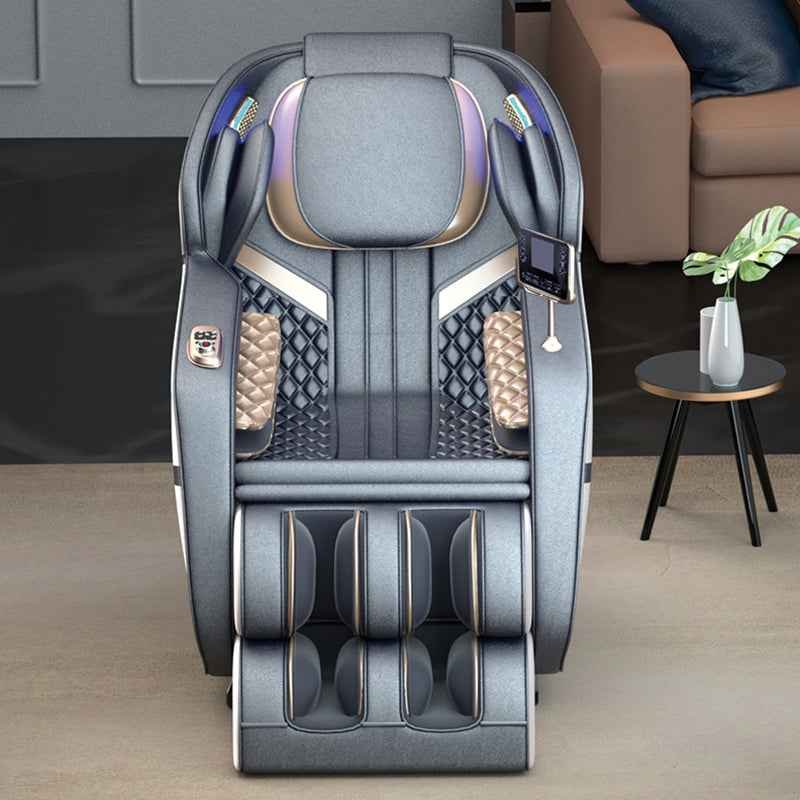
An AI powered massage chair uses sensors, software, and automated adjustment to tailor a massage session to the person sitting in it. In practical terms, the technology may scan shoulder position, estimate body shape, remember preferences, adjust massage intensity, or recommend a program based on the user’s selections.
The term “AI” can sound more advanced than the underlying feature set. Some chairs use genuinely adaptive software that changes a session as it gathers sensor data. Others use the label for guided programs, voice controls, or automatic body scanning that has existed in massage chairs for years. The useful question is not whether a chair says “AI,” but what it can detect, decide, and adjust.
This guide explains what AI technology in massage chairs actually does, where it can improve comfort and convenience, and where its limits are. It is not a replacement for medical assessment, diagnosis, or treatment.
What “AI” Means in a Massage Chair
In a massage chair, artificial intelligence usually refers to software that processes information from the chair’s sensors and controls. It uses that information to select or modify massage settings without requiring the user to adjust every option manually.
Most AI-related functions fall into three broad categories:
- Body detection: locating the user’s shoulders, back length, or seated position so the massage mechanism follows the body more accurately.
- Adaptive adjustment: changing roller position, air pressure, intensity, speed, or massage techniques during a session.
- Personalization: saving preferences, suggesting programs, or learning which settings a user tends to choose.
That does not necessarily mean the chair is independently “thinking” in the human sense. Many systems operate through programmed rules. For example, if a shoulder scan identifies a higher shoulder position, the chair may move the upper roller track accordingly. If a pressure sensor detects a change in seating position, the chair may pause or recalibrate.
More sophisticated systems can combine several inputs, such as body measurements, selected goals, previous settings, and real-time pressure information. However, the extent of that capability varies greatly by manufacturer and model.
The Core Technologies Behind Adaptive Massage
An AI powered massage chair depends on physical components as much as software. Its intelligence is only as useful as the sensors, motors, massage mechanism, and controls that carry out the chosen settings.
Body scanning and shoulder detection
Automatic body scanning is one of the most common features associated with AI massage chairs. When a program begins, the chair moves its rollers upward along the back and uses sensors to estimate where the user’s shoulders and back contours are located.
The chair then sets a massage range. This matters because a roller track that starts too low may miss the upper trapezius area, while a track set too high can create an uncomfortable sensation near the neck.
Body scanning improves setup, but it is not perfect. Loose clothing, a slouched position, very broad or narrow shoulders, and unusual body proportions can affect the result. A well-designed chair should still let the user manually move the rollers up or down when the automatic scan is slightly off.
Pressure and position sensors
Some chairs include sensors in the seat, backrest, footwell, or arm areas. These can help the chair determine whether someone is seated, whether the body has shifted, or whether the feet are positioned in the leg section.
Depending on the model, this information may be used to:
- start or stop a scan when the chair is occupied;
- adjust the leg rest or foot rollers for a better fit;
- reposition air cells around the arms, calves, or feet;
- pause movement when the user leaves the chair; or
- maintain a more consistent massage contact as the user reclines.
These sensors usually improve convenience and fit rather than create a completely customized therapeutic assessment. A chair cannot reliably determine the cause of muscle pain, identify an injury, or diagnose a physical condition from seating pressure alone.
Roller control and massage mapping
The roller mechanism is the central massage component in most full-size chairs. Depending on the chair’s design, rollers may travel along a straight track or a longer track that follows more of the spine and gluteal area.
AI-related software can control where the rollers work, how long they remain in one area, and which movement pattern they use. Common movements include kneading, tapping, rolling, pressing, and combinations of these techniques.
A basic automatic program may run a fixed sequence over a preset area. An adaptive program may spend more time around the shoulders after detecting their location or may reduce pressure in a region after a user chooses a gentler comfort setting. The chair is still working within predefined mechanical limits; it cannot create massage movements that its rollers are not physically designed to perform.
Air compression control
Airbags or air cells inflate around areas such as the shoulders, arms, hips, calves, and feet. Software controls the order, timing, and pressure of inflation. This can create rhythmic compression, hold a limb in place while rollers work, or add a stretching sensation during recline.
In an adaptive chair, air compression may change with the selected program, body size setting, or intensity level. The practical benefit is often a more balanced feel between roller massage and compression. Stronger is not automatically better: too much compression can be uncomfortable, especially for users who are sensitive to pressure.
Voice, app, and user-profile controls
Some manufacturers describe voice commands and smartphone apps as AI features. They can be useful, but they are not necessarily adaptive massage technology.
Voice control may allow commands such as starting a session, reclining the chair, selecting a relaxation routine, or increasing intensity. An app may provide a remote control interface, session history, or saved programs. User profiles can make a chair faster to use in a shared household by recalling preferred massage areas, duration, recline position, and intensity.
These features are best viewed as convenience tools. Their value depends on whether they make regular use easier for the people who will actually use the chair.
What an AI Powered Massage Chair Can Actually Adjust
Capabilities vary, but a chair marketed as AI-powered may automate one or more of the following settings:
| Feature | What the chair may use | Practical result |
|---|---|---|
| Roller position | Body scan or shoulder detection | The massage range better matches the user’s back length and shoulder height. |
| Massage area | Selected goal, scan data, or saved preference | The program may focus more on the neck, shoulders, lower back, or full back. |
| Intensity | User input, preset rules, or adaptive programming | Roller depth, speed, air pressure, or a combination of settings may become gentler or stronger. |
| Leg-rest position | Height estimate, calf detection, or manual confirmation | The foot and calf section extends or retracts to better suit the user’s leg length. |
| Recline and stretch sequence | Chosen program and chair position sensors | The chair coordinates recline, airbags, and rollers for a programmed stretch-like movement. |
| Program recommendations | Previous use, stated preferences, or menu selections | The interface may suggest familiar routines rather than requiring full manual setup. |
Not every chair performs every adjustment automatically. A product page should state specifically whether a feature is sensor-based, manually selected, or simply a preloaded automatic program. That distinction helps buyers compare chairs honestly.
Credit: massagechairscheap.com
How Adaptive Programs Differ From Standard Automatic Programs
Traditional massage chairs have long included automatic routines. A standard routine follows a fixed pattern: it may scan the body at the start, then deliver a predetermined mix of rolling, kneading, air compression, and recline for a set time.
An adaptive program adds a feedback loop. The chair uses available inputs to alter at least part of the experience. For example, it might recalibrate roller height after the user settles deeper into the chair, adjust air compression according to a selected comfort level, or use a saved profile to begin with preferred settings.
The difference can be subtle. A chair does not need an AI label to provide an excellent automatic massage, and an AI label does not guarantee better rollers, quieter motors, stronger build quality, or a more comfortable seat.
Rule-based automation versus machine learning
Many “intelligent” chair functions are rule-based. The manufacturer defines conditions and responses in advance. If the scan identifies the shoulders at a certain height, the chair sets the roller range to a matching position. This is useful automation, even if it is not advanced machine learning.
Machine learning generally involves software recognizing patterns from data and changing predictions or recommendations over time. In a massage chair, this might appear as a system that learns commonly selected settings and suggests them to the user. Manufacturers do not always explain how much learning occurs on the chair itself, in an app, or not at all.
For buyers, the important consideration is the outcome: Does the chair make accurate, controllable adjustments that improve comfort? Clear controls and reliable manual overrides matter more than technical marketing language.
Benefits That Matter in Daily Use
The best reason to choose adaptive technology is not novelty. It is reducing the small setup problems that can make a massage chair feel less comfortable or less convenient.
Faster setup for multiple users
In a household with users of different heights and preferences, automatic scanning and user profiles can reduce repeated adjustments. Each person may still need to fine-tune roller height or intensity, but the chair can start closer to an appropriate setting.
More consistent roller placement
When the roller path aligns well with the user’s shoulders and back, the massage usually feels more deliberate. This is especially important for people whose shoulder height does not match the default range of a fixed program.
Simpler controls for casual use
Some users do not want to navigate several menus before every session. A well-designed adaptive program can provide a reasonable starting point with one button, then allow changes if needed. That is often more useful than a long list of complex settings that rarely get used.
Potentially better comfort during recline
Coordinated control of recline, airbags, leg extension, and rollers can make a session feel smoother. In zero-gravity-style positions, the chair may distribute body weight differently and change how strongly the rollers contact the back. Adaptive settings can help manage that transition, although individual comfort remains highly subjective.
What the Technology Cannot Do
A massage chair can support relaxation and may help some people feel temporarily less tense or sore after ordinary activity. It should not be presented as a medical device unless it has the appropriate regulatory status and intended use.
Even a sophisticated AI powered massage chair cannot:
- diagnose the source of back, neck, joint, or nerve pain;
- detect muscle knots, inflammation, disc problems, circulation disorders, or injuries with medical reliability;
- replace a clinician, physical therapist, or qualified massage professional;
- know whether a particular technique is appropriate for a health condition; or
- guarantee relief for every user.
“Pain detection” and “fatigue detection” are terms worth examining closely in marketing materials. They may refer to a questionnaire, a body scan, selected comfort goals, or general usage patterns rather than an objective medical measurement.
Anyone with unexplained pain, a recent injury, significant circulation concerns, a clotting disorder, severe osteoporosis, neuropathy, pregnancy-related concerns, implanted medical devices, or another condition that may be affected by strong pressure or recline should seek advice from an appropriate healthcare professional before using a massage chair. Manufacturer safety guidance should also be followed.
Credit: massagechairscheap.com
How to Evaluate AI Claims Before Buying
Instead of comparing broad claims such as “smart,” “intelligent,” or “AI-enhanced,” look for concrete functions that affect fit and comfort.
Ask what sensors the chair has
Look for a clear explanation of the sensing method. Does the chair scan shoulder height? Does it detect leg length? Are there pressure sensors in the seat? A vague statement about “AI body detection” is less useful than a description of what the system measures and what it changes afterward.
Check the manual adjustment options
Automation should not lock the user into a bad setting. Useful manual controls commonly include:
- roller height adjustment;
- massage width and speed selection;
- independent intensity control for rollers and airbags;
- targeted massage zones;
- leg-rest extension or retraction; and
- recline position controls.
A chair with dependable manual adjustment can suit more body types than one that relies entirely on an imperfect automatic scan.
Consider body-size fit separately from AI features
Smart functions cannot overcome physical fit limitations. Check the manufacturer’s recommended height range, seat width, shoulder width, calf section size, footwell dimensions, and stated weight capacity. The chair should fit the intended user when upright and reclined.
Very tall users may need extra leg-room extension and a long roller track. Shorter users may need a seat and shoulder scan that allow correct positioning without sliding forward. Broad-shouldered users should pay attention to shoulder air cells and the internal width of the chair.
Review controls and accessibility
A complicated app does not make a chair easier to use. Consider whether the remote has readable labels, whether common actions are available without a phone, and whether voice control works reliably in the intended language and region.
If the chair depends on an app for profiles or updates, check whether basic massage controls still work if the app is unavailable. Physical controls and a clear manual remain valuable.
Understand privacy and connectivity
Not every AI massage chair connects to the internet. If a chair has Wi-Fi, Bluetooth, an account-based app, voice features, or cloud-connected profiles, review the manufacturer’s privacy policy before purchasing. Find out what information is collected, whether usage data is stored, whether data can be deleted, and whether the chair remains functional without an account.
Connectivity can add convenience, but it can also add setup requirements and long-term dependence on software support.
Other Chair Features Still Matter More Than the AI Label
AI features should be one part of the decision, not the whole decision. The underlying chair design determines whether the massage feels comfortable, fits the room, and remains practical over time.
- Massage mechanism: Roller track design, massage types, adjustability, and the way rollers contact the body have a major effect on the experience.
- Air cell layout: Coverage and controllability matter more than simply having a high number of airbags.
- Recline and space: Measure the chair’s footprint in both upright and fully reclined positions. Wall-hugging designs may need less rear clearance, but still require floor space in front.
- Comfort when not massaging: Seat padding, headrest support, arm position, and fabric feel matter during every session.
- Noise: Motor, air pump, and roller noise can matter in shared living spaces.
- Maintenance and service: Check cleaning instructions, access to repairs, warranty terms, and whether replacement parts or service are available in your area.
A less automated chair with better physical fit and straightforward controls may be the better choice than a feature-heavy model that does not suit the user’s body or room.
Credit: massagechairscheap.com
FAQ
Does an AI massage chair need an internet connection?
No. Core functions such as body scanning, automatic programs, roller control, and air compression can operate within the chair itself. Internet access is more likely to be needed for app features, cloud profiles, voice-assistant integrations, or software updates.
Can an AI powered massage chair recognize different people automatically?
Some chairs can store multiple user profiles, but automatic identification is not universal. Many require a person to select a profile through the remote or app. Check whether the model saves settings and how those profiles are accessed.
Will adaptive massage settings work through thick clothing?
They usually still work, but thick, bulky clothing can reduce the sensation of rollers and airbags and may make body-position detection less precise. Comfortable, relatively thin clothing generally allows more direct contact while maintaining a suitable barrier between the user and the chair.
Are software updates important for a smart massage chair?
They can be useful if the chair offers connected features, as updates may improve an app, fix control issues, or add supported functions. However, the chair’s essential massage quality should not depend on uncertain future updates. It should work well with its included controls from the start.
Is an AI-powered model worth paying more for?
It can be worthwhile when automatic body fitting, easier controls, or saved profiles solve a real need for the household. It is less worthwhile when the added cost comes mainly from vague branding. Compare the specific adaptive functions against physical fit, massage quality, warranty support, and available manual controls before deciding.