
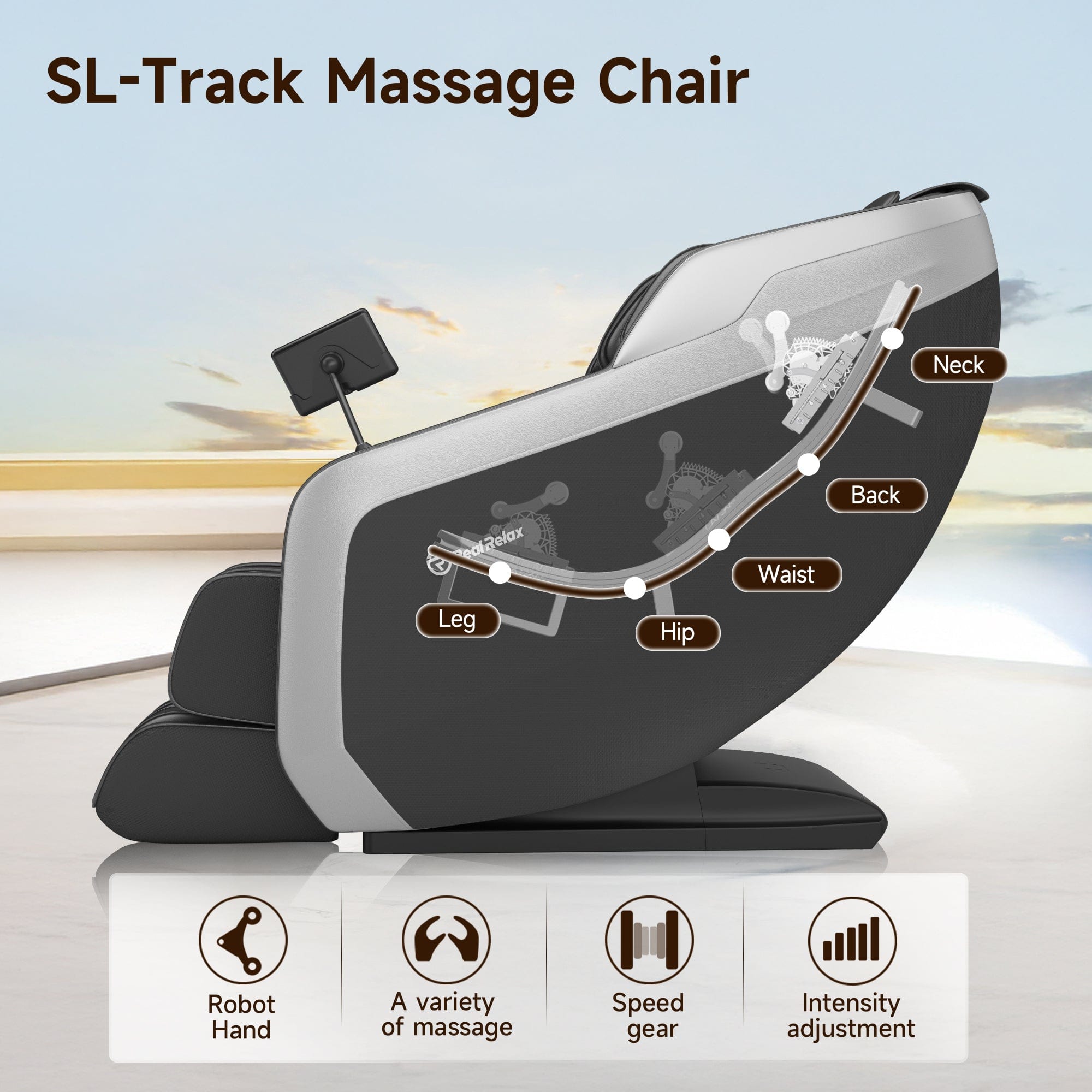
A massage chair SL track uses an extended roller path designed to follow the natural curve of the back and continue below the waist toward the hips or upper thighs. Compared with a shorter track, it changes where the chair can deliver roller massage—not necessarily how strong or therapeutic that massage feels.
The main advantage is broader lower-body coverage. A chair with an SL track can move its massage mechanism from the upper back, through the lumbar area, and into the gluteal region, which may feel more complete for people who carry everyday tension around the hips and lower back.
Still, track length alone does not determine whether a chair will suit you. The roller mechanism, body scan, recline position, seat design, air compression, and your height all affect the areas you actually feel during a session.
What an SL Track Is
An SL track combines features commonly associated with S-track and L-track massage chairs. The “S” portion refers to a curved path that follows the general shape of the spine. The “L” portion extends that path beyond the lower back and into the seat area.
In a massage chair with SL track construction, the rollers typically begin near the neck or shoulders, travel down the back, follow the lumbar curve, and continue underneath the seat toward the hips. The precise endpoint varies by model. Some chairs focus mainly on the glutes, while others reach farther toward the upper hamstrings.
The track is the rail system inside the chair that guides the roller assembly. It should not be confused with the massage programs themselves. A track determines where rollers can travel; the chair’s motors, roller design, programming, and settings determine how the massage is delivered.
How the Extended Track Changes Massage Coverage
The defining difference of an SL track is its ability to carry the roller mechanism below the lumbar region. This changes the chair’s practical coverage from a back-focused massage into one that includes more of the pelvis and seat area.
Upper back and shoulder coverage remains important
An extended track does not replace upper-body coverage. The rollers still need to reach the areas around the shoulders, shoulder blades, and upper back effectively. This is especially important because many people sit with forward-rounded shoulders or feel tightness around the trapezius muscles after desk work.
Track design alone cannot guarantee a good shoulder massage. A user who is much taller or shorter than the chair’s intended range may find that the rollers start too high, stop too low, or miss the shoulder area. Body scanning and manual shoulder-position adjustment can make a meaningful difference.
The lumbar area gets a more continuous roller path
On a well-designed SL track, the rollers move smoothly through the lower back rather than ending abruptly near the waist. This can create a more connected sensation between upper-back, mid-back, and lumbar massage programs.
For many users, the lower back is where the extra track length becomes noticeable. Instead of finishing at the base of the spine, the roller motion can continue downward into the seat. Whether that feels comfortable depends on the chair’s roller pressure, padding, recline angle, and the user’s sensitivity.
Glute and hip-area coverage is the key difference
The practical reason to consider a massage chair SL track is coverage around the glutes and upper hip area. These muscles support the pelvis during sitting, standing, and walking, and they can feel stiff after long periods in one position.
When rollers extend into this region, the massage may feel more targeted than seat airbags or vibration alone. Some chairs use rollers for a kneading or rolling sensation under the glutes, while others combine roller motion with air cells that compress the sides of the hips or thighs.
That said, extended lower-body coverage is not automatically comfortable for everyone. Deep roller contact under the glutes can feel intense, particularly in an upright position or at higher intensity settings. A chair that allows roller intensity adjustment, padding inserts, and multiple recline positions offers more ways to tailor the experience.
Upper-thigh reach varies substantially
Some descriptions suggest that every SL track massages the thighs. In practice, the roller path may end at the glutes, just below them, or farther into the upper hamstrings. The chair’s shape, the user’s seated position, and its advertised roller range all matter.
Do not assume that an extended track will replace dedicated calf, foot, or thigh massage features. If leg coverage matters, look separately at the ottoman design, calf compartments, foot rollers, airbags, and leg-extension range.
SL Track vs. S Track vs. L Track
Track labels are useful shorthand, but manufacturers do not always use them in exactly the same way. It is more useful to ask where the rollers start, how far they travel, and whether they follow the body comfortably.
| Track Type | Typical Roller Path | Coverage Strength | Potential Limitation |
|---|---|---|---|
| S track | Follows the curve of the spine from upper back to lower back | Back-focused massage with attention to spinal contours | Usually stops around the lumbar or tailbone area |
| L track | Extends from the back into the seat area | Broader coverage of the glutes and sometimes upper thighs | May not follow spinal curves as closely in every design |
| SL track | Follows the back’s curve, then extends under the seat | Continuous coverage from shoulders through lower back and glutes | More coverage does not guarantee better fit, pressure, or programming |
An S track may be entirely suitable for someone who mainly wants upper- and mid-back massage. An L track may appeal to someone who prioritizes lower-body coverage. An SL track is often chosen by people who want both a contoured back path and roller movement into the seat.
However, these categories are not a quality ranking. A well-fitted chair with an S track can be more satisfying than a poorly adjusted chair with a long SL track. The most useful comparison is between specific models and their fit range, roller functions, adjustment options, and seat geometry.
What the Track Does Not Tell You
Marketing descriptions can make an extended track sound like a complete measure of massage quality. It is not. Several features determine whether the coverage feels precise, comfortable, and useful for your preferences.
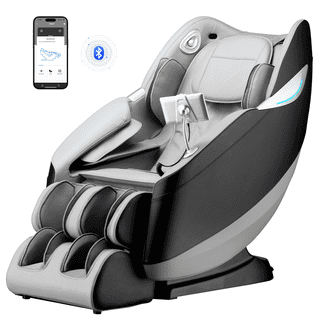
Credit: walmart.com
Roller mechanism and movement
Massage chairs may use different roller systems and movement patterns. The rollers can travel up and down the track, move side to side, protrude outward, or combine these movements depending on the chair’s design. These motions influence whether the chair feels like broad rolling, localized kneading, tapping, stretching, or a combination of techniques.
A long track with limited roller movement may provide broad coverage but less targeted sensation. Conversely, a shorter track with effective width adjustment and body scanning may feel more accurate in the upper back. Look at the available manual controls as well as the automated programs.
Body scanning and shoulder detection
Many massage chairs use sensors or programmed detection routines to estimate shoulder position and body shape before starting. This matters because the upper back is not the same height for every user, and the lumbar curve varies as well.
A body scan can help place the rollers more appropriately, but it is not perfect. The ability to make manual adjustments is valuable, particularly in households where several people use the same chair. If a chair consistently places rollers on the neck, too low on the shoulders, or too far from the lower back, its track length will not solve the fit issue.
Air compression is separate from roller coverage
Airbags or air cells may massage the shoulders, arms, hips, calves, and feet through gentle squeezing or compression. These components can complement the work of the rollers, especially around areas the roller assembly cannot reach directly.
For example, a chair may use its SL track to massage the back and glutes while hip airbags hold the pelvis in place or add side-to-side compression. This can make a program feel more enveloping, but it is a different sensation from direct roller massage.
Heat and vibration have different roles
Heat and vibration are often included in massage chairs, but neither expands roller coverage. Heat may add warmth to a selected area, while vibration creates surface-level movement through the seat or backrest. Some people enjoy these features as part of a relaxation routine; others prefer to leave them off.
It is best to view them as optional comfort features rather than evidence that a chair provides a deeper or more comprehensive massage.
Why Recline Position Matters With an SL Track
Recline changes how your weight rests against the rollers. In a more upright position, your body may press more firmly into the backrest and seat. In a deeper recline, pressure may spread more evenly, and the lower-back-to-glute transition can feel less abrupt.
Many massage chair owners use a reclined or near-zero-gravity position when they want a gentler, more supported session. In this posture, the chair can distribute body weight across the backrest and seat while elevating the legs. The experience varies by chair and user, but recline is often one of the most effective ways to change perceived roller intensity without altering the program.
Before choosing a chair, consider how much room it needs behind and in front of it. Some recliners slide forward as they recline, while others require substantial wall clearance. An SL track does not necessarily make a chair larger, but chairs with extended tracks are often substantial pieces of furniture with significant depth and weight.
Who Benefits Most From Extended Roller Coverage?
A massage chair with SL track design may be a sensible choice for users who value a massage that continues beyond the lower back. It can be especially appealing if you dislike chairs that stop at the waist or rely only on vibration beneath the seat.
- People who sit for long periods: Extended coverage may feel more complete after desk work, driving, or other seated routines.
- Users who prefer glute massage: Roller-based seat coverage can feel more focused than basic seat vibration.
- People seeking a full-body relaxation routine: An SL track pairs naturally with leg massage, recline, and air compression features.
- Households with varied preferences: A chair with adjustable roller intensity and manual positioning can offer more flexibility across users.
- Buyers replacing a basic back-only massage chair: The added lower-body reach can be a noticeable upgrade in coverage.
It may be less important for someone who only wants light upper-back massage or has limited space and prefers a smaller chair. In those situations, a compact chair with a shorter track and good upper-body adjustment may be the more practical choice.
Fit Matters More Than the Longest Track
Longer roller travel is useful only if the chair fits your frame. The headrest, shoulder area, seat depth, leg rest, and lower-back contour all influence where your body sits relative to the track.
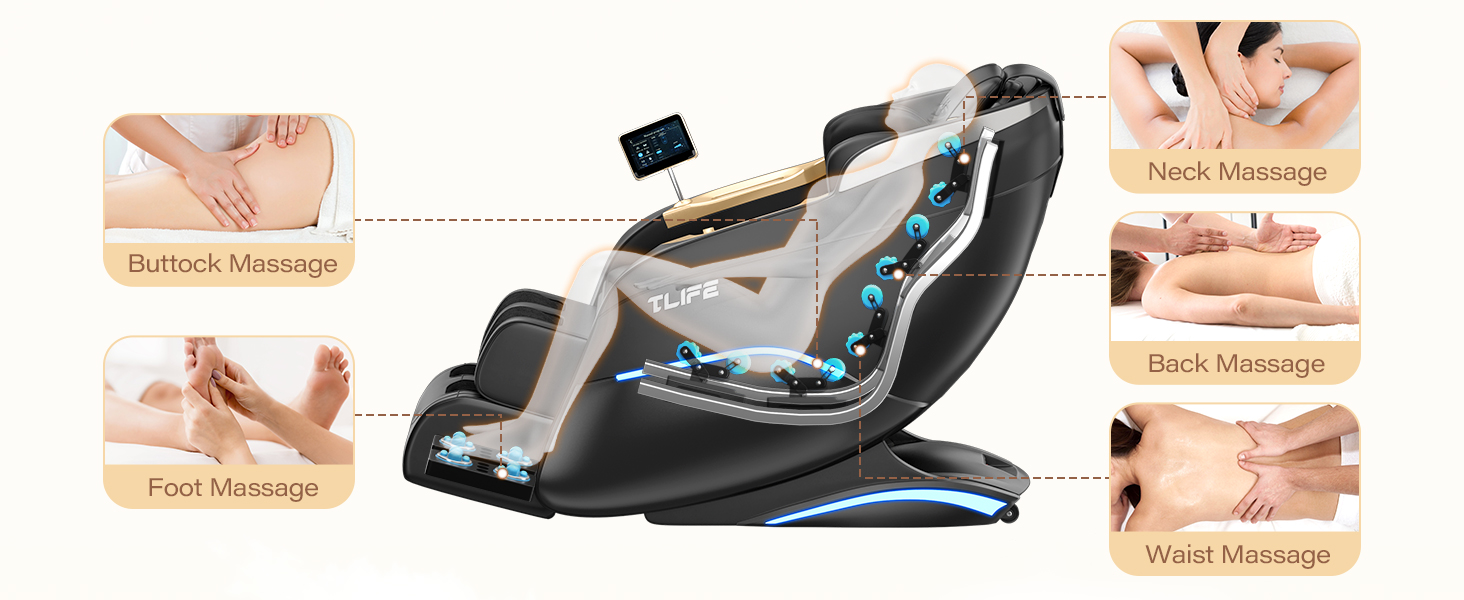
Credit: amazon.com
Check the recommended user height range
Manufacturers often provide an approximate height range, but it should be treated as a starting point rather than a guarantee. Torso length matters as much as total height. Two people of the same height can have different shoulder positions and leg lengths.
If possible, sit in the chair before buying. Run a program that travels from the neck through the seat, then assess whether the rollers reach the shoulders, follow the lower back comfortably, and contact the glutes where you expect. If an in-person trial is not possible, review the return policy carefully and look for clear adjustment information from the manufacturer.
Consider seat width and hip comfort
An SL track chair may have side airbags, fixed arm channels, or a shaped seat that affects usable width. A snug seat can improve the positioning of airbags for some users, but it may feel restrictive for others. The chair should allow you to sit naturally without excessive pressure at the hips or outer thighs.
Also consider the seat’s cushioning. Rollers beneath a thinly padded seat may feel more intense. This is not inherently good or bad; it depends on your preferences and the amount of adjustment available.
Leg-rest range affects the overall experience
Although it is separate from the track, the leg rest affects your position in the chair. If the ottoman is too short or does not extend far enough, taller users may slide down or sit differently, changing contact with the back and seat rollers.
Look for a leg section that accommodates your lower-leg length and supports the calves without forcing the knees into an awkward bend.
How to Evaluate an SL Track Massage Chair Before Buying
Rather than comparing track labels alone, use the chair’s complete design to judge whether the coverage will suit your needs.
- Confirm the roller endpoints. Find out whether the rollers stop at the tailbone, glutes, or upper thighs. Product images can be helpful, but written specifications and manuals are usually more reliable.
- Check the massage zones. Look for independent back, lower-back, seat, or glute settings if you want control over extended-track coverage.
- Review intensity controls. Roller depth, speed, width, air pressure, and massage duration can affect comfort more than track length does.
- Assess body-fit features. Prioritize body scanning, shoulder adjustment, leg extension, seat dimensions, and stated user fit guidance.
- Measure the room. Account for the chair’s upright footprint, reclined footprint, doorways, turning space, and the route needed for delivery.
- Look at practical ownership details. Consider upholstery care, remote usability, warranty terms, service availability, and whether the chair can be moved safely if needed.
Common Misconceptions About SL Tracks
“An SL track massages the entire body.”
No roller track massages the entire body. An SL track expands coverage from the back into the seat area, but the arms, calves, feet, and head require separate systems or are not directly massaged at all. “Full body” is often a broad marketing description that can include rollers, airbags, vibration, heat, and recline.
“A longer track is always more intense.”
Track length and intensity are different factors. A chair can have a long path with gentle rollers, or a shorter path with firm, focused pressure. Intensity depends on the mechanism, padding, recline, settings, and how your body contacts the chair.
“Glute rollers are the same as hip airbags.”
They create different sensations. Rollers move along the track beneath or behind the body, while airbags compress from the sides or surrounding panels. Some people prefer one method; others enjoy the combination.
“An SL track can address a medical problem.”
A massage chair is primarily a comfort and relaxation product. It should not be viewed as a replacement for medical evaluation, diagnosis, or treatment. Anyone with persistent pain, recent injury, circulation concerns, pregnancy-related questions, implanted medical devices, or other health considerations should seek guidance from an appropriate healthcare professional before using a massage chair.
Using Extended Coverage Comfortably
Start conservatively when using a new chair, especially if you are unfamiliar with roller massage beneath the lower back and glutes. Choose a shorter program or lower intensity, then adjust gradually based on comfort.
- Use the chair’s body scan or shoulder adjustment before beginning.
- Try a reclined position if the seat rollers feel too strong upright.
- Reduce roller intensity or add the manufacturer-provided padding if available.
- Select a localized program when you want to focus on a specific region rather than running a long full-body routine.
- Stop if the massage feels painful, causes numbness, or leaves you uncomfortable afterward.
Routine care also protects the chair’s performance. Keep the track area and moving joints free from objects, follow the manufacturer’s cleaning instructions for the upholstery, and avoid allowing children or pets near moving components during operation. Do not attempt to disassemble the roller mechanism or electrical components yourself.
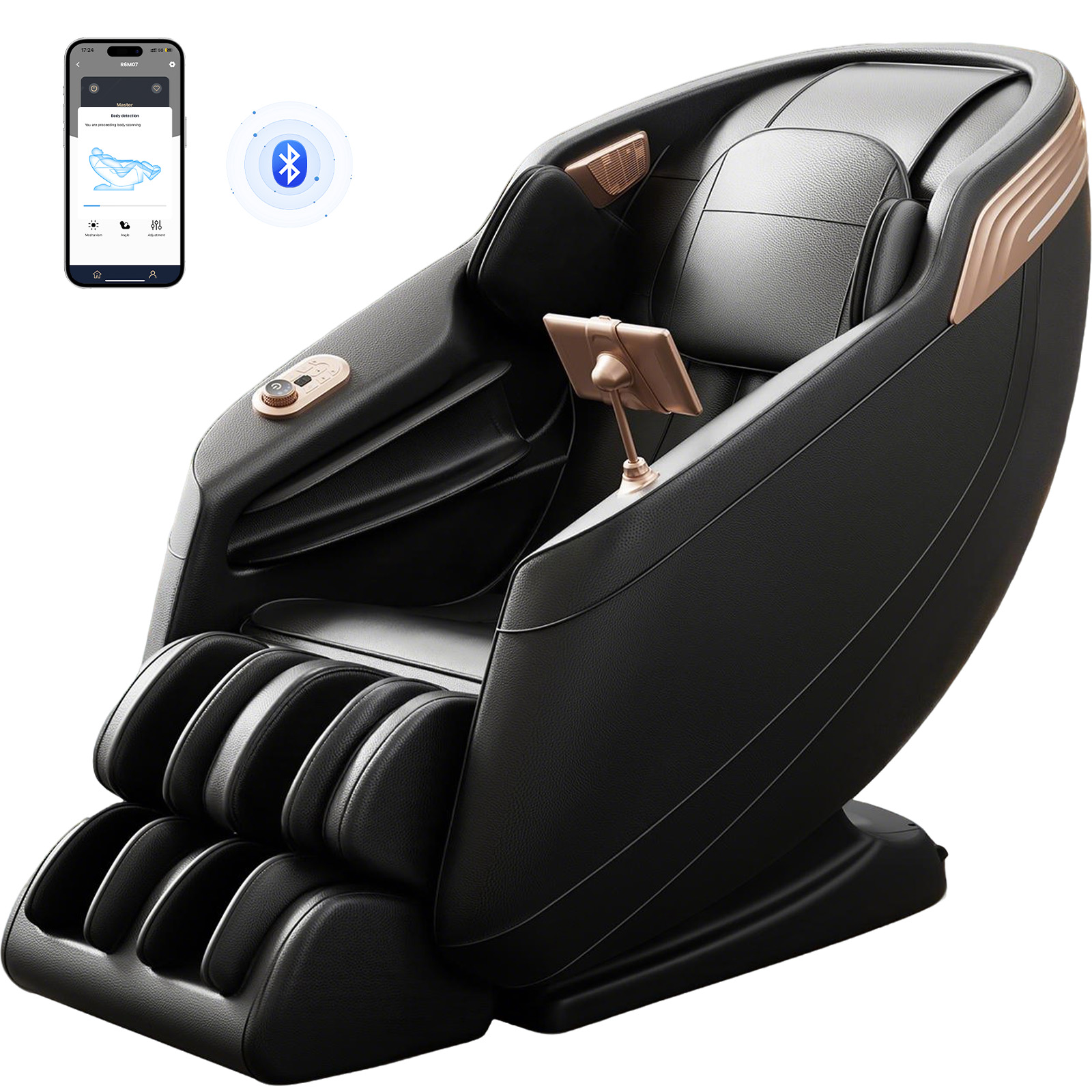
Credit: walmart.com
FAQ
Is an SL track better than an S track?
Neither is universally better. An SL track is usually preferable when you want roller massage that continues into the glutes or upper seat area. An S track can be a good fit when upper- and lower-back coverage is the main priority and a smaller or simpler chair better suits the room and budget.
How far down do SL track rollers usually go?
They commonly travel from the upper back into the glute area, but the exact endpoint differs by chair. Some extend slightly below the glutes, while others stop higher in the seat. Check the specific model’s roller range rather than relying on the SL label alone.
Can a shorter person use a massage chair with an SL track?
Yes, provided the chair supports their shoulder height and leg length. Shorter users should pay particular attention to body scanning, manual shoulder adjustment, seat depth, and whether the leg rest can position comfortably without forcing them to slide forward.
Do SL track chairs need more room behind them?
Not because of the track itself. Space needs depend mainly on the chair’s recline mechanism and overall dimensions. A forward-sliding recline design may work closer to a wall than a conventional recliner, but you should always use the manufacturer’s stated clearance requirements.
Can I use the glute massage function every day?
For many people, a moderate comfort-focused session may be part of a regular routine if it feels comfortable and the manufacturer permits it. Avoid overly intense or prolonged use, and stop if you experience pain, tingling, numbness, or worsening discomfort.