
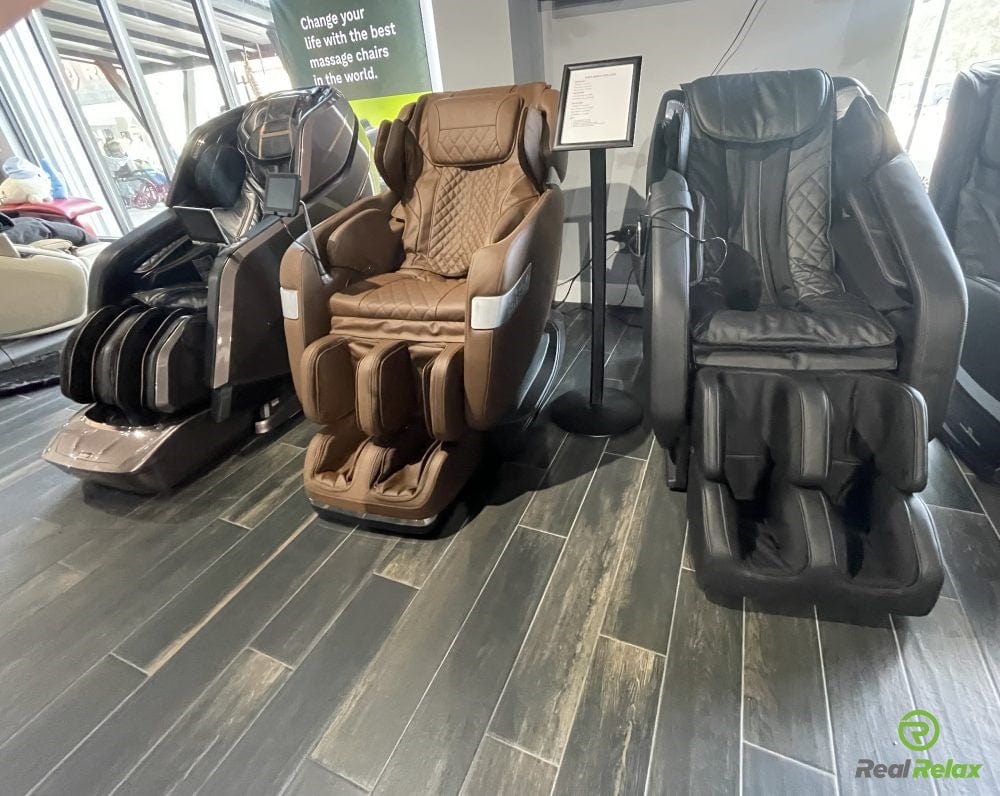
A used massage chair can be a practical way to access features that may be out of reach at full retail price. It can also be a costly mistake if the rollers, recline system, airbags, controls, or upholstery are already near the end of their useful life.
The key is to inspect the chair as a working machine rather than as a piece of furniture. A clean exterior and a low asking price do not tell you whether the massage mechanism tracks smoothly, whether the motors are straining, or whether replacement parts are still available.
Before buying a used massage chair, verify its identity, test every major function in person when possible, inspect its condition closely, and calculate the true cost of getting it home and keeping it operational. This guide explains what deserves the closest attention.
Start With the Exact Model and Its History
Do not inspect a chair until you know precisely what it is. Massage chairs can look similar across different model years, but their features, repairability, manuals, and parts availability may vary substantially.
Find the model number and manufacturing information
Look for a label on the rear frame, underside of the chair, or near the power connection. Ask the seller for a clear photo if you are viewing the listing remotely. The label may include the model name, model number, serial number, electrical rating, and manufacturing date.
Use that information to locate the manufacturer’s manual and product page. This helps you confirm what the chair was designed to do. For example, a seller may describe a chair as having foot rollers, zero-gravity recline, heat, or full-body stretching when those functions were never included on that model.
Knowing the exact model also lets you check whether the brand still supports it. Older chairs may be perfectly usable, but a failed remote, power board, upholstery panel, or air pump can be difficult to replace if parts are discontinued.
Ask why the chair is being sold
The answer is not proof of condition, but it can reveal useful context. A chair sold because of a move, downsizing, or lack of use may be a better prospect than one described vaguely as “needs a small fix.” Ask direct follow-up questions:
- When was the chair purchased, and was it bought new or previously owned?
- How often was it used?
- Has it ever been repaired, serviced, or modified?
- Are any functions currently unavailable or intermittent?
- Has it been kept in a smoke-free and pet-free environment?
- Is the original remote, power cord, manual, and accessory set included?
- Has it been stored in a garage, basement, storage unit, or other unconditioned space?
A seller who can demonstrate the chair, explain its ownership history, and identify known issues is generally easier to assess than one who provides only stock photos or insists that the chair cannot be tested.
Inspect the Massage Mechanism Before Anything Else
The internal massage mechanism is the most important part of a massage chair used purchase. Cosmetic wear is often manageable; a failing roller track, motor, gearbox, or control board may make the chair impractical to repair.
Run a complete massage program
Ask to run at least one automatic program from start to finish. Then test key functions manually if the remote permits. Sit in the chair during the test, because some faults only become apparent under body weight.
Listen for changes in sound as the rollers move from the neck and shoulders toward the lower back. A normal chair will make mechanical noise, but it should sound consistent. Pay attention to loud grinding, metallic clicking, repeated knocking, squealing, or a motor that seems to labor or stop unexpectedly.
Watch for the rollers to travel smoothly along the backrest. They should not jerk, pause without reason, become stuck in one area, or return to the wrong position. Also test more than one massage style where available, such as kneading, tapping, rolling, or shiatsu-style movements. A chair may power on and still have a weak or incomplete mechanism.
Check roller alignment and body scanning
Many massage chairs perform a body scan before beginning a program. The chair should identify a sensible shoulder position and allow adjustment if the controls offer it. If the rollers start far above the shoulders, press painfully into the neck, or stop too low on the back, the issue could be an incorrect setting, a body-fit limitation, or a mechanism fault.
Remember that not every chair fits every body. A fully working chair may still be a poor choice if you are much taller, shorter, broader, or lighter than the person for whom it was designed. Test the chair in the same general posture you expect to use at home.
Assess roller pressure, not just movement
Rollers should provide noticeable but controlled pressure at their normal intensity setting. Weak massage can result from a low setting, a thick removable pad, or an adjustment issue. It can also point to worn components or a mechanism that no longer moves through its intended range.
Remove or fold back any manufacturer-designed head pillow or back pad only if the chair’s instructions allow it. Do not assume a thin massage feel is a defect until you have checked the settings. Conversely, do not accept harsh, uneven pressure as normal wear if it feels sharp, lopsided, or mechanically erratic.
Test Airbags, Foot Massage, Heat, and Other Features
A used massage chair may have several systems beyond its back rollers. Test each advertised feature separately. It is common for a seller to demonstrate one automatic routine while avoiding functions that are slow, noisy, or no longer working.
| Feature to test | What normal operation generally looks like | Warning signs |
|---|---|---|
| Air compression | Airbags inflate and release in a controlled sequence around the shoulders, arms, calves, or feet. | One side does not inflate, pressure leaks away quickly, inflation is painfully uneven, or the pump makes excessive noise. |
| Foot and calf unit | The ottoman extends, retracts, and adjusts smoothly; foot rollers or nodes operate consistently if included. | Sticking tracks, a loose footrest, broken covers, painful exposed parts, or rollers that work on only one side. |
| Recline and zero-gravity position | The chair reclines and returns at a steady speed without abrupt movement. | Jerking, loud strain, a seat that drifts downward, failure to hold position, or interference with nearby walls. |
| Heat | Heat feels mild and gradual in the listed zones after several minutes. | No warmth, a burning smell, hot spots, damaged wiring, or heat that cannot be switched off. |
| Stretch or twist programs | Airbags and recline movements work in a coordinated, controlled pattern. | Sudden pulling, incomplete movement, severe asymmetry, or a program that stops and displays an error. |
| Speakers, USB ports, lights, and extras | Optional features operate as described. | Loose ports, crackling audio, broken housings, or missing adapters. |
Features such as Bluetooth audio, ambient lighting, wireless charging, and USB charging may not determine whether the chair can still massage effectively. Still, they affect value. Include nonworking extras in your price calculation rather than treating them as irrelevant.
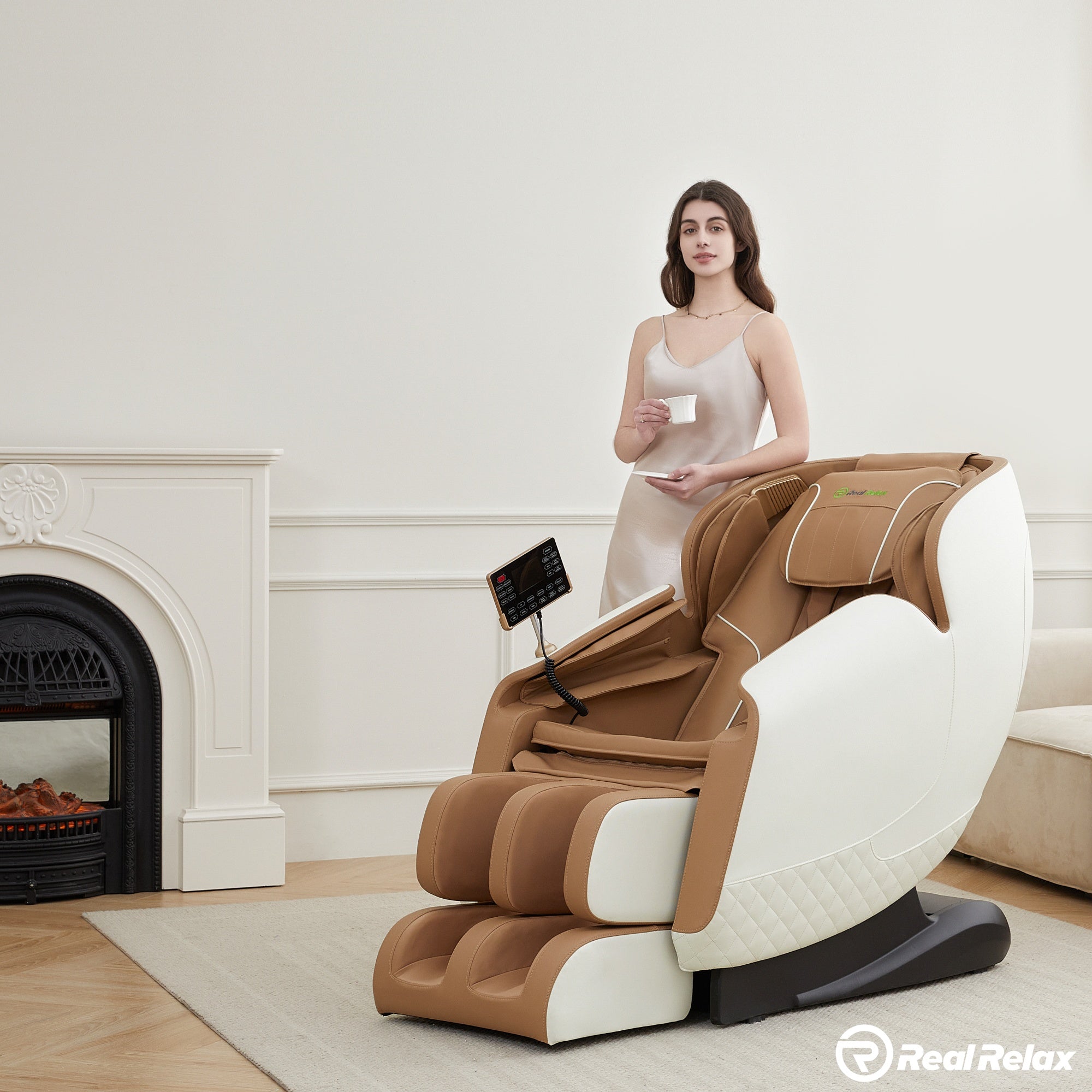
Credit: realrelaxmall.com
Do not overlook the remote control
The remote is often essential, especially on chairs that use a proprietary wired controller. Confirm that every button responds, the display is readable, and the cable has no splits, kinks, or loose connection points. Test the pause, stop, recline, intensity, massage-position, and program controls.
A missing remote is not always a deal-breaker, but do not assume a universal replacement will work. Some chairs require a model-specific controller, and availability may be limited for discontinued models.
Examine the Chair’s Frame, Upholstery, and Moving Parts
Physical wear tells you how the chair has been used and whether it has been stored appropriately. Focus on high-stress areas rather than minor surface marks alone.
Inspect upholstery closely
Look at the seat, armrests, headrest, calf area, footwells, and hinge points under bright light. Peeling synthetic leather is common on older massage chairs, particularly where skin, sweat, friction, and heat are concentrated. Small cosmetic cracks may be tolerable, but widespread flaking can continue quickly and is difficult to restore neatly.
Check seams for separation, loose stitching, tears, and stretched panels. Press gently around padded areas to identify flattened foam, hardened cushioning, or sharp internal components. A cover can hide wear, but it cannot correct a broken internal frame or damaged airbag compartment.
Check the structural base and joints
With the chair upright and unoccupied, inspect the base, side panels, footrest supports, and recline joints. Then sit down and shift your weight carefully. The chair should feel stable, without excessive rocking, creaking, or side-to-side movement.
Look for cracked plastic housings, bent metal, missing fasteners, or signs that a panel has been removed repeatedly. A few visible screws are normal on many designs. Mismatched hardware, stripped screw holes, tape, glued sections, or improvised brackets deserve more scrutiny.
Look underneath and behind the chair
The least visible areas often reveal the most. Check for dust buildup around vents, corrosion, insect activity, moisture stains, rodent damage, or frayed wires. Chairs kept in damp storage can develop electrical and mechanical problems that are not obvious during a short test.
Do not remove safety covers or reach into moving mechanisms. A visual inspection from the outside is enough to identify obvious concerns. If you see exposed wiring, melted plastic, scorched areas, or fluid damage, walk away unless a qualified technician has inspected and repaired the chair.
Verify Electrical Safety and Power Operation
Massage chairs combine motors, electronics, heating elements, and moving components. Treat electrical defects as a serious issue, not a minor inconvenience.
Before testing, inspect the power cord and plug for cuts, flattening, exposed wire, discoloration, or loose prongs. Confirm that the chair is plugged into a suitable grounded outlet as directed by its manufacturer. Avoid buying a chair that only works when the cord is held in a certain position or when connected through an unidentified adapter.
During operation, watch for flickering displays, repeated resets, unexpected shutoffs, burning odors, sparking, or an electrical buzzing sound that changes unpredictably. Switch the chair off and disconnect power if any of these occur.
Also confirm that the chair powers down properly. A chair that cannot return to its upright position after a session may be difficult to move, inspect, or use safely in a home with limited space.
Consider Hygiene, Allergens, and Household Conditions
Because a massage chair supports the head, neck, hands, legs, and feet, cleaning condition matters more than it does for some other used furniture. Surface dirt may be removable, but odors and allergens can be harder to resolve.
Smell the chair before sitting in it. Persistent cigarette smoke, mildew, pet odor, or strong fragrance can be difficult to remove from foam, fabric, seams, and internal air passages. Be cautious with a heavily scented chair, since fragrance may be masking another odor.
Ask whether pets had access to the chair and whether it was used with shoes on. Inspect foot compartments carefully for debris, damaged liners, and stains. If the chair uses removable fabric pads or washable covers, confirm that those components are present and in usable condition.
For routine cleaning after purchase, follow the manufacturer’s instructions for the upholstery material. Harsh solvents, excessive water, and unapproved cleaners can damage synthetic leather, discolor fabric, or reach electrical components. Unplug the chair before cleaning it, and never spray liquid directly into controls, seams, vents, or moving sections.
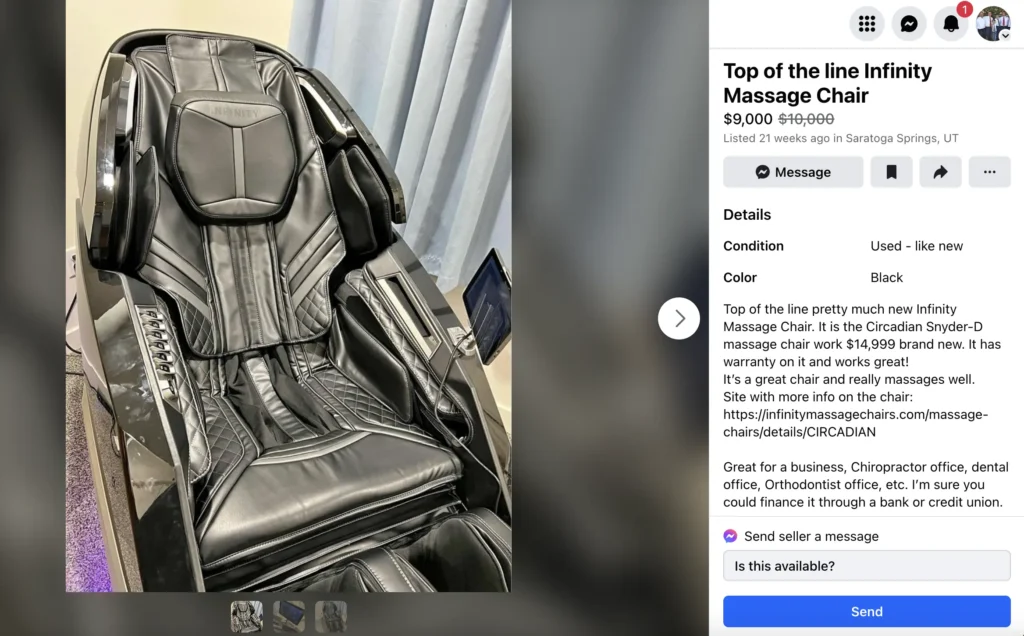
Credit: massage-chair-relief.com
Measure Your Home Before You Commit
A chair that works well at the seller’s home may not fit through your doorway, around a stair landing, or in the space where you intend to use it. This is a frequent and expensive oversight with used massage chairs because many are bulky, heavy, and awkward to carry.
Measure more than the upright footprint
Get the chair’s width, depth, and height in its upright position. Then find out how far it extends when fully reclined and when the footrest is open. Some designs slide forward as they recline, while others require substantial clearance behind the backrest.
Measure your intended room location, doorways, hallways, turns, elevator interior, stair width, and ceiling clearance where relevant. If the chair can be partially disassembled for delivery, confirm exactly which pieces come off and whether reassembly requires special tools or a technician.
Plan for delivery, not just pickup
Moving a massage chair is rarely a one-person task. It may require professional movers familiar with heavy furniture, stair carries, or tight access routes. Delivery costs can change whether an apparent bargain remains worthwhile.
Ask who is responsible for loading, transport damage, setup, and removal of any existing furniture. A private seller may offer curbside pickup only. If a chair is damaged during a do-it-yourself move, manufacturer support or a repair company may not cover the issue.
Check Fit, Comfort, and Practical Use
A massage chair can be mechanically sound but still unsuitable for your body or routine. Spend enough time in it to evaluate its fit rather than judging it from a quick sit-down.
- Make sure the headrest and shoulder area accommodate your height comfortably.
- Check whether your feet fit naturally in the footwell without crowding or overreaching.
- Test arm compartments for width, pressure, and ease of entry and exit.
- Confirm that the seat does not force your hips into an uncomfortable position.
- Try several intensity levels and massage zones.
- Consider whether household members who will use it have different height or mobility needs.
Massage chairs are intended for comfort and relaxation, but they are not a substitute for medical assessment or treatment. People who are pregnant, have implanted medical devices, have a recent injury or surgery, use blood-thinning medication, or have a health condition that could be affected by vigorous pressure should seek appropriate medical advice before use. The same caution applies if massage causes pain, numbness, dizziness, or other concerning symptoms.
Work Out a Fair Price Based on Risk, Not the Original Retail Price
A seller may emphasize what the chair cost when new, but that is not the most useful benchmark. The current value of a used massage chair depends on its working condition, age, brand support, cosmetic state, included accessories, local demand, and the cost of moving it.
Compare the asking price with current prices for similar working chairs in your area, not only with the original retail price. Then account for pickup, delivery, cleaning supplies, possible upholstery repairs, and the risk of future service. A very low price may be reasonable if the chair has light cosmetic wear and every function works. It may be poor value if a remote is missing, a recline motor is unreliable, or parts are unavailable.
When to walk away
Some problems are not worth accepting unless you have verified repair options and the price reflects the risk. Consider passing on the chair if you find any of the following:
- The seller will not allow a full power-on test.
- The chair has exposed wiring, burning smells, overheating, or signs of water damage.
- Rollers grind, stick, move unevenly, or fail to travel through the backrest.
- The recline system will not hold position or the footrest is structurally loose.
- There are major cracks in the frame or substantial instability under weight.
- Strong mildew, smoke, or pet odors remain after reasonable airing out.
- The chair is too large for your access route or intended room.
- The seller cannot identify the model and no compatible manual, remote, or parts source can be found.
Make the Final Decision After a Full Test
The best used massage chair is not necessarily the newest-looking one or the model with the longest feature list. It is the chair that fits your body and room, performs every function you expect to use, has no significant electrical or mechanical warning signs, and can be transported without turning the purchase into an unexpected expense.
Take your time during the inspection. A seller who wants a fair transaction should be willing to let you check the controls, run a complete program, inspect the upholstery, and measure the chair. If important questions cannot be answered or the chair cannot be tested, price the uncertainty as a serious risk—or choose another option.

Credit: furnitureforlife.com
Frequently Asked Questions
Is it safe to buy a massage chair that is several years old?
Age alone does not make a chair unsafe or unusable. Condition, storage history, frequency of use, electrical integrity, and parts availability matter more. An older chair that runs smoothly and has been well maintained can be a better buy than a newer chair with heavy use or water damage.
Can a massage chair be repaired if the rollers stop working?
Sometimes, but repair depends on the cause and whether compatible parts are available. A fault may involve the roller motor, track, sensor, gearbox, wiring, remote, or control board. Obtain the exact model number and ask an authorized service provider or qualified repair technician whether diagnosis and parts are still available before purchasing.
Should I buy a used massage chair without the original manual?
It can be acceptable if the chair is fully functional and you can locate the correct manual from the manufacturer or a reliable source. However, the manual is especially useful for understanding weight limits, cleaning instructions, clearance requirements, reset procedures, and safe operation. Missing documentation should make you more careful, not less.
How can I tell whether a massage chair will fit through my door?
Measure the narrowest point of every doorway, hallway, turn, stairway, and elevator involved in delivery. Compare those measurements with the chair’s packaged or disassembled dimensions if available, not only its assembled width. Ask whether the arm panels, footrest, or backrest can be removed and whether that work should be done by a technician.
Is professional cleaning necessary after buying a used massage chair?
Professional cleaning is not always necessary, but it may be worthwhile if the upholstery is fabric, odors are present, or the chair came from a home with pets or smoke exposure. For light surface cleaning, use only methods approved by the manufacturer. Avoid soaking the chair or applying cleaners near seams, vents, controls, and electrical components.