
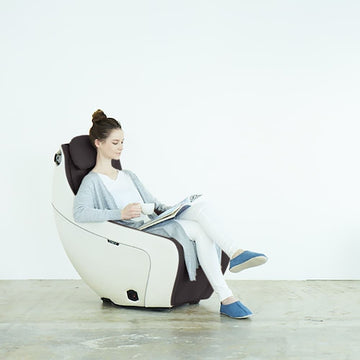
A compact massage chair can make daily relaxation more practical when a full-size model would overwhelm the room. The best space-conscious designs reduce their footprint through features such as wall-hugging recline, shorter chair bodies, and integrated controls, but “compact” does not mean every model will fit every space.
Before choosing one, it helps to look beyond the chair’s upright width. You also need to account for its reclined position, clearance around the sides, access to power, delivery path, and the body-size range it can accommodate comfortably. A chair that fits neatly against a wall but blocks a walkway when reclined may not be the space-saving solution it first appears to be.
This guide explains how compact massage chairs save room, which dimensions matter most, and how to plan a comfortable installation without sacrificing the features you actually want.
What Makes a Massage Chair Compact?
A compact massage chair is designed to occupy less usable floor area than a conventional massage chair, especially in smaller rooms, apartments, bedrooms, offices, and multipurpose living spaces. Its compactness may come from the chair’s overall dimensions, its reclining mechanism, or both.
Manufacturers do not use one universal definition for “compact,” so product labels alone are not enough. A chair marketed as compact may be narrow but still extend far forward when reclining. Another may have a larger upright frame but need very little space behind it. The usable footprint matters more than the marketing category.
Most compact massage chairs use one or more of the following design approaches:
- Wall-hugging or space-saving recline: The chair shifts forward as it reclines, reducing the clearance needed behind the backrest.
- Shorter overall length: A shorter seat base or foot section can reduce how far the chair projects into the room.
- Narrower arm sections: Slimmer airbag compartments and armrests can make the chair easier to place beside furniture or within a tighter layout.
- Built-in controls: A fixed remote panel or armrest controller avoids the need for a separate control stand beside the chair.
- Retractable or adjustable footrest: This can make the chair more suitable for users of different heights while limiting its size when not in use.
- Simplified massage systems: Some smaller chairs use fewer air cells, a shorter roller track, or fewer large components to keep the frame manageable.
Compact designs can be highly capable, but there are trade-offs. A smaller frame may have a more limited fit range, less extensive calf and foot coverage, or fewer adjustment options than a larger premium chair. The goal is not to buy the smallest possible chair; it is to buy one that fits both the room and the intended user.
The Dimensions That Matter Before You Buy
Looking at the product’s width, height, and depth is a useful starting point, but those measurements only describe the chair in one position. For a realistic fit assessment, consider the chair’s dimensions upright, fully reclined, and during entry and exit.
Upright footprint
The upright footprint is the amount of floor space the chair occupies while not in use. This is usually the most relevant measurement for a chair placed in a bedroom corner, home office, or living room.
Measure the intended area from wall to wall and account for nearby furniture. Leave room to walk around the chair, open doors, access storage, and reach windows or outlets. If the chair will sit near a sofa or desk, consider whether its armrests will collide with other furniture when people move through the room.
Reclined depth
Reclined depth is often the deciding measurement. A massage chair may fit comfortably in an upright position but extend substantially into the room when its backrest and leg section are fully deployed.
Check whether the listed reclined length includes the extended footrest. If product information is unclear, ask the retailer or manufacturer for the total floor depth required in the most reclined position. This is especially important for chairs with long ottomans, calf compartments, or separate leg-rest mechanisms.
Rear wall clearance
Rear clearance is the empty space required between the back of the chair and the wall. Traditional recliners often need significant room behind them. By contrast, a space saving massage chair with a wall-hugging mechanism may need only a small gap because the seat slides forward as the backrest reclines.
Do not assume “zero wall” means the chair can touch the wall. It may still need enough room for ventilation, fabric movement, cables, and safe operation. Follow the manufacturer’s installation guidance for the specific model.
Width and side clearance
Width affects more than whether the chair fits between two walls. Massage chairs can become wider during operation if arm airbags inflate outward or if armrests have moving parts. Side clearance also makes cleaning easier and gives users a safer path when getting in or out.
Measure the narrowest part of the available space, not just the widest. Baseboards, radiators, shelving, end tables, and door trim can reduce the usable width.
Height and overhead clearance
Chair height matters when placing a model under shelves, angled ceilings, wall cabinets, or low windowsills. While a reclining chair usually moves backward and downward rather than upward, headrest movement and the person’s head position can still affect overhead clearance.
Delivery-path dimensions
A chair can fit perfectly in its final location yet fail to fit through the front door, elevator, hallway, stairwell, or bedroom doorway. Check the packaged dimensions as well as the assembled dimensions. Some models arrive partly assembled, while others have removable side panels or leg sections that make installation easier.
Measure tight turns, not just door widths. A bulky chair box may need to rotate around a corner, and stair landings can be more restrictive than a straight hallway.
How Wall-Hugging Recline Saves Space
Wall-hugging recline is one of the most useful features in compact massage chairs. Instead of reclining straight backward from a fixed base, the chair’s seat assembly moves forward as the backrest lowers. This motion reduces the amount of empty space needed behind the chair.
The practical advantage is placement flexibility. A wall-hugging model may work in a bedroom, den, or apartment living room where a conventional chair would have to sit much farther into the room.
However, reduced rear clearance does not eliminate the need to plan for forward extension. As the chair reclines, its front section may still require considerable floor space. The room must accommodate the entire reclined shape without blocking:
- Main walkways and door swings
- Cabinet drawers and closet doors
- TV stands or coffee tables
- Pet routes and children’s play areas
- Emergency access through hallways or exits
Wall-hugging recline is most valuable when the room is shallow from front to back. It is less helpful if the main limitation is a narrow alcove or a tight passage beside the chair.

Credit: bedroomsandmore.com
Measure Your Room Before Ordering
A simple floor plan prevents many disappointing purchases. You do not need design software; a tape measure, painter’s tape, and a rough sketch are enough.
- Identify the exact placement area. Measure the width, depth, and height of the usable zone. Note trim, outlets, vents, windows, and nearby furniture.
- Mark the upright footprint. Use painter’s tape on the floor to outline the chair’s stated upright dimensions.
- Mark the fully reclined footprint. Extend the tape outline forward based on the chair’s maximum reclined depth, including the footrest.
- Add operating clearance. Leave practical space around the sides and front for entering, exiting, cleaning, and moving past the chair.
- Test the walking path. Walk around the taped area as if the chair were fully reclined. Check whether household traffic still feels natural.
- Check the delivery route. Measure doors, hallways, elevators, and turns from the entry point to the final room.
If the chair will be used near a desk, dining table, or sofa, test that room layout during normal daily activities. A compact chair should not require you to move furniture every time you want a massage session.
Compact Features That Matter Most in Small Rooms
Not every feature contributes equally to a smaller footprint. Prioritize the design elements that solve the specific space problem in your home.
Sliding or wall-hugging base
This is the priority feature for tight wall placement. It allows the chair to sit closer to a wall while still reclining, provided the manufacturer’s required gap is maintained.
Adjustable footrest length
A footrest that extends or adjusts can improve fit for different users while remaining less intrusive when the chair is upright. It is especially useful in shared households where users vary in height.
Keep in mind that an extending footrest still needs room in front of the chair. It improves body fit more than it eliminates reclined-depth requirements.
Space-efficient controls
Integrated buttons, armrest controls, or a remote that stores in a pocket can simplify placement. A freestanding remote pedestal may add width and become one more item to navigate around in a compact room.
Built-in wheels or manageable repositioning
Some chairs are easier to tilt and move for cleaning or occasional rearrangement. This can be useful in multipurpose rooms, although a massage chair is not usually something you will want to move daily. Check how the chair is intended to be moved; dragging it can damage flooring or the chair’s base.
Fold-away or concealed components
Some designs reduce visual bulk by tucking away the foot section or covering the massage mechanism when not in use. This may make a chair feel less dominant in a living room, even if the actual floor dimensions are similar.
Appropriate massage coverage
A compact chair should still meet your comfort priorities. Consider whether you want roller massage along the back, air compression around the shoulders and arms, calf massage, foot massage, heat, or reclining comfort. Smaller chairs may offer a more focused massage area than larger models, which can be perfectly suitable if your main need is back and shoulder relaxation.
Massage chairs are intended for comfort and relaxation. They are not a substitute for medical evaluation or treatment when pain, numbness, weakness, or other persistent symptoms are present.
Body Fit: A Smaller Chair Still Needs to Feel Comfortable
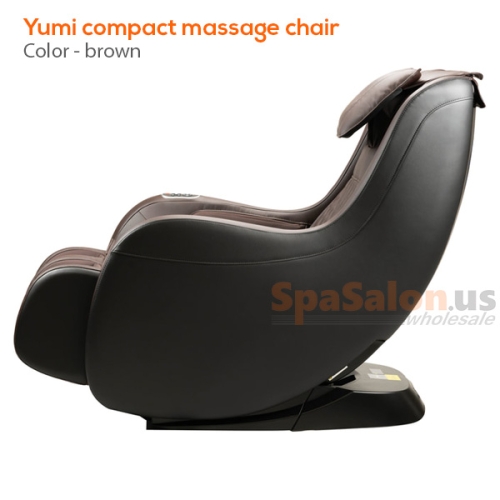
Space efficiency should not come at the expense of basic fit. A chair that is too narrow, too short, or poorly matched to your body can feel restrictive regardless of how well it fits the room.
Credit: spasalon.us
Seat width and shoulder room
Check the internal seating area rather than relying only on the chair’s outside width. Thick arm compartments can make a chair look wide while leaving a relatively narrow space for the user. Conversely, a slim external profile may feel cramped at the shoulders.
If the chair uses shoulder airbags or a fixed shoulder massage area, the fit should allow your shoulders to rest naturally without being squeezed or pushed forward.
Backrest and roller-track length
The roller track determines the areas of the back that the massage mechanism can reach. In compact models, the track may focus on the upper and lower back rather than extending farther down toward the glutes or thighs. That is not automatically a disadvantage, but it should match your expectations.
Consider whether the chair offers body scanning or manual massage-position adjustment. These features may help align the massage area with the user, though their effectiveness varies by design and individual body shape.
Leg and foot fit
Users with longer legs should pay close attention to the footrest. A fixed short ottoman can force the knees into an uncomfortable bend, while a footrest that extends too far may not support shorter users well. Adjustable leg sections are useful, but they should move smoothly and feel stable rather than leaving the legs unsupported.
Getting in and out safely
Compact seating areas can make entry and exit more awkward, particularly for people with limited mobility or balance concerns. Test the upright seat height if possible, and ensure there is clear floor space beside the chair. Avoid placing it where a user must step over a footrest, squeeze between furniture, or turn sharply in a narrow passage.
Where a Compact Massage Chair Works Best
Compact massage chairs are particularly useful where relaxation furniture needs to coexist with everyday living. The best location depends on when and how the chair will be used.
| Location | Why It Can Work | Planning Consideration |
|---|---|---|
| Bedroom | Offers privacy and a quieter setting for evening use. | Keep access clear around the bed, wardrobe, and door. |
| Living room corner | Convenient for regular use and can serve as an additional seat. | Check the reclined path against coffee tables and traffic routes. |
| Home office | Useful for breaks in a space already dedicated to comfort and productivity. | Make sure it does not interfere with desk-chair movement or storage. |
| Apartment den or multipurpose room | A wall-hugging design can preserve more open floor space. | Measure delivery access, elevator dimensions, and shared walkways. |
| Guest room | Can add a relaxation feature without permanently taking over the room. | Consider whether the chair must be moved when guests stay over. |
A corner is often a sensible location, but avoid trapping the chair so tightly that its recline mechanism, power cord, or side panels cannot be accessed. Also consider noise. Massage rollers, air pumps, and mechanical adjustments may be noticeable in quiet rooms or through shared walls.
Power, Flooring, and Maintenance in a Tight Setup
Small-room installation is not only about dimensions. A chair needs safe power access, a stable surface, and enough surrounding space for basic care.
Power placement
Use a nearby grounded wall outlet where possible. Do not stretch a cable across a walkway, under a rug, or where the reclining base could pinch it. If an extension solution is necessary, follow the chair manufacturer’s instructions and local electrical safety guidance rather than assuming any power strip will be suitable.
Plan cable routing before pushing the chair into position. A wall-hugging chair may move forward and back during use, so the cable needs enough slack to move safely without becoming tangled.
Floor protection
Massage chairs can be heavy and may concentrate weight at the base. On hardwood, vinyl, laminate, or softer flooring, a suitable protective mat may help reduce scuffs and pressure marks. Choose a mat that lies flat and does not interfere with the chair’s stability or moving parts.
On thick carpet, make sure the chair sits level. An uneven base can affect comfort and may make the chair feel less stable when reclining.
Cleaning access
Leave enough room to vacuum around the base and remove dust from vents or seams. Dust, pet hair, and clutter should not accumulate around mechanical components. Refer to the product manual for cleaning methods, especially for synthetic upholstery, leather, fabric, or removable covers.
Common Mistakes When Choosing a Space-Saving Massage Chair
- Measuring only the upright chair: The fully reclined position is usually the more important number.
- Assuming compact means lightweight: Many compact models are still heavy and difficult to move once installed.
- Ignoring the delivery path: A narrow doorway or staircase can create a problem before the chair reaches its room.
- Placing the chair too close to a wall: Even wall-hugging designs require the manufacturer’s recommended clearance.
- Focusing on exterior size alone: Internal seat width, shoulder fit, and footrest length affect everyday comfort.
- Blocking the chair with temporary furniture: Coffee tables, laundry baskets, pet beds, and storage bins can make recline inconvenient.
- Overlooking noise and privacy: A chair may fit physically in a room but not suit the household’s quiet hours or shared-wall layout.
Credit: massagechairstore.com
Choosing the Right Balance of Size, Features, and Comfort
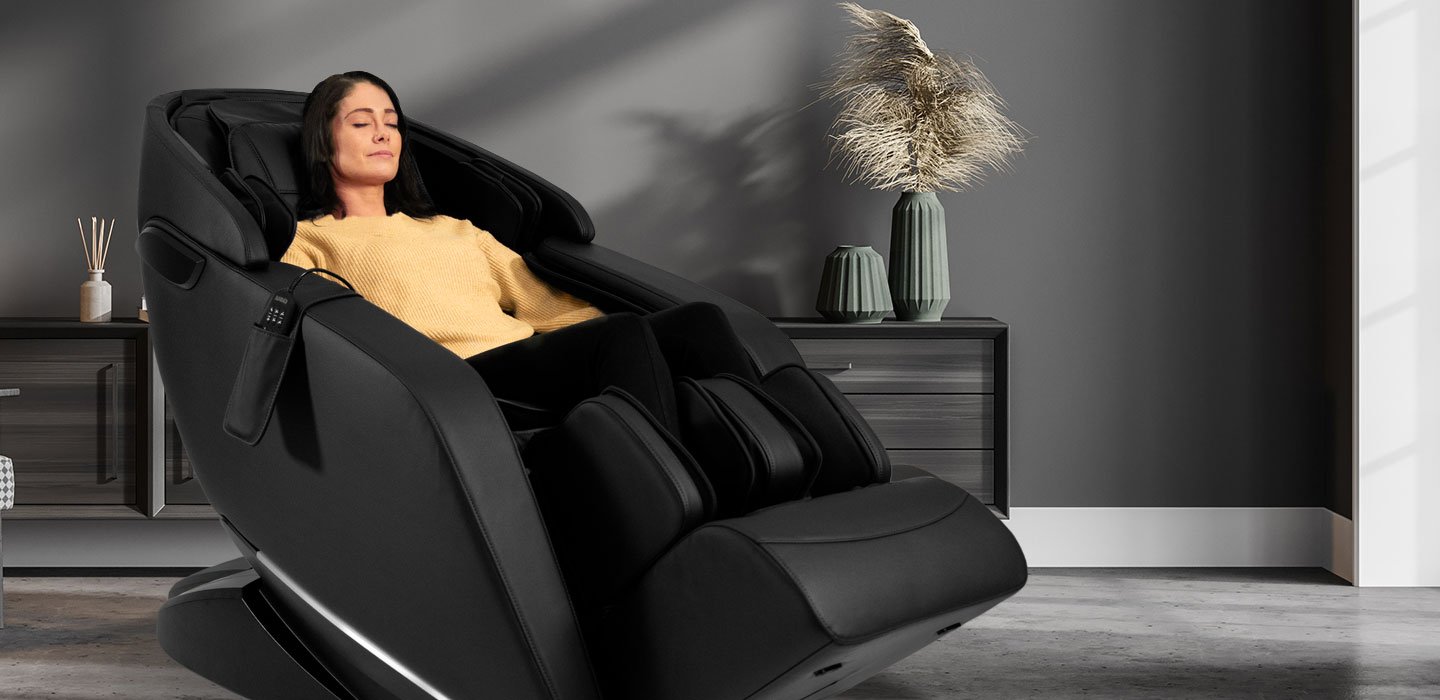
The right compact massage chair is one that fits the room in its fully reclined position, supports the main user comfortably, and delivers the massage functions you are likely to use. Start with the room’s maximum usable footprint, then narrow the options by recline clearance, delivery access, and body fit.
If wall space is limited, prioritize a genuine wall-hugging design. If forward floor space is limited, look closely at total reclined depth and footrest extension. If the chair will be shared, focus on adjustable leg support, shoulder fit, and controls that make everyday use straightforward.
Compactness is most valuable when it makes the chair easy to live with. A well-planned placement should let you enjoy a massage without rearranging the room, obstructing movement, or compromising comfort.
Frequently Asked Questions
Can a compact massage chair be placed on an upper floor?
It can, provided the chair can be delivered safely through the stairway or elevator and the floor is suitable for its weight. Check the manufacturer’s product weight and packaged dimensions, then consider building access and any delivery restrictions before ordering.
Do compact massage chairs have full-body massage?
Some do, but coverage varies widely. A compact model may include back rollers, air compression, calf massage, and foot massage, while others focus mainly on the back and seat. Review the listed massage zones rather than assuming “compact” or “full-body” describes the same level of coverage across brands.
Is a massage chair suitable for a small apartment living room?
Yes, especially if the layout has a clear wall section and enough open space in front for reclining. A wall-hugging model can be helpful, but you should still map its fully extended footprint and keep primary walkways clear.
How can I make a massage chair look less bulky in a room?
Choose upholstery and styling that work with existing furniture, place the chair against a visually quiet wall, and avoid crowding it with large side tables. A model with a concealed footrest or less prominent arm sections may also blend more easily into a shared living space.
Should I choose a compact chair if I am tall?
Possibly, but check the user-height guidance, shoulder positioning, roller-track reach, and footrest design carefully. Taller users often benefit from an adjustable or extending leg section, but the chair should still support the body naturally without forcing the knees, feet, or shoulders into an uncomfortable position.