
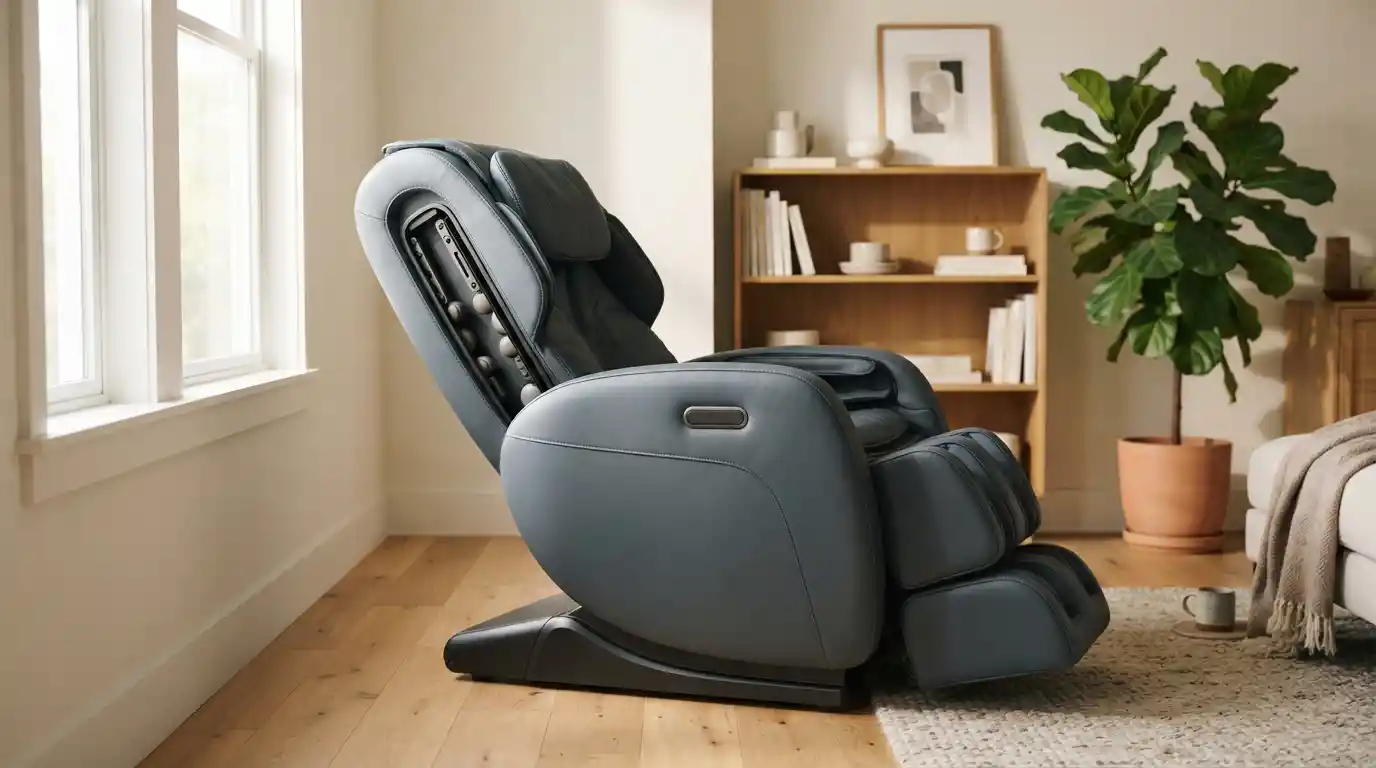
Are massage chairs worth it? They can be, but the answer depends less on whether massage feels good and more on how often you will use the chair, what kind of massage you prefer, how much space you have, and whether you are comfortable with the cost and upkeep.
A massage chair offers convenience that occasional spa visits, handheld massagers, and scheduled appointments cannot match: it is available at home whenever you have time. However, it is also a large, expensive piece of furniture with limits. Even advanced models cannot fully reproduce the judgment and hands-on work of a trained massage professional.
For someone who enjoys regular massage for relaxation, muscle comfort after long days, or a calming routine before bed, a well-chosen chair may provide meaningful value over time. For someone who only wants massage occasionally or has limited room, it may be difficult to justify.
The Short Answer: When a Massage Chair Is Worth It
A massage chair is usually worth buying when it will become part of your regular routine rather than an occasional novelty. The strongest case is for households where one or more people expect to use it several times a week and value the ability to relax without booking, traveling, or sharing a public space.
It is less likely to be worthwhile if you are mainly looking for a medical solution, need highly targeted treatment for an injury, dislike firm pressure, or do not have a practical place to put a large chair. Comfort is personal, and an expensive chair is not automatically a good fit for every body type or preference.
A massage chair may suit you if you:
- Want convenient massage at home on a frequent basis.
- Prefer a predictable routine for winding down, resting, or easing everyday muscle tightness.
- Share your home with other potential users.
- Have enough floor space, electrical access, and clearance for recline.
- Like the feeling of mechanical rolling, kneading, tapping, stretching, or air compression.
- Can treat the purchase as a comfort and lifestyle expense rather than a healthcare substitute.
- Are willing to research fit, features, delivery requirements, and warranty support.
It may not be the right purchase if you:
- Expect the chair to diagnose, treat, or cure pain or a health condition.
- Only want a massage a few times a year.
- Need very specific work that changes from session to session.
- Live in a small space where the chair will block a walkway or dominate the room.
- Are sensitive to pressure, noise, or the feeling of being enclosed by airbags.
- Would need to stretch your budget or use high-cost financing to buy it.
What You Are Actually Paying For
Massage chair prices vary widely because the category includes everything from simple vibration recliners to sophisticated chairs with roller tracks, body scanning, multiple massage programs, air cells, heated sections, foot mechanisms, and app-based controls. Comparing prices without comparing the underlying hardware can be misleading.
The cost is not limited to the purchase price. Delivery, installation, power use, cleaning, eventual repairs, and the practical cost of giving up floor space all matter. A chair can also be difficult and expensive to move, particularly if it must go upstairs or through narrow doorways.
| Cost consideration | Why it matters | What to check |
|---|---|---|
| Initial purchase | Feature sets and build quality differ substantially. | Compare the massage mechanism, fit range, controls, recline, warranty, and service support. |
| Delivery and setup | These chairs are heavy and bulky. | Confirm room-of-choice delivery, stairs policy, assembly, packaging removal, and return logistics. |
| Floor space | A reclined chair needs more room than its upright footprint suggests. | Measure the chair’s full recline clearance and access route before ordering. |
| Maintenance and repairs | Motors, rollers, upholstery, remotes, and air systems can wear over time. | Read warranty exclusions, labor coverage, parts availability, and local repair options. |
| Opportunity cost | The same budget could support other wellness or home-comfort choices. | Consider whether you would use the chair more than alternatives you already enjoy. |
Instead of focusing only on the advertised number of programs, look at how likely you are to use the functions. A chair with fewer programs but comfortable rollers, intuitive controls, a good recline position, and suitable body fit can deliver more value than a feature-heavy model that feels awkward.
Convenience Is the Biggest Advantage
The central benefit of a massage chair is immediate access. There is no appointment to make, no travel time, and no need to work around another person’s schedule. That convenience can make short sessions realistic on busy days, when leaving home for massage would not be.
Many owners use chairs as part of a simple routine: a brief session after desk work, a wind-down period in the evening, or a relaxing break after exercise. This regular access is often the most persuasive reason a massage chair feels worthwhile.
Benefits that are easy to overlook
- Privacy: Some people prefer relaxing at home rather than visiting a spa or clinic.
- Consistency: The chair is ready whenever you want a familiar massage style and intensity.
- Shared household use: Value may increase when compatible family members use the same chair.
- No recurring booking process: You do not need to plan ahead for every session.
- Weather and mobility convenience: Staying home can be easier during poor weather or after a tiring day.
Convenience does not mean every session will be equally satisfying. Some people love the repeatable pressure of rollers and airbags, while others find the movement too mechanical. Trying a similar chair in person, where possible, is one of the best ways to avoid an expensive mismatch.
How Massage Chairs Work and Why Features Matter
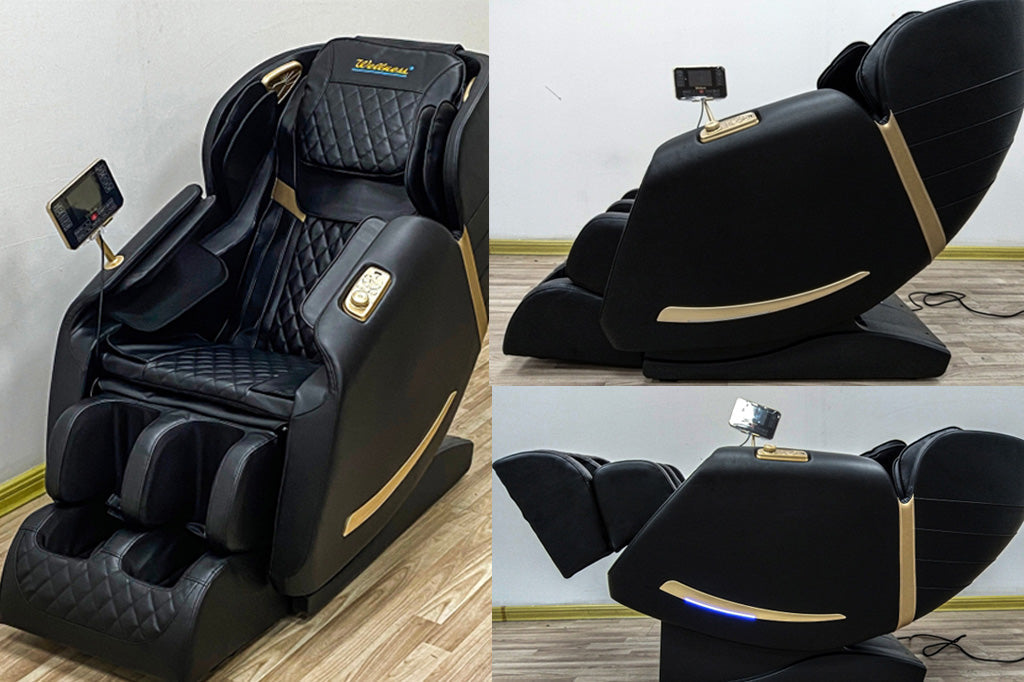
Most full-size massage chairs use a combination of moving rollers and air compression. The rollers travel along a track in the backrest to create patterns such as kneading, rolling, tapping, or a combination of movements. Airbags inflate and deflate around areas such as the shoulders, arms, hips, calves, or feet to create compression and holding sensations.
Different chairs vary greatly in how they apply these techniques. A feature name alone does not guarantee a better experience. For example, “body scanning” generally refers to the chair estimating your shoulder position or body shape so the massage can begin in a more suitable place. It can be useful, but it does not replace proper fit.
Credit: bestsleepcentre.com
Massage mechanism and roller track
The mechanism determines how the chair creates pressure and movement. Some chairs focus mainly on the upper and lower back, while others extend the roller path farther toward the hips or thighs. A longer track may appeal to people who want broader coverage, but the quality of movement, adjustability, and positioning are still more important than track length alone.
Look for controls that let you adjust roller position, width, speed, and intensity when those options matter to you. If you are tall, short, broad-shouldered, or have a longer torso, the ability to reposition the massage can make a noticeable difference.
Air compression and foot massage
Air compression can feel gentle and enveloping or quite firm, depending on the chair and settings. It is often used to hold the body in place during a stretch program or to create rhythmic pressure around the limbs. Some users enjoy it as much as the back rollers; others turn it down or off.
Foot and calf sections deserve special attention. They can be appealing after long periods of standing, but they are not universally comfortable. Check whether the footwell suits your foot size, whether the calf area feels too narrow, and whether the pressure can be adjusted independently.
Recline, heat, and zero-gravity-style positions
Recline can improve comfort by spreading body weight and reducing the feeling of sitting upright. Chairs described as having a zero-gravity-style position typically raise the legs and recline the body into a more supported posture. The name is marketing language for a seating position, not a guarantee of therapeutic results.
Heat is another comfort feature, but its location and intensity differ by model. It may provide a pleasant warming sensation, yet it should not be viewed as treatment for an injury or medical condition.
The Drawbacks to Consider Before Buying
A massage chair is a substantial commitment. It can be excellent at providing accessible relaxation, but it has practical and financial disadvantages that buyers should understand before ordering.
They take up more space than expected
Measure more than the spot where the chair will sit. You need to account for its reclined position, room to walk around it, clearance from walls, nearby furniture, and the route from the delivery entrance to the final room. Doorways, hallways, elevators, staircases, and tight turns can be just as important as the room itself.
Some designs are built to recline closer to a wall than traditional chairs, but “space-saving” does not mean small. Always use the manufacturer’s current dimensions rather than relying on photos.
Mechanical massage is not the same as human massage
A massage therapist can alter pressure, respond to verbal feedback, avoid a tender spot, and adapt to how your muscles feel that day. A chair follows programmed motions. Even models with body scanning and many settings have less judgment and flexibility than a skilled person.
This does not make massage chairs ineffective for relaxation. It simply means expectations should be realistic. If you depend on individualized bodywork, a chair may be a supplement to occasional professional massage rather than a replacement.
Fit can make or break the experience
Massage chairs are not one-size-fits-all. Shoulder width, height, leg length, body weight distribution, and sensitivity to pressure all affect comfort. A chair that works well for one person in a household may not work well for another.
Pay close attention to stated user-height guidance, seat dimensions, footrest extension, shoulder position, and weight capacity. These specifications are model-specific, so confirm them directly with the seller or manufacturer before purchasing.
Noise and visual impact can matter
Motors, rollers, airbags, and foot mechanisms make sound. The noise may be acceptable in a dedicated relaxation room but distracting in a quiet living room, bedroom, or shared apartment. The chair’s appearance can also affect how you use the room; a large massage chair is harder to blend into a space than a standard recliner.
Repairs can be inconvenient
Massage chairs contain more moving parts than ordinary seating. When something goes wrong, moving the chair for service may be difficult. A long warranty is helpful only if it includes meaningful coverage and the company can provide practical support where you live.
Before buying, find out who handles service, whether in-home repair is available, what labor costs may apply after the initial coverage period, and whether replacement parts are likely to be available later.
Who Gets the Most Value From a Massage Chair?
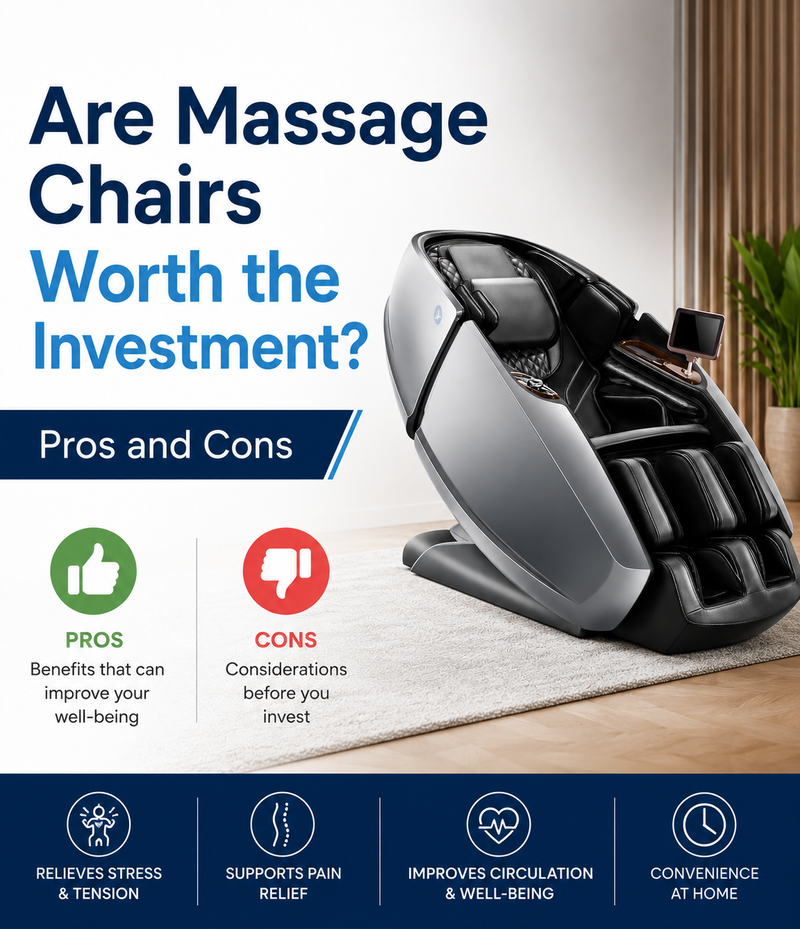
Whether a massage chair is worth it depends heavily on the person using it. The best buyers are usually those who see it as a frequently used comfort appliance rather than a luxury item that will solve every ache.
Credit: themodernback.com
People with demanding desk routines
Long periods of sitting can leave people feeling stiff or fatigued. A chair may offer a convenient relaxation break, especially when paired with ordinary habits such as standing up regularly, adjusting a workstation, and changing position throughout the day. It cannot correct a poorly fitted office setup on its own, so ergonomic desk habits still matter.
Active people who enjoy recovery routines
People who exercise regularly may appreciate a chair as part of a post-workout wind-down routine. The most appropriate expectation is comfort and relaxation, not faster healing of an injury. New, severe, persistent, or worsening pain should be assessed by an appropriate healthcare professional rather than managed solely with a chair.
Busy households
Shared use can improve value, provided the chair fits the people using it and everyone can operate it safely. User profiles or easy controls are useful when household members prefer different intensities and programs.
People who already know they enjoy chair massage
If you have used massage chairs in stores, airports, spas, or showrooms and consistently enjoy the experience, you have better evidence than someone buying based only on online descriptions. This is especially important if you are sensitive to strong pressure or skeptical about airbags and foot rollers.
Who Should Be Cautious?
A massage chair is not appropriate for every situation. People who are pregnant, have implanted medical devices, circulation concerns, recent surgery, fractures, osteoporosis, a blood-clotting condition, significant nerve symptoms, or other relevant health concerns should ask a qualified healthcare professional before using one. The chair’s manual may also list specific warnings and contraindications.
Stop using a chair if it causes pain, numbness, dizziness, skin irritation, or symptoms that feel unusual. More intensity is not necessarily better. A comfortable setting that leaves you feeling relaxed is generally more sensible than repeatedly choosing a painful one.
Children, people who cannot safely reposition themselves, and anyone who may not understand the controls should not use a massage chair unsupervised. Keep fingers, loose clothing, blankets, and pets away from moving parts, especially around the footrest and reclining mechanism.
How to Decide If the Cost Makes Sense for You
There is no universal financial threshold for determining whether a massage chair is worth buying. A useful way to decide is to estimate likely use honestly, then compare that value with alternatives you would realistically use instead. Do not compare it only with an idealized schedule of frequent professional massages if you know you would not actually book them.
- Define your main purpose. Is it relaxation, everyday comfort, foot massage, a shared household feature, or replacing a particular routine?
- Estimate realistic use. Think in weekly sessions, not the excitement of the first month.
- Set a full budget. Include delivery, any protection plan you genuinely value, and potential moving or repair costs.
- Measure your room and access route. Confirm both the upright footprint and reclined clearance.
- Prioritize fit over feature count. A comfortable chair with useful adjustments is usually a better purchase than a complicated one that does not suit your body.
- Read the return and warranty terms. Large-item returns may involve fees, packaging requirements, or difficult pickup arrangements.
- Consider a trial. Test comparable chairs in person if possible, paying attention to shoulder placement, calf fit, noise, and pressure.
For some buyers, a smaller massage cushion, foot massager, quality recliner, occasional professional massage, or a home exercise and mobility routine may better match their budget and needs. A massage chair is worthwhile only when it is the option you will actually use consistently.
Features Worth Prioritizing Over Marketing Extras
When comparing models, focus first on features that affect daily comfort and ownership. A long list of automatic programs may look impressive, but it should not distract from the basics.
- Comfortable body fit: Appropriate shoulder, seat, leg, and foot dimensions.
- Adjustable intensity: Important for households with different pressure preferences.
- Manual control: Lets you target an area or choose a simple program without relying on presets.
- Useful recline: A stable, comfortable position that suits your room layout.
- Clear controls: Especially valuable if more than one person will use the chair.
- Durable upholstery: Consider feel, cleaning needs, pets, sunlight exposure, and likely wear.
- Credible after-sales support: Essential because the chair is difficult to transport for repairs.
Bluetooth speakers, voice controls, chromotherapy lights, and extensive app functions may add enjoyment for some users, but they should be secondary decisions. They do not compensate for uncomfortable rollers, poor fit, or weak service support.
Credit: homebarsusa.com
Final Decision Guidance
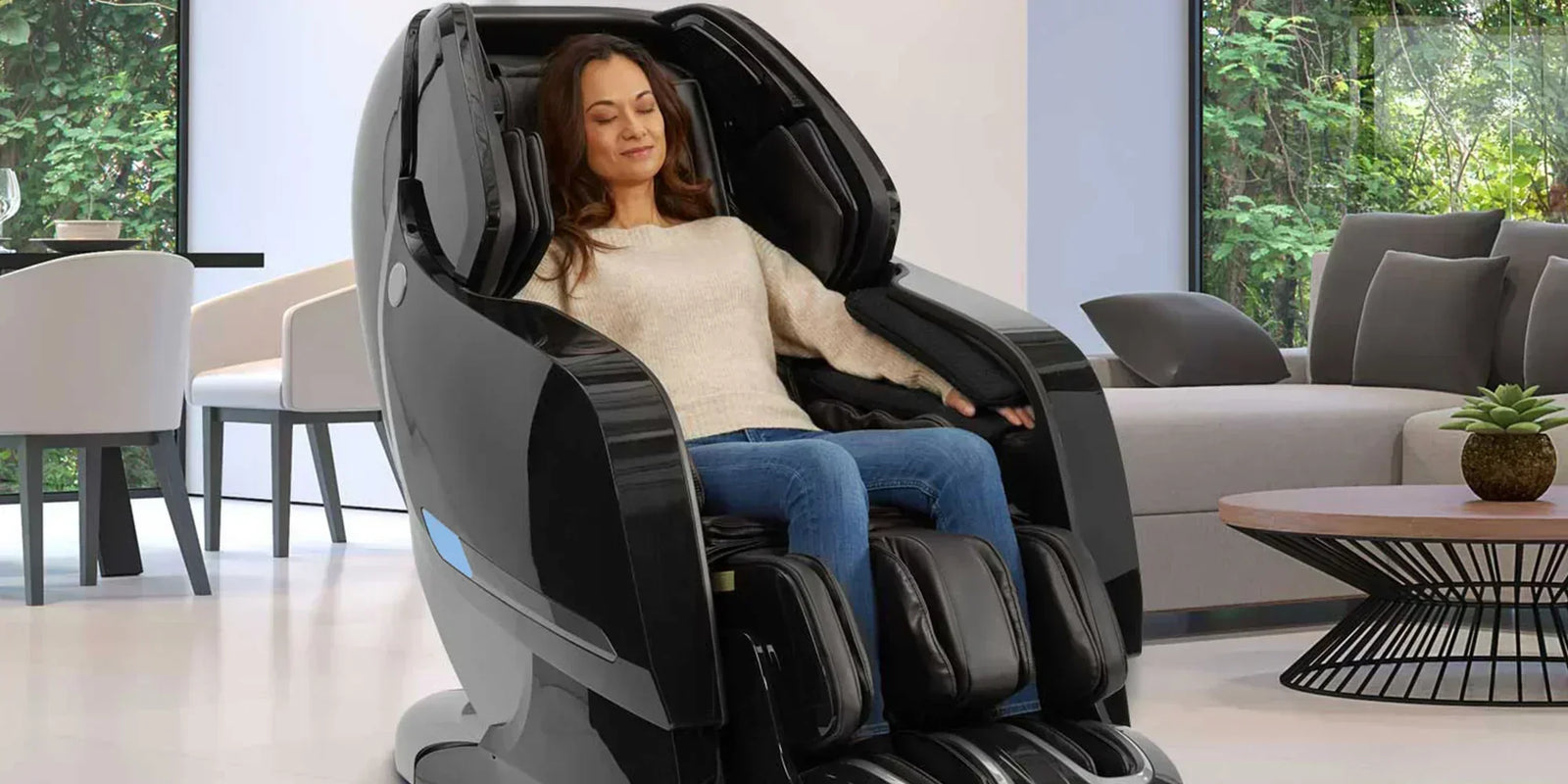
So, is a massage chair worth it? It can be an excellent investment in home comfort for people who enjoy mechanical massage, have the space for it, and expect to use it often. The convenience of having a session available at home is the category’s biggest advantage.
It is not a guaranteed bargain, a medical device, or a substitute for personalized care. Buy one because its comfort, fit, features, and convenience suit your routine—not because it promises more than a chair can realistically deliver.
Frequently Asked Questions
How long should a typical massage chair session last?
Follow the chair manufacturer’s guidance and begin with shorter, gentler sessions while you learn how your body responds. Many chairs include timed programs, but comfort should guide your choice. Stop if the massage becomes painful or leaves you feeling worse rather than relaxed.
Can a massage chair replace seeing a massage therapist?
It can replace some at-home relaxation sessions for people who enjoy mechanical massage, but it cannot fully replace individualized hands-on assessment or changing techniques. A therapist can adapt to your feedback and specific areas of concern in ways a programmed chair cannot.
Do massage chairs use a lot of electricity?
Power use varies by model, features, session length, and standby settings. Check the product manual or energy information for the specific chair you are considering. For most buyers, purchase price, repairs, and frequency of use are more important cost factors than electricity alone.
Can two people of very different heights use the same massage chair?
Possibly, if the chair has a broad supported height range, effective body scanning, adjustable roller position, and an extending legrest. However, a chair that fits one person very well may still feel poorly aligned for another, so shared households should prioritize fit testing.
What is the best place to put a massage chair at home?
Choose a level area near a suitable power outlet with enough clearance for full recline and safe access around moving parts. Avoid blocking doors, walkways, and emergency routes. A quieter room is often preferable, but the location should also make regular use convenient.
Sources & References
Use the manufacturer’s documentation for model-specific fit, electrical, safety, warranty and maintenance requirements.