
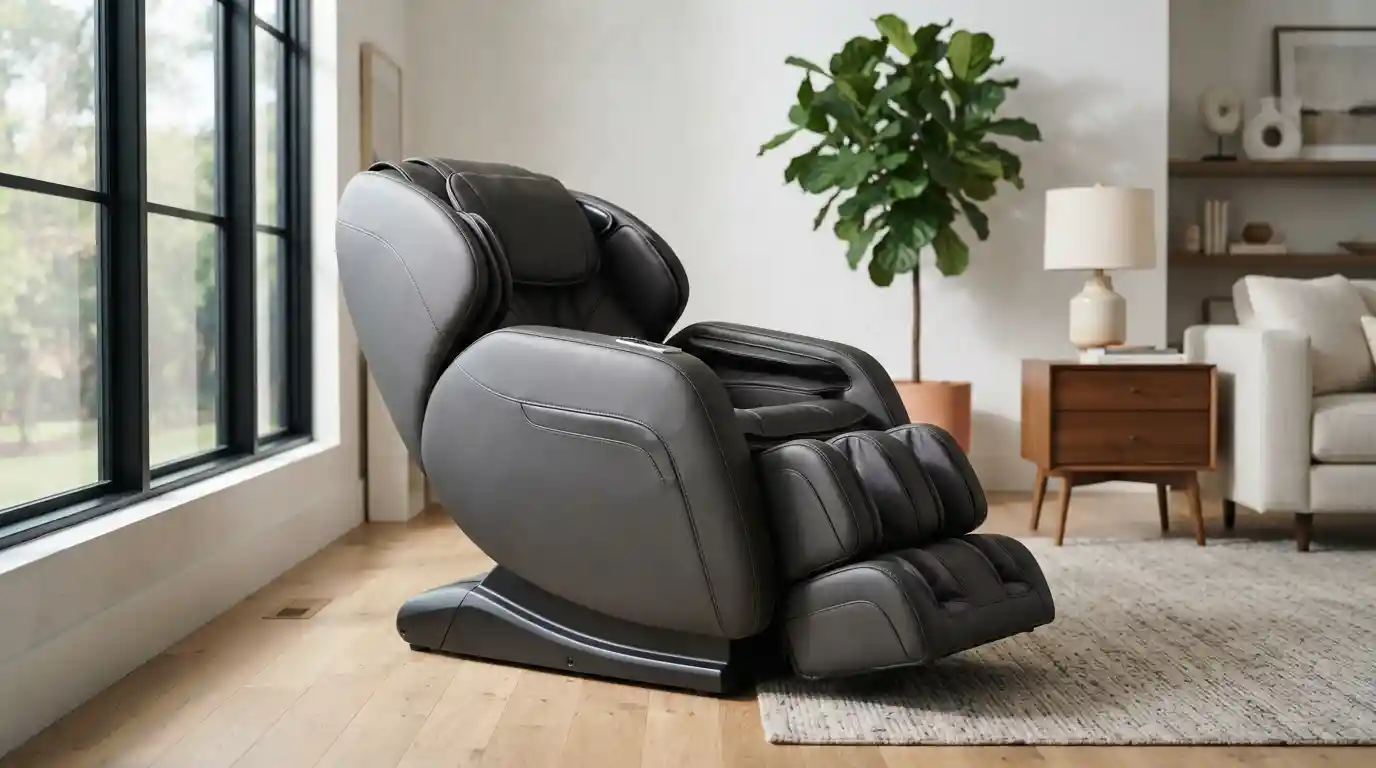
An Osaki massage chair review should start with one important point: Osaki is not a single-chair brand with one consistent experience. Its lineup ranges from simpler relaxation chairs to large, feature-heavy models with advanced roller systems, body scanning, deep recline, foot massage functions, and extensive air compression.
The brand is best known for offering many features at different price levels. That can make an Osaki chair appealing for buyers who want a full-body massage experience without limiting themselves to a small number of premium-brand models. It also means that model-by-model comparison matters more than the logo on the chair.
This guide compares the main types of Osaki massage chairs, explains their likely strengths and weaknesses, and outlines alternatives worth considering. Features, upholstery options, and program names can vary by production year and retailer, so confirm the exact specifications of any chair before buying.
What to Expect From an Osaki Massage Chair
Osaki massage chairs generally focus on high-feature home massage. Depending on the model, that may include a long massage track, multiple roller dimensions, automatic programs, zero-gravity recline, heat, calf and foot massage, Bluetooth speakers, touchscreen remotes, or voice controls.
The strongest reason to consider Osaki is range. The company offers chairs for buyers who want basic daily comfort as well as shoppers looking for a more immersive, full-body experience. Many models emphasize the areas people commonly want addressed after sitting, standing, exercising, or commuting: the neck, shoulders, back, hips, calves, and feet.
However, a feature list is not the same as a better massage. A chair with more airbags, speakers, or wellness programs may still be a poor fit if the rollers do not reach your shoulders correctly, the seat is too narrow, or the intensity cannot be adjusted to your comfort level.
Osaki Massage Chair Review: Brand Strengths and Limitations
Where Osaki tends to perform well
- Wide choice of massage technologies: Osaki has models with 2D, 3D, and 4D roller systems. Higher-dimensional systems generally allow more control over roller depth, speed, and rhythm.
- Full-body coverage: Many Osaki chairs combine back rollers with airbags or air cells around the shoulders, arms, hips, calves, and feet.
- Strong lower-body focus: Foot rollers, calf compression, ankle coverage, and leg-extension systems are common on many midrange and premium designs.
- Deep recline options: Zero-gravity-style recline is widely available. This position raises the legs and reclines the back to distribute body weight more evenly.
- Feature-rich premium models: The brand’s higher-end chairs often add advanced controls, heat zones, stretch programs, body scanning, and more refined massage settings.
- Broad price coverage: Shoppers can compare several chair types without moving immediately into the highest luxury price category.
Potential drawbacks to consider
- Model differences can be substantial: A lower-priced Osaki chair may share the brand name but not the same roller quality, fit range, or adjustment depth as a flagship model.
- Large physical footprint: Many full-size chairs are heavy, bulky, and difficult to move after delivery. Doorways, stairs, room layout, and floor protection should be considered before ordering.
- Programs can be overwhelming: A long menu of automatic programs is useful only if the controls are understandable and the chair saves or repeats settings you enjoy.
- Fit varies by body shape: Shoulder width, height, leg length, and calf circumference can affect comfort more than a chair’s headline feature count.
- Service quality may depend on the seller: Delivery, setup, warranty coverage, and repair arrangements can differ between authorized retailers. Read the purchase terms carefully.
- Not a substitute for clinical care: A massage chair may support relaxation and temporary muscular comfort, but it does not diagnose or treat injuries, circulation disorders, nerve conditions, or chronic pain causes.
How Osaki Massage Technologies Compare
Understanding the massage mechanism is more useful than comparing dozens of automatic programs. The roller system has the greatest effect on how a chair feels across the back.
| Massage system | What it generally does | Best suited to | What to watch for |
|---|---|---|---|
| 2D rollers | Move up and down the back and side to side across the massage track. | Buyers who want a straightforward rolling, kneading, tapping, or shiatsu-style massage. | Usually offers less control over how far the rollers press outward. |
| 3D rollers | Add outward and inward movement, allowing rollers to reach farther toward the body. | People who want more noticeable pressure or greater control over massage depth. | May feel too intense for sensitive users if depth settings are limited. |
| 4D rollers | Build on 3D movement with more variation in speed, timing, and roller rhythm. | Buyers seeking a less mechanical, more varied massage feel. | “4D” is not a universal technical standard, so compare actual settings rather than marketing language alone. |
For many buyers, a well-fitted 3D chair with clear intensity control is a better purchase than a 4D chair that is too aggressive or poorly sized. The chair should allow you to reduce roller depth, air compression, speed, and foot massage intensity independently when possible.
Massage track length matters, but not by itself
Many Osaki models use an extended massage track that follows the shape of the spine and continues toward the glutes or upper hamstrings. This can create more complete lower-back and hip-area coverage than a shorter back-only track.
Still, track length alone does not guarantee a better result. Proper shoulder detection, roller width adjustment, and body position are equally important. If rollers consistently stop below your shoulders or press into the wrong place, even an advanced track will feel disappointing.
Air compression and foot massage
Airbags or air cells create squeezing, holding, and rhythmic compression around the body. In Osaki chairs, they are often used for the shoulders, arms, hips, calves, and feet. This feature can make a massage feel more complete, especially when paired with rollers in the back and soles.
Look for adjustable air intensity. Strong calf compression can feel supportive to one person and uncomfortably restrictive to another. The same applies to foot rollers: they can be a major benefit for people who enjoy firm sole stimulation, but some users need the lowest setting, thicker socks, or a removable foot pad for comfort.
Osaki Model Types Compared
Rather than treating every chair as interchangeable, it helps to place Osaki models into practical categories. Model names and configurations change over time, but the categories below reflect the types of chairs commonly found in the lineup.
| Osaki chair category | Typical features | Best for | Main compromise |
|---|---|---|---|
| Entry and lower-midrange chairs | Basic roller massage, recline, airbags, heat on some models, and a simpler remote. | First-time owners who want occasional relaxation without a highly complex chair. | Less customization, shorter tracks, and fewer advanced body-fit adjustments. |
| 3D full-body chairs | Adjustable roller depth, body scanning, extended tracks, foot rollers, and several automatic programs. | Users who want firmer massage capability and more control over intensity. | Can be too forceful for buyers who prefer a gentle massage. |
| 4D premium chairs | More varied roller timing, sophisticated automatic programs, multiple massage zones, advanced recline, and expanded controls. | Frequent users who value massage customization and a more nuanced roller feel. | Higher cost, more electronic components, and often a larger footprint. |
| Compact or space-saving recliners | Wall-saving movement, smaller dimensions, and a reduced room-clearance requirement on some designs. | Homes where a conventional large massage chair would dominate the room. | May provide less space in the shoulder, seat, or calf areas than oversized chairs. |
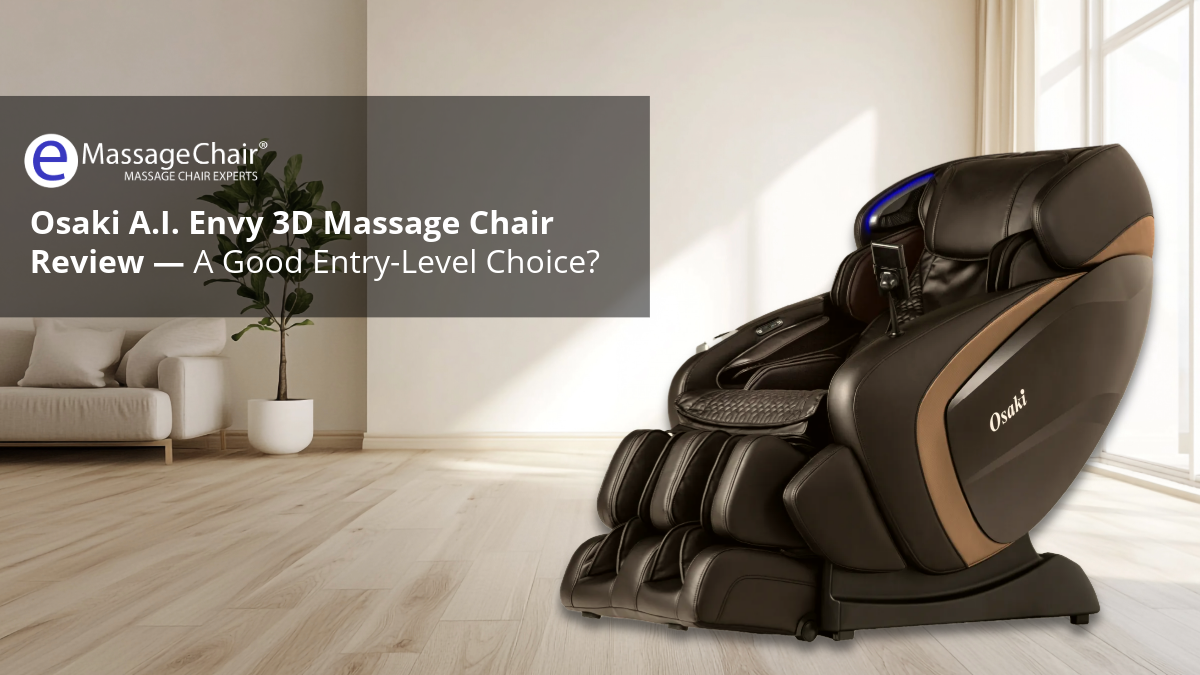
Credit: emassagechair.com
Osaki premium 4D models
Premium Osaki chairs, including models marketed under 4D naming, are usually aimed at buyers who want the broadest combination of roller control, body scanning, automated routines, air compression, and comfort features. These chairs often make the most sense for households where the chair will be used frequently by one or two people who can benefit from detailed personalization.
The advantage is not simply stronger pressure. Better premium models should provide a wider range from gentle to firm, along with the ability to target specific zones such as the upper back, lumbar area, glutes, calves, or feet. A good control system also matters: changing settings should be simple while reclining, not a task that requires studying a manual every time.
The downside is that premium chairs require more research before purchase. Their complex mechanisms make warranty terms, in-home service availability, and retailer support more important than they are for a basic recliner.
Osaki 3D models
A 3D Osaki chair can be a practical middle ground. It typically offers more noticeable roller depth than a 2D chair while avoiding some of the extra cost associated with flagship 4D designs. For people who want a massage that reaches beyond surface-level rolling, 3D adjustment is often the feature worth prioritizing.
Pay close attention to whether the chair lets you reduce depth independently from speed and kneading style. Deep rollers can be enjoyable on the lower back but excessive around the shoulder blades or neck. Fine adjustments help a chair serve different users without becoming uncomfortable.
Value-focused Osaki chairs
More affordable Osaki models may be suitable if your goal is occasional relaxation, basic back massage, reclining comfort, and some leg or foot coverage. They can still be substantial pieces of furniture, but they often have fewer motors, simpler remotes, and less precise body-mapping ability.
These models are best judged by essentials: roller reach, seat comfort, calf fit, noise level, recline angle, and how easily you can use the controls. Do not assume a longer list of automatic programs compensates for weak shoulder positioning or a cramped footwell.
Who Should Consider an Osaki Chair?
Osaki may be a strong option for shoppers who want a feature-rich massage chair and are prepared to compare models carefully. It is particularly relevant for people who value a combination of back rollers, calf and foot massage, recline, and adjustable air compression in one chair.
An Osaki chair can be a sensible fit for:
- People who use massage primarily for relaxation after long workdays or physical activity.
- Buyers who prefer a full-body chair rather than a back-only massage pad or compact recliner.
- Households that want adjustable settings for more than one regular user.
- People who enjoy a firmer massage and want the option of 3D or 4D roller depth.
- Shoppers with enough room for delivery access, recline clearance, and permanent placement.
It may be less suitable for someone who needs an extremely compact chair, strongly prefers a subtle massage, has limited tolerance for calf or foot pressure, or does not want to manage several settings. In those cases, a simpler chair with a gentler roller system may deliver a better everyday experience.
Important Fit and Room Measurements Before Buying
A massage chair is not a one-size-fits-all appliance. Fit affects both comfort and massage accuracy, while room constraints affect whether you can use the chair as intended.
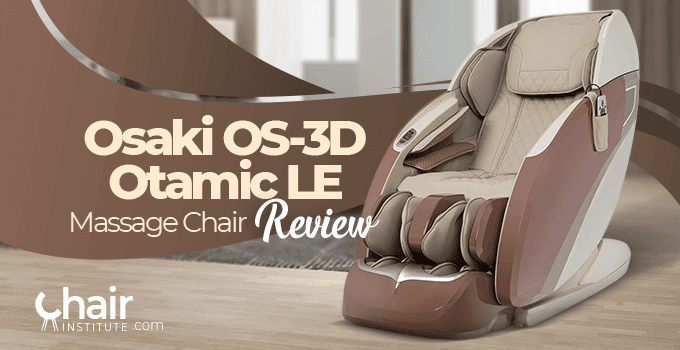
Credit: chairinstitute.com
Body-fit questions to ask
- What height range does the manufacturer recommend?
- Does the chair have automatic body scanning, and can you manually adjust shoulder position?
- Is the shoulder area wide enough for your frame without feeling loose?
- Does the leg rest extend, and is the extension powered, spring-loaded, or manually adjusted?
- Will the calves fit comfortably in the leg wells?
- Can roller depth, air pressure, and foot roller intensity be reduced?
Room-planning questions to ask
- What are the chair’s upright and fully reclined dimensions?
- How much wall clearance is required for the specific model?
- Can the chair fit through every doorway, hallway, elevator, or stairwell on its delivery route?
- Is there a nearby grounded power outlet without relying on an extension cord?
- Will the flooring support the chair’s weight and protect against marks from its base?
Do not estimate based on photos. Measure the intended space and compare it with the manufacturer’s current dimensions. If delivery access is tight, ask the retailer how the chair is packaged, whether assembly is included, and what happens if the product cannot be brought into the room.
Osaki Massage Chair Pros and Cons at a Glance
Pros
- Large selection of massage chair styles and feature levels.
- Many models offer full-body massage elements beyond back rollers.
- 3D and 4D options can provide meaningful roller-depth customization.
- Foot and calf massage are common priorities in the lineup.
- Zero-gravity-style reclining positions can improve comfort during a session.
- Premium models often provide extensive automatic and manual controls.
Cons
- Comparing similarly named models can be confusing without a detailed specification review.
- Large chairs may be impractical for apartments, small rooms, or difficult delivery routes.
- Advanced models can have a learning curve for controls and settings.
- Firm roller and foot massage settings will not suit every user.
- Warranty and service experiences depend heavily on the authorized dealer and local repair coverage.
- Premium features can push the purchase into a higher budget category quickly.
Alternatives to Osaki Massage Chairs
Comparing alternatives is useful because brands often prioritize different aspects of the experience. The best choice depends on whether you value intense rollers, a quiet design, a more traditional furniture appearance, simpler controls, or broad repair support.
Titan massage chairs
Titan is frequently considered alongside Osaki because the brands occupy similar parts of the full-feature massage chair market. Titan models may appeal to shoppers looking for comparable technology categories, including extended tracks, advanced rollers, air compression, and deep recline.
Compare the specific chair rather than assuming one brand is always better. Focus on the massage mechanism, shoulder width, maximum recline clearance, footwell design, control interface, and warranty terms.
Kahuna massage chairs
Kahuna chairs are often associated with stretch-oriented routines, strong body coverage, and value-conscious full-size designs. They can be worth considering for buyers who want assertive massage programs and a broad recline experience without necessarily paying for every premium entertainment or control feature.
As with Osaki, assess intensity carefully. A chair known for stronger stretch or compression programs may not be ideal for a user who wants a quiet, light-pressure session.
Human Touch massage chairs
Human Touch can be a good alternative for buyers who care about furniture styling, recognizable wellness-focused design, and more straightforward everyday operation. Some shoppers may prefer its approach if they want a chair that blends more easily into a living area.
The trade-off may be that a particular Human Touch model does not match the extensive feature list of a large Osaki flagship. Decide whether you value advanced massage customization or a simpler, more living-room-friendly design.
Synca massage chairs
Synca is worth a look for shoppers interested in compact formats, Japanese-inspired massage design, or chairs designed for smaller spaces. The right Synca option may suit someone who wants a more restrained footprint and does not need the broadest range of large-chair features.
Its best fit will depend on the individual model’s body dimensions and massage zones. Compact chairs can be excellent space savers, but they require especially careful attention to shoulder and leg fit.
How to Buy an Osaki Chair More Confidently
- Set your non-negotiables first. Decide whether roller depth, foot massage, heat, recline, space-saving movement, or a specific body-size range matters most.
- Compare the exact model, not the series name. Similar Osaki names can have different tracks, remotes, leg rests, and massage systems.
- Read the warranty before checkout. Check parts coverage, labor coverage, in-home service eligibility, exclusions, and who handles repair requests.
- Confirm the retailer is authorized. This can affect warranty validity, delivery support, and access to replacement parts.
- Measure your room and delivery path. Include the fully reclined position and the route from the delivery entrance to the final room.
- Consider who will use it. A chair that fits the tallest user may not automatically be comfortable for a shorter user, and vice versa.
- Choose adjustability over novelty. Independent control of roller depth, air pressure, speed, and heat is usually more valuable than a long list of rarely used programs.
Among massage chair reviews Osaki models often receive attention for their extensive features, but the best purchase is still the one that fits your body, room, comfort preferences, and support expectations. A carefully selected midrange chair can be more satisfying than a flagship model with capabilities you never use.
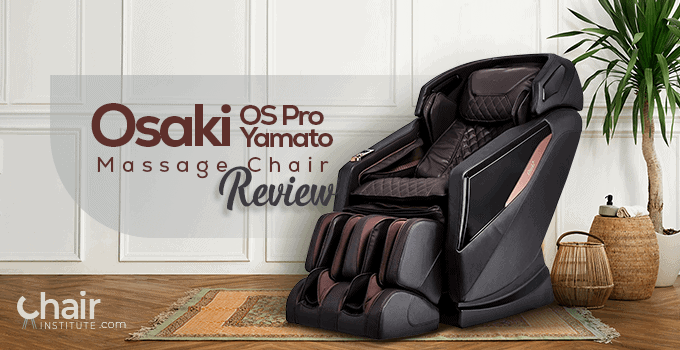
Credit: chairinstitute.com
Frequently Asked Questions
Are Osaki massage chairs good for daily use?
They can be, provided the massage intensity is comfortable and the chair fits the user properly. Start with shorter sessions and lower settings, especially with deep rollers, strong calf compression, or foot rollers. Follow the manufacturer’s usage guidance, and speak with a qualified healthcare professional if you have a medical condition or are unsure whether massage is appropriate.
What is the difference between an Osaki 3D and 4D massage chair?
A 3D chair generally lets the rollers move outward and inward to vary massage depth. A 4D chair usually adds more variation in roller speed, rhythm, and timing. The exact implementation is model-specific, so check whether the chair gives you useful manual control rather than relying on the label alone.
Do Osaki massage chairs require professional installation?
Many arrive with delivery and setup options, but requirements vary by retailer and model. Because these chairs are heavy and may include separate components or protective packaging, professional room-of-choice delivery can be worthwhile. Confirm what service is included before ordering.
Can a massage chair help with back pain?
A massage chair may provide temporary comfort, relaxation, or relief from everyday muscle tension for some people. It should not be viewed as a diagnosis or treatment for persistent, severe, radiating, or unexplained back pain. Seek medical advice for symptoms that are ongoing, worsening, or accompanied by weakness, numbness, fever, or changes in bladder or bowel control.
How long should an Osaki massage chair last?
Longevity depends on usage frequency, user weight, maintenance, power conditions, upholstery care, and the availability of service when components wear out. Protect the chair from direct sunlight and spills, keep moving parts clear, follow cleaning instructions, and purchase from a seller with clear warranty and repair support.
Sources & References
- National Center for Complementary and Integrative Health (NCCIH): Massage Therapy—What You Need To Know — evidence and safety information about massage therapy.
- Human Touch: Use & Care Manuals — manufacturer documentation for setup, operation, safety and maintenance.
For model-specific limits, warnings, troubleshooting and maintenance, always follow the manual supplied by the chair manufacturer.