
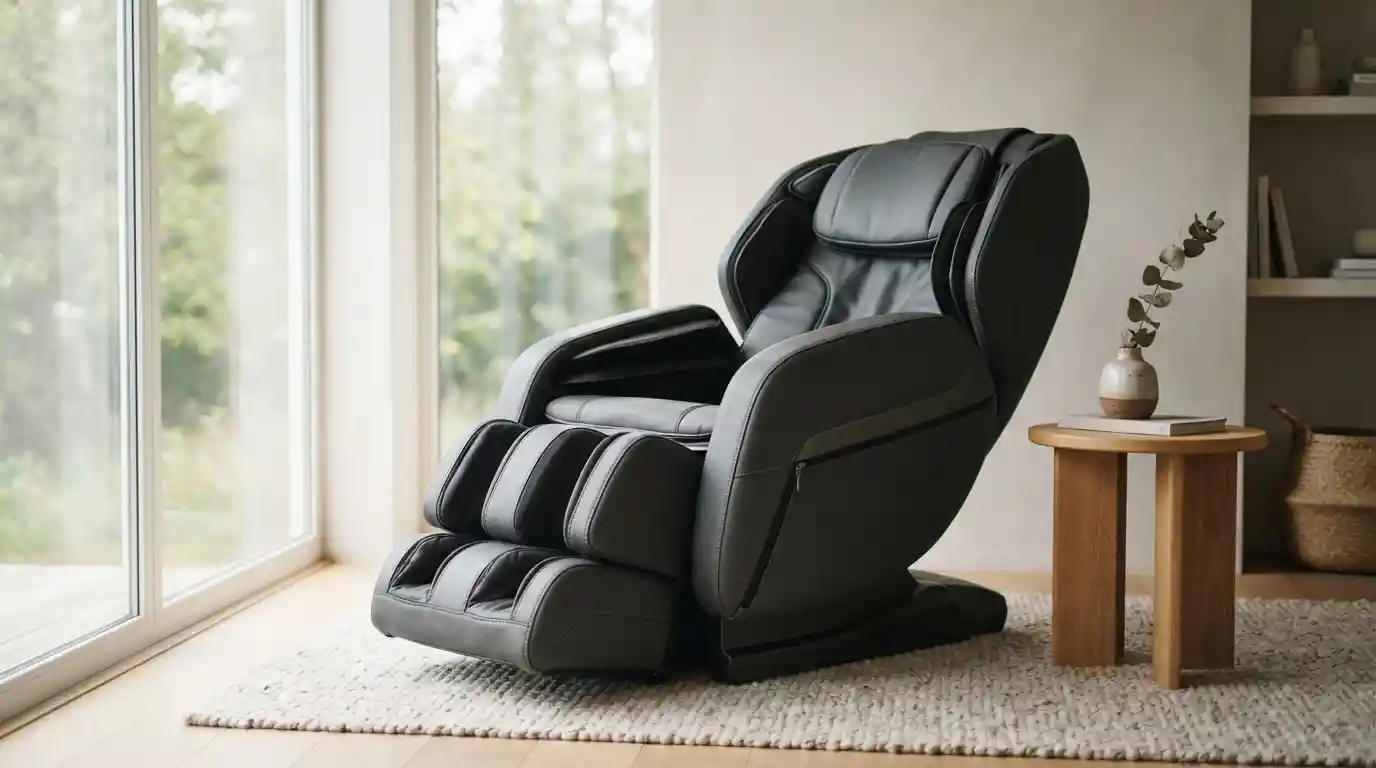
Massage chair reviews can be useful, but only when you know which details actually affect comfort, fit, reliability, and day-to-day use. A chair with glowing feedback may still be a poor choice if its shoulder width, foot section, massage intensity, or space requirements do not match your needs.
The most helpful way to review massage chairs is to look beyond star ratings and promotional features. Compare the massage system, body-size range, reclining position, controls, warranty terms, delivery process, and the types of feedback that appear repeatedly across independent buyer reviews.
This guide explains what buyers should compare before choosing a massage chair, how to read a massage chair review critically, and which trade-offs matter more than a long feature list.
Start With the Type of Massage Experience You Want
Not every massage chair is designed to feel the same. Some focus on gentle relaxation, while others provide firmer roller pressure, targeted stretching programs, or strong air compression. Before comparing brands or models, decide what kind of session you expect to use most often.
A useful starting point is to consider whether you prefer a chair that feels:
- Gentle and soothing: Usually best for people who are sensitive to pressure or want a calming end-of-day routine.
- Firm and deep: Better suited to users who prefer more noticeable roller movement along the back.
- Customizable: Helpful in households where different users have different comfort preferences.
- Full-body focused: Includes back massage alongside air compression for the arms, legs, calves, feet, or shoulders.
- Targeted: Lets you select a specific region, such as the upper back, lower back, calves, or feet.
Massage chairs are comfort products, not a replacement for medical diagnosis or treatment. If you have persistent pain, recent surgery, a circulatory condition, a pregnancy-related concern, or another health issue that may affect chair use, ask a qualified healthcare professional before buying or using one.
Compare the Massage Mechanism Before Programs and Extras
The massage mechanism has a greater effect on the chair’s feel than the number of automatic programs listed in its description. Marketing terms vary by manufacturer, so focus on what the rollers can reach, how they move, and whether the chair lets you adjust their position and intensity.
Roller track design
Most massage chairs use a moving roller system that travels along a track in the backrest. The track shape and length influence which parts of the body receive roller massage.
- S-track: Follows the natural curve of the spine more closely. It generally focuses on the neck, shoulders, back, and lower back.
- L-track: Extends farther below the lower back, often continuing through the seat area toward the upper thighs or glutes.
- Longer or extended tracks: May provide broader coverage, but the actual experience still depends on roller depth, chair fit, and program design.
An L-track is not automatically better than an S-track. Someone who mainly wants shoulder and upper-back massage may value accurate shoulder positioning and comfortable neck support more than extended seat coverage. Conversely, a user who spends long periods sitting may appreciate a chair with massage that continues into the lower-body area.
Roller movement and techniques
Look for clear information about the massage motions a chair provides. Common terms include kneading, tapping, rolling, shiatsu-style movements, compression, and combinations of these techniques. The names do not always tell you how intense the chair will feel, so buyer comments about pressure and adjustability are especially valuable.
When reading massage chair reviews, look for feedback that describes:
- Whether rollers reach the shoulder area without pressing uncomfortably into the neck.
- How well the chair reaches the lower back for users of different heights.
- Whether the pressure remains comfortable throughout a full program.
- How smoothly the rollers move between body zones.
- Whether the chair’s mildest setting is genuinely gentle.
Body scanning and manual adjustment
Many chairs include a body scan that attempts to identify shoulder height and body shape before a session begins. This can improve alignment, but it is not perfect for every user. A good feature to prioritize is the ability to manually fine-tune roller position after the scan.
Manual controls are particularly important if you are near the lower or upper end of the chair’s recommended height range. A chair may technically accommodate you, yet still place the rollers too high or too low for a comfortable massage.
Assess Air Compression, Foot Massage, and Stretching Features
Rollers are only one part of the experience. Massage chairs may also use air cells or airbags to inflate around the shoulders, arms, hips, legs, calves, and feet. These create a squeezing or holding sensation rather than the rolling movement used on the back.
Air compression zones
More air cells do not always mean a better chair. What matters is where they are located, how evenly they inflate, and whether their intensity can be reduced. Strong compression can feel supportive to one person and restrictive to another.
Review massage chairs with attention to comments about arm and leg compartments. Buyers often identify practical issues that specification sheets overlook, such as narrow arm channels, calf sections that feel too tight, or airbags that are difficult to adjust.
Foot and calf massage
Foot massage systems differ widely. Some use airbags alone, while others combine compression with rollers, nodes, vibration, or textured surfaces under the feet. A strong foot mechanism can be appealing, but it may be too intense for users with sensitive feet.
Check whether the footrest is adjustable or extendable. This affects fit for taller users and can prevent a cramped position. Also consider how easy it is to enter and exit the chair; a deep footwell or narrow calf compartment may be inconvenient for some people.
Stretch and recline programs
Some automatic programs use airbags and recline movement to gently hold parts of the body while the chair changes position. These are often described as stretch programs. Their intensity can vary considerably, so do not assume they will feel mild simply because they are marketed as relaxing.
If stretching is a priority, seek reviews that explain whether the program feels gradual, whether it can be stopped easily, and whether the user can adjust compression strength. Anyone with mobility limitations should pay close attention to entry, exit, and recline control rather than focusing only on the stretch feature itself.
Make Sure the Chair Fits Your Body
Fit is one of the most common reasons a highly rated massage chair disappoints its owner. The chair may be well made, but its shoulder position, seat width, calf length, or footrest shape may not suit a particular body.
Before purchasing, review the manufacturer’s stated user-height guidance and treat it as a starting point rather than a guarantee. The best massage chair review comments often come from buyers who mention their general height, build, and the areas where the rollers land.
| Fit area | Why it matters | What to look for |
|---|---|---|
| Shoulder position | Determines whether rollers reach the upper back accurately. | Body scan, manual shoulder adjustment, and feedback from similarly sized users. |
| Seat width | Affects comfort around the hips and ease of sitting down. | Interior seat dimensions and comments about narrow or restrictive side panels. |
| Calf section | Influences lower-leg comfort and footrest usability. | Adjustable calf support, extendable footrest, and compression controls. |
| Headrest and neck area | Can affect comfort even when massage functions are switched off. | Removable pads, adjustable cushioning, and reports of neck pressure. |
| Weight capacity | Relates to safe intended use and long-term suitability. | The manufacturer’s current stated limit rather than retailer summaries. |
Do not rely only on the exterior width of the chair. A model can look large but have a relatively narrow usable seating area because of its arm compartments, side panels, or airbag chambers.

Credit: reddit.com
Look Closely at Recline and Room Requirements
A massage chair needs more than floor space. It also needs enough clearance to recline, enough room for the footrest to extend, and a practical path through doors, hallways, and stairways during delivery.
Zero-gravity positioning
“Zero gravity” usually refers to a reclined position that elevates the legs and distributes body weight more evenly across the chair. Many users find this position comfortable because it can reduce the feeling of pressure on the lower back and seat. However, the term is not a guarantee that every chair will feel comfortable to every user.
Compare how many recline positions are available and whether you can stop at a preferred angle. A chair that only moves through fixed automatic positions may be less flexible than one that allows manual recline adjustment.
Wall clearance and sliding designs
Some chairs slide forward as they recline, allowing placement closer to a wall. This can be useful in smaller rooms, but the manufacturer’s required clearance should still be checked carefully. Measure from the wall, account for the fully extended footrest, and leave enough room to walk around the chair.
Also measure:
- The intended room and the chair’s full upright footprint.
- The chair’s maximum reclined length.
- Doorways, turns, elevators, staircases, and other delivery access points.
- The location of nearby electrical outlets.
- The clearance needed for safe entry and exit.
Large chairs are not always delivered fully assembled. Confirm how the chair will arrive, whether threshold or room-of-choice delivery is included, and whether assembly service is available in your area.
Evaluate Controls, Programs, and Everyday Usability
A massage chair may include many automatic routines, but a smaller set of well-designed controls can be more useful than a complicated menu. Think about who will use the chair and whether they can operate it comfortably without relying on an app or a lengthy manual.
Useful control features
- Clear buttons or a readable remote display.
- Quick-start options for a short session.
- Separate intensity settings for rollers and airbags.
- Manual selection of massage zones and techniques.
- Easy roller-position adjustment.
- Pause and stop controls that are easy to reach.
- Saved user settings, if multiple people will use the chair.
Voice control, Bluetooth speakers, app connectivity, ambient lighting, and charging ports can be convenient, but they should not outweigh core comfort and reliability. Extra electronics can also add setup complexity. If a connected feature matters to you, check whether basic chair functions remain easy to use from the built-in remote.
Noise and shared living spaces
Massage chairs make some mechanical noise from rollers, motors, airbags, and recline movement. Noise tolerance is personal, but it matters if the chair will be used in a bedroom, apartment, office, or shared living room.
Written reviews may describe a chair as quiet without giving useful context. More informative comments compare the sound to normal conversation, mention whether it can be used while someone watches television, or explain whether the air pumps are more noticeable than the rollers.
Read Massage Chair Reviews With a Critical Eye
A single review rarely tells the full story. The goal is to identify patterns across several sources: verified buyer feedback, detailed retailer reviews, professional product coverage, manufacturer documentation, and the seller’s policies.

Credit: reddit.com
Give more weight to specific feedback
A short comment such as “Amazing chair” can indicate satisfaction, but it does not explain why. A more useful massage chair review identifies the user’s needs and describes a specific outcome, such as shoulder placement, calf fit, assembly difficulty, remote usability, or the feel of the foot rollers.
Details that make reviews more actionable include:
- How long the owner has used the chair.
- Whether the reviewer discusses body fit.
- Which settings or programs they use.
- Whether the comment concerns delivery, product quality, or comfort.
- How the seller handled a problem, if one occurred.
Separate product issues from delivery issues
Large furniture purchases can generate negative feedback because of freight scheduling, packaging damage, missed appointments, or difficult assembly. These issues matter, but they are different from the chair’s massage quality and mechanical performance.
When you review massage chairs, sort complaints into categories. Repeated comments about a weak foot massage, uncomfortable shoulder position, or confusing controls may reveal a product limitation. Repeated comments about unresponsive support or difficult returns may reveal a seller or warranty concern. Both affect the purchase decision, but they should be evaluated separately.
Watch for repeated patterns, not isolated complaints
No complex appliance is likely to receive perfect feedback. The more useful question is whether the same problem appears repeatedly across reviews from different buyers and sellers. Pay particular attention to patterns involving:
- Early mechanical faults or error messages.
- Difficulty receiving replacement parts or service.
- Seats that feel too narrow or footrests that feel too short.
- Rollers that are consistently described as too aggressive or too mild.
- Mismatch between advertised features and real-world operation.
Be cautious with reviews posted immediately after delivery. Early impressions are useful for appearance and setup, but they cannot say much about longer-term durability.
Compare Materials, Build Quality, and Maintenance Needs
Massage chairs often use synthetic upholstery because it is easier to clean and works well around moving components. The material’s feel, thickness, stitching, and wear resistance can vary substantially between models.
Rather than assuming one upholstery label guarantees quality, inspect the manufacturer’s material description and look for owner feedback about wear points. Areas around the seat edge, arm openings, footrest, and headrest commonly experience the most contact.
Maintenance considerations
Most chairs benefit from simple, regular care:
- Wipe upholstery using the cleaning method recommended by the manufacturer.
- Keep the chair away from excessive heat, direct sunlight, and moisture.
- Check that moving sections are clear before reclining or extending the footrest.
- Avoid placing heavy items on the chair when it is not in use.
- Use only approved accessories, replacement parts, and cleaning products.
A chair with removable pads or accessible covers may be easier to keep comfortable over time. On the other hand, heavily padded designs can soften the roller sensation, which may be positive or negative depending on the user.
Warranty, Service, and Returns Can Matter as Much as Features
A massage chair contains motors, rollers, air pumps, electronics, wiring, upholstery, and moving recline parts. For that reason, warranty coverage and service access deserve as much attention as the massage menu.
Read the current warranty document instead of relying on a retailer’s brief summary. Coverage may differ for structural components, parts, labor, in-home service, and upholstery. It is also important to understand who performs repairs, whether you must pay for shipping, and what happens if service is unavailable in your area.
Before ordering, confirm:
- The return window and whether the chair can be returned after unpacking or use.
- Who pays return freight, which can be significant for a large chair.
- Whether a restocking fee may apply.
- How warranty claims are submitted and what proof of purchase is required.
- Whether in-home repair is included, optional, or unavailable.
- Whether replacement parts are reasonably accessible after the initial warranty period.
Do not assume an extended protection plan is automatically worthwhile. First compare its exclusions with the manufacturer warranty and determine whether it includes meaningful labor or in-home service coverage.
Use a Practical Shortlist Instead of Chasing the Highest Rating
The best chair is usually the one that meets your core needs with the fewest compromises, not the model with the longest list of features. Create a shortlist of two or three options, then compare them using the same criteria.
| Priority | Questions to ask before choosing |
|---|---|
| Comfort and fit | Will the rollers align with my shoulders? Is the seat, arm area, and calf section comfortable for my body? |
| Massage style | Do I prefer gentle, firm, targeted, or full-body massage? Can intensity be adjusted enough? |
| Space | Will it fit through the home and recline safely in the intended room? |
| Ease of use | Can everyone using it understand the controls and get in and out safely? |
| Ownership support | Are delivery, return, warranty, and repair terms clear and realistic? |
| Value | Am I paying for functions I will use, or overlooking a basic feature that matters every day? |
If possible, try a comparable chair in person before purchasing. If that is not possible, prioritize sellers with transparent policies, detailed documentation, and a return process you understand before the chair arrives. The right choice should feel suitable not only during a short demonstration but also in your room, for your body, and throughout regular use.

Credit: reddit.com
Frequently Asked Questions
Are expensive massage chairs always more comfortable?
No. Higher-priced models may offer more adjustment options, longer tracks, premium finishes, or advanced controls, but comfort remains personal. A less expensive chair that fits your height, shoulder width, and preferred massage intensity can be the better choice.
How long should a massage chair session last?
Follow the chair manufacturer’s guidance and start with a shorter, comfortable session. Many automatic programs have built-in timers. If a session feels uncomfortable, stop rather than trying to complete the program.
Can two people with very different heights share one massage chair?
They can if the chair has effective body scanning, manual roller adjustment, an adaptable footrest, and enough room in the seat and calf area. Still, a chair that fits one user extremely well may only fit another adequately, so adjustable positioning is important.
Is a foot roller system necessary?
No. Some users consider foot rollers a priority, while others find them too intense and prefer air compression or a padded footrest. The best option depends on your sensitivity, footwear habits, and how much attention you want on the feet.
What should I do if a new massage chair arrives damaged or does not work properly?
Document the issue promptly with photos or video, keep packaging if the seller requests it, and contact the retailer or manufacturer through the stated support channel. Review the delivery, return, and warranty terms before arranging repairs or disposing of any shipping materials.
Sources & References
Use manufacturer documentation for model-specific safety, dimensions, setup, warranty and maintenance details.
1 thought on “Massage Chair Reviews: What Buyers Should Compare Before Choosing”