
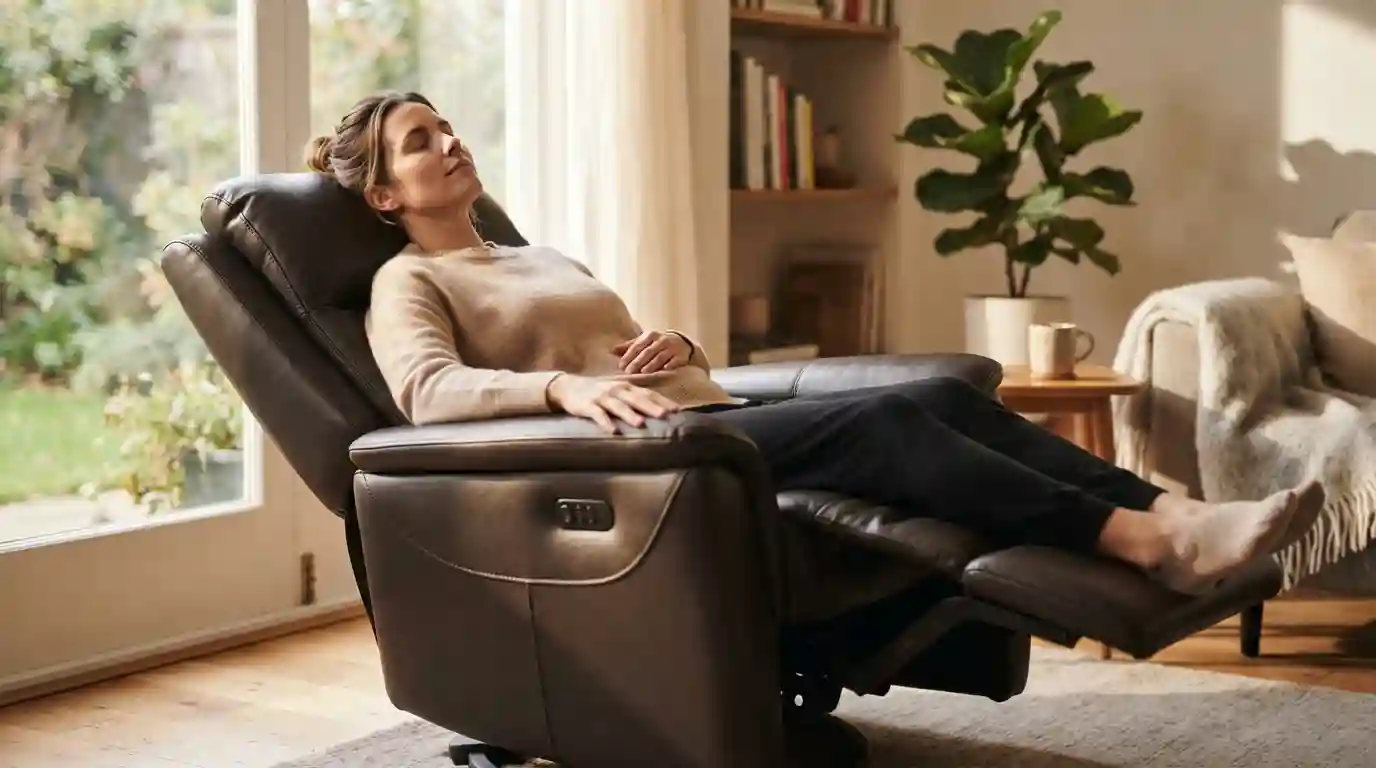
Do massage chairs work? For many people, they can provide short-term relief from muscle tightness, a calming break, and a more comfortable way to unwind at home. A well-fitted chair can knead, roll, tap, stretch, and apply air compression to areas such as the back, shoulders, hips, calves, and feet without requiring another person to be present.
However, a massage chair is not a substitute for medical diagnosis, physical therapy, exercise, or hands-on treatment when those are needed. Its results depend on the chair’s design, the user’s body size and sensitivity, the type of discomfort involved, and how the chair is used. The most realistic answer is that massage chairs can support relaxation and temporary comfort, but they have clear limits.
If you are asking, “Does massage chair really work?” the useful question is not whether every feature delivers the same result for everyone. It is whether the chair’s massage style, fit, and controls match your goals.
What Massage Chairs Can Do Well
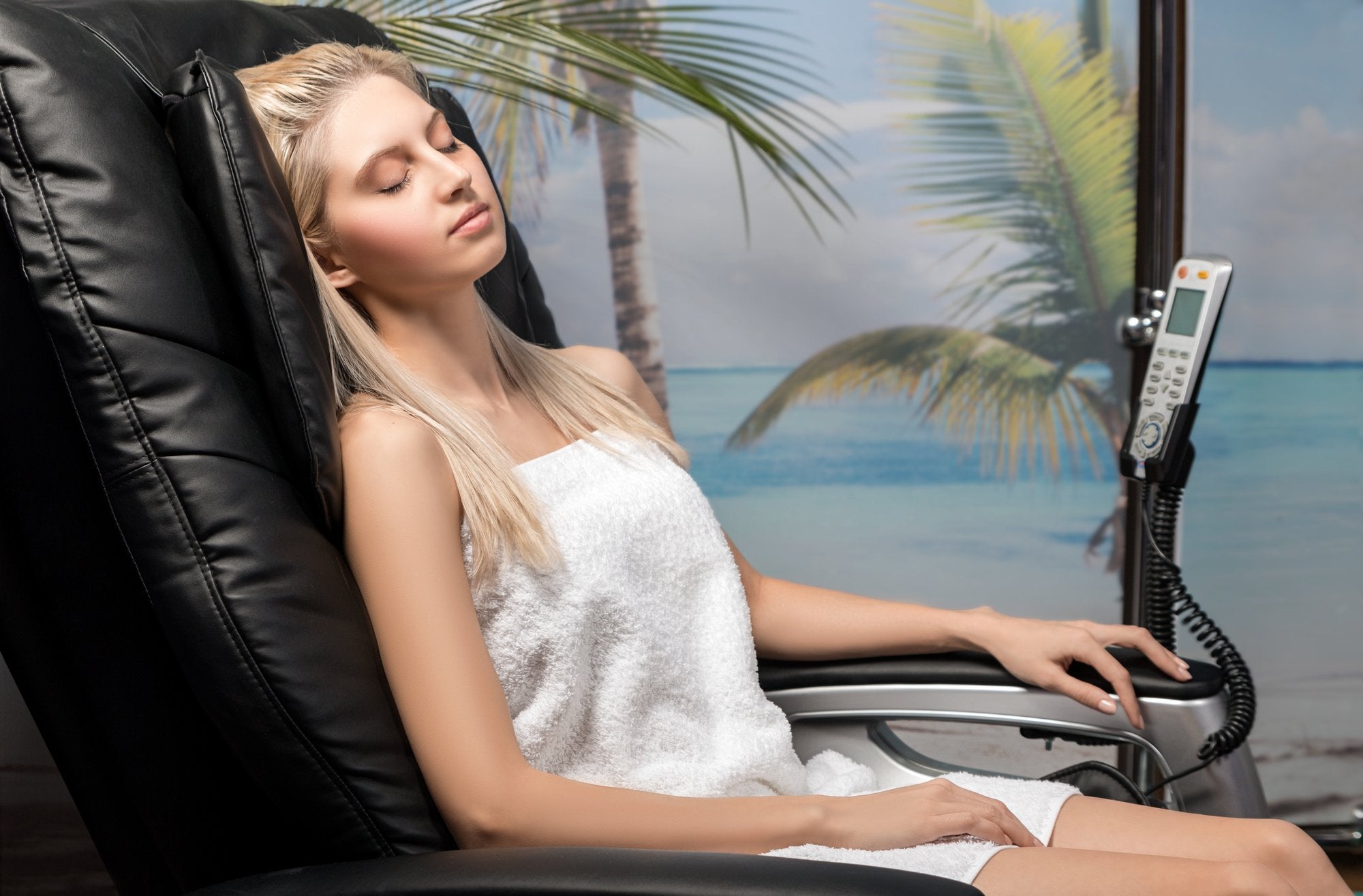
Massage chairs use mechanical rollers, airbags, vibration, heat in some models, and reclining positions to create a massage-like experience. They do not duplicate every aspect of a skilled massage therapist’s work, but they can deliver consistent pressure and movement on demand.
Encourage relaxation and stress relief
One of the most reliable benefits is simple relaxation. Sitting in a reclined position with gentle rhythmic movement can help a person slow down after work, before bed, or during a break. A massage session may feel especially useful when stress shows up as tense shoulders, a tight upper back, or clenched muscles.
Relaxation is personal, though. Some users enjoy firm pressure and deep kneading, while others find it overstimulating. A chair works best when its intensity, speed, and massage area can be adjusted rather than locked into a single automatic routine.
Provide temporary relief for everyday muscle tightness
Massage chair rollers and airbags can temporarily ease the feeling of stiffness or fatigue after ordinary activities such as desk work, driving, standing, household tasks, or a moderate workout. Rolling and kneading programs are commonly used around the upper back and lower back, while air cells may gently compress the arms, legs, feet, shoulders, or hips.
This is comfort support, not proof that the chair has corrected the cause of the tightness. For example, a person whose shoulders tighten during computer work may feel better after a session, but an uncomfortable desk height, poor armrest position, lack of breaks, or an unsuitable monitor setup may still be contributing to the problem.
Make regular massage more convenient
Convenience is a meaningful advantage. A chair is available without booking an appointment, traveling, or coordinating schedules. For people who enjoy frequent short sessions, that accessibility can make relaxation part of a regular routine.
It may also help people who are uncomfortable with hands-on massage or who simply prefer privacy. A chair cannot adapt with human judgment in the same way a trained practitioner can, but it can offer repeatable programs whenever the user wants them.
Support a comfortable recovery routine
After normal physical activity, a gentle massage program may be a pleasant part of a recovery routine. It can be paired with hydration, adequate sleep, light movement, and appropriate stretching if those activities are comfortable for the individual.
That does not mean a massage chair repairs injuries or speeds healing in every situation. If pain is sharp, worsening, linked to an accident, or changes the way you walk or use a limb, self-massage should not be the only response.
What Massage Chairs Cannot Do
Massage chairs are often marketed with dramatic names for their programs, but the names can make the capabilities sound broader than they are. Understanding their limitations helps set safer and more useful expectations.
They cannot diagnose the cause of pain
Back, neck, shoulder, hip, and leg pain can come from many causes. Muscle tension is only one possibility. Nerve irritation, joint problems, inflammatory conditions, circulation issues, fractures, infections, and other concerns may require very different care.
A chair cannot tell the difference between ordinary muscle fatigue and a condition that needs medical attention. If symptoms are severe, persistent, recurrent, or unexplained, consult a qualified healthcare professional instead of trying to massage through them.
They do not replace medical care or rehabilitation
A massage chair may complement a clinician-approved comfort routine, but it does not replace treatment plans for injuries, post-surgical recovery, chronic pain conditions, or neurological symptoms. It also cannot replace exercises designed by a physical therapist to rebuild strength, improve movement control, or restore function.
Be especially cautious about claims that a chair can cure a condition, “realign” the spine, remove toxins, break up scar tissue, or permanently eliminate pain. Those claims are much stronger than what a consumer massage chair can reasonably promise.
They cannot fully replicate a skilled human massage
A trained massage professional can assess how a person responds during a session, change techniques around sensitive areas, and use hands to work with many angles and tissue types. A chair follows mechanical paths and programmed routines.
Modern chairs can be sophisticated, especially models with body scanning and long roller tracks, but their ability to personalize pressure is still limited by the hardware. A roller may feel excellent for one person’s shoulder blade area and uncomfortable for another person with a different torso length or spinal shape.
They cannot overcome poor fit
Even an expensive massage chair may not work well if it does not fit the user. The neck rollers can land too low or too high, the shoulder airbags can press in the wrong place, and the foot wells may be too short or too tight. People near the lower or upper end of a chair’s stated height range should pay close attention to fit.
In other words, do massage chairs really work? Yes, when the chair contacts the intended areas comfortably. If the mechanics consistently miss those areas, more features will not solve the core problem.
How the Main Features Affect Results
Massage chairs vary widely. It helps to look beyond labels such as “full body,” “zero gravity,” or “deep tissue” and consider what each component actually does.
| Feature | What It Usually Does | What to Watch For |
|---|---|---|
| Roller mechanism | Moves along the back to roll, knead, tap, or press muscles. | Roller range, intensity control, and whether the path matches your back length. |
| Air compression | Inflates airbags around the shoulders, arms, hips, calves, or feet for gentle squeezing and holding. | Compression should feel secure, not painful or restrictive. |
| Recline or zero-gravity-style position | Reclines the body and may elevate the legs, changing how body weight rests in the chair. | It can improve comfort for some users, but it is not a medical treatment. |
| Heat | Adds warmth, often around the lumbar area or legs. | Heat may feel soothing, but it should be used cautiously by people with reduced sensation or medical restrictions. |
| Foot rollers | Applies rolling or pressure to the soles of the feet. | Can be intense; the ability to reduce pressure or use socks matters. |
| Body scan | Attempts to position rollers based on shoulder height and body shape. | Check whether manual shoulder-position adjustment is available when the scan is inaccurate. |
Credit: massagechairs.com
Rollers are the core of the massage experience
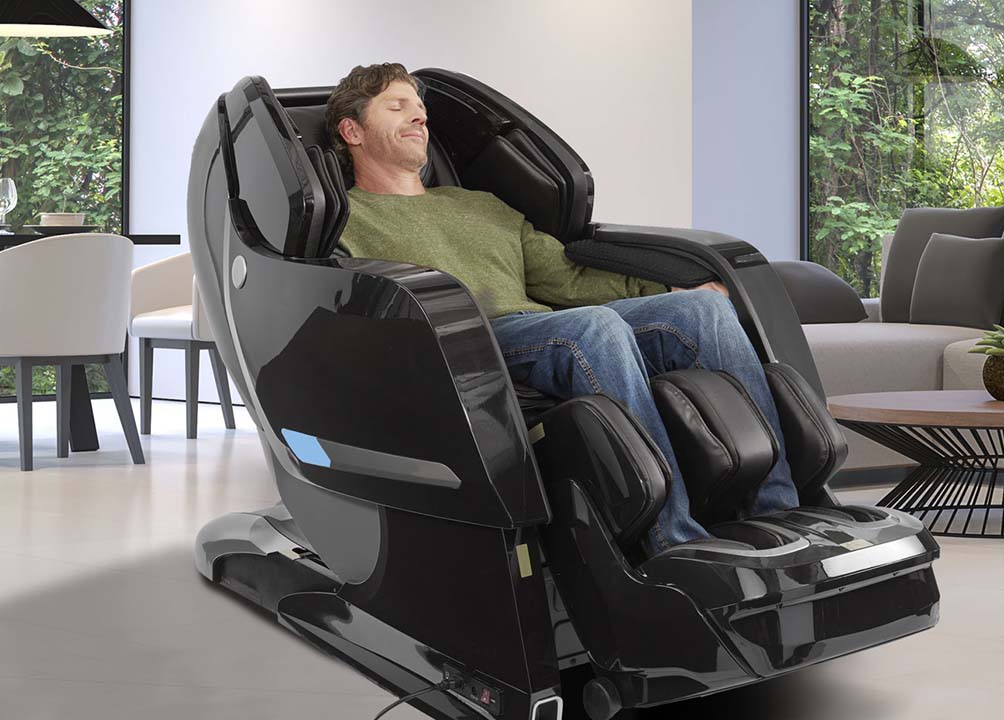
The roller system largely determines how a chair treats the back. Basic chairs may focus on a limited area, while more advanced designs may extend farther from the upper back toward the lower back and hips. Longer coverage can be useful, but it is not automatically better if the roller pressure is too aggressive or the track does not suit the user.
Look for control over intensity, width, speed, and massage location. Spot massage is particularly useful when a person wants to spend more time around the upper back or lumbar region without repeating an entire program.
Airbags add a different kind of pressure
Air compression is not the same as roller massage. It generally creates a squeezing, cradling, or holding sensation. Some people find this gentle pressure relaxing around the arms, calves, and feet. Others dislike the feeling of being held in place.
Airbags can also help keep the body positioned during a reclining session. But they should never be so tight that they cause numbness, pain, or discomfort. Lower settings are often a better starting point.
Reclining can improve comfort, not guarantee results
Recline changes the sitting position and distributes body weight differently. This can make roller pressure feel less sharp for some users and can make a session feel more restful. It is also one reason massage chairs need careful room planning: a chair may require clear space behind it, in front of it, or both when moving into its full recline range.
“Zero gravity” is a common marketing term for a reclined posture with raised legs. It may be comfortable, but it should not be interpreted as a guarantee of spinal correction, pain treatment, or circulation improvement.
Who Is Most Likely to Benefit?
A massage chair tends to be most useful for people who want regular, convenient relaxation and who respond well to mechanical massage. The value is often higher when several household members can use the chair comfortably, provided each user has suitable controls and no health reason to avoid it.
It may be a good fit for people who:
- Experience ordinary muscle tightness from sitting, standing, commuting, or daily activity.
- Enjoy the feeling of massage and want access to it at home.
- Prefer short, repeatable relaxation sessions rather than occasional appointments.
- Want adjustable support for the back, shoulders, legs, or feet.
- Have enough space for the chair, its recline movement, and safe access around it.
It may be less satisfying for people who want very targeted work on a small area, dislike firm pressure, have an unusual body shape that standard rollers do not fit well, or expect the chair to resolve a medical problem.
Who Should Be Careful or Ask a Clinician First?
Massage is not suitable in every situation. The safety guidance in a chair’s manual should always come first, and people with health concerns should ask a doctor or other qualified clinician whether chair massage is appropriate for them.
Extra caution is sensible for people with:
- Recent surgery, a recent injury, or a suspected fracture.
- Severe osteoporosis or other conditions that increase fracture risk.
- Blood clot concerns, significant circulation problems, or unexplained leg swelling.
- Reduced feeling in the skin or feet, including some forms of neuropathy.
- Bleeding disorders or use of medication that increases bleeding risk.
- Pregnancy, particularly if there are complications or uncertainty about massage safety.
- Implanted medical devices or a health condition for which vibration, heat, or pressure could be a concern.
- Severe, new, or worsening neck or back symptoms.
Stop using the chair and seek prompt medical advice for symptoms such as chest pain, sudden weakness, numbness, loss of coordination, fever with back pain, a severe headache with neck pain, or changes in bladder or bowel control. These are not situations to manage with a home massage program.
Credit: wildcatmattress.com
How to Use a Massage Chair Without Overdoing It
More pressure and longer sessions are not necessarily better. Mechanical massage can leave muscles feeling sore if the settings are too intense, particularly when the user is new to the chair or returns after a long break.
- Start with a short, gentle program. Choose low roller intensity and light air compression until you know how your body responds.
- Adjust the fit before judging the chair. Confirm that neck, shoulder, and back rollers land in the correct areas. Use manual adjustment if the chair provides it.
- Use targeted settings carefully. A focused program can be helpful, but prolonged concentrated pressure on one tender spot may aggravate it.
- Pay attention during and after the session. A comfortable, relaxed feeling is a good sign. Sharp pain, tingling, numbness, dizziness, or lasting soreness is a reason to stop.
- Keep the chair as one part of a broader routine. Movement breaks, sensible workstation setup, sleep, exercise suited to your abilities, and professional care when needed remain important.
Common mistakes that make a chair feel ineffective
- Choosing maximum intensity immediately because it seems more powerful.
- Assuming pain means the massage is “working.”
- Using automatic programs without correcting shoulder or roller position.
- Buying based only on feature lists instead of body fit and comfort.
- Using the chair to avoid evaluation of ongoing or unusual symptoms.
- Ignoring practical issues such as door clearance, floor protection, power access, and recline space.
How to Tell Whether a Massage Chair Is Working for You
Judge effectiveness by what happens during and after normal use, not by how powerful the chair feels. A useful session should feel comfortable while it is running and leave you feeling relaxed or temporarily less tight rather than sore, numb, dizzy, or irritated afterward.
- Comfort during the session: Roller and air pressure should stay within a tolerable range without sharp pain.
- Short-term response: Notice whether ordinary tightness or stiffness feels temporarily easier after a gentle session.
- Fit and targeting: The rollers should reach the intended areas instead of repeatedly missing the shoulders, back, calves, or feet.
- Repeatability: A useful chair should let you reproduce comfortable settings without needing maximum intensity.
- No worsening symptoms: Stop and seek appropriate medical guidance if use causes persistent pain, numbness, weakness, dizziness, or other concerning symptoms.
For the mechanics behind rollers, airbags, tracks, and programs, see How Do Massage Chairs Work?. If your question is about purchase value, cost, space, and ownership trade-offs rather than effectiveness, see Are Massage Chairs Worth It?.
The Bottom Line
Massage chairs work best as tools for relaxation, temporary muscle comfort, and convenient at-home massage. They can be genuinely enjoyable and useful when their rollers, airbags, recline position, and controls fit the person using them.
They cannot diagnose pain, treat every condition, replace rehabilitation, or guarantee lasting relief. Choose one for comfort and routine use rather than as a cure, start gently, and get medical advice when symptoms are severe, persistent, or unexplained.
Credit: massagechairstore.com
Frequently Asked Questions
Can a massage chair make you sore?
Yes. Firm rollers, strong airbags, or an overly long session can leave muscles tender, especially when you are not used to mechanical massage. Lower the intensity, shorten the next session, and avoid using the chair on painful areas until the soreness settles. Stop if pain is sharp, unusual, or worsening.
Is it okay to use a massage chair every day?
Daily use may be comfortable for some people when sessions are moderate and do not cause soreness or irritation. Follow the chair manufacturer’s usage guidance, begin conservatively, and adjust based on how you feel afterward. Daily use is not appropriate if a clinician has advised you to avoid massage, heat, vibration, or prolonged reclining.
Are massage chairs good for lower back discomfort?
They may provide short-term comfort for ordinary lower back muscle tightness, particularly when roller pressure and recline feel comfortable. They are not a reliable solution for every type of lower back pain. Persistent pain, pain after an injury, pain that travels down a leg, numbness, or weakness should be assessed by a healthcare professional.
Do more expensive massage chairs always give better massages?
No. Higher-priced chairs may offer more adjustment, coverage, materials, and programming, but fit and comfort matter more than feature count. A simpler chair with well-positioned rollers and usable intensity controls can be more satisfying than a complex chair that feels too hard, too narrow, or poorly aligned.
Should you wear clothes in a massage chair?
Most people use a massage chair while wearing comfortable clothing. Thin or medium-weight fabric can make roller pressure feel less intense and may improve comfort, while very thick clothing can reduce the sensation. Avoid items with hard objects in pockets, bulky belts, or accessories that could press into your body or damage the chair.