
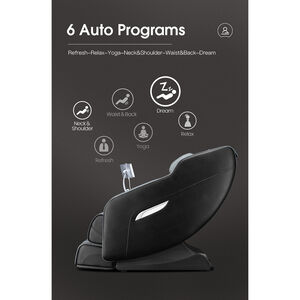
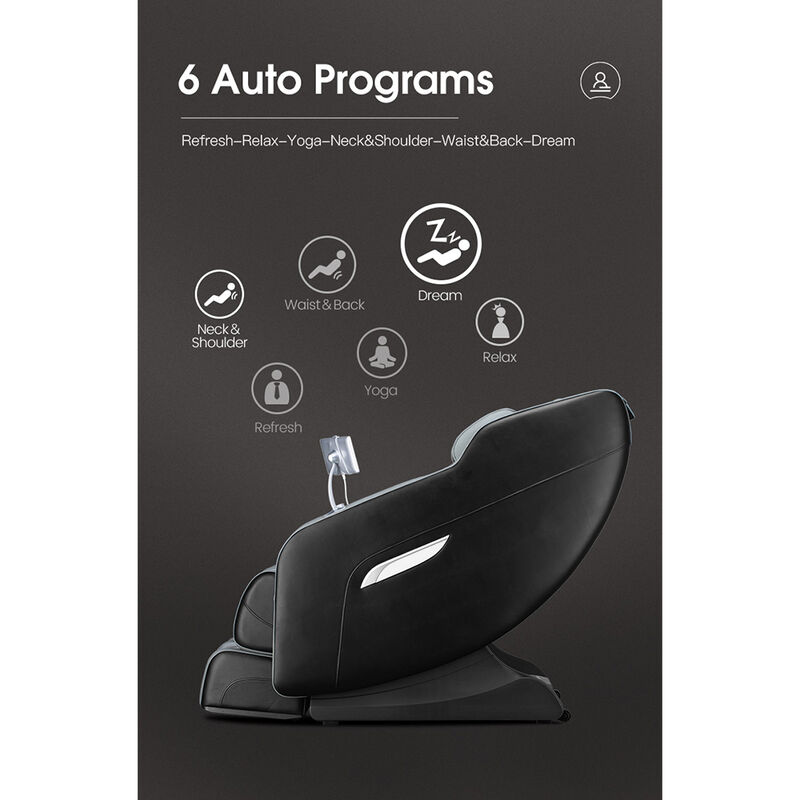
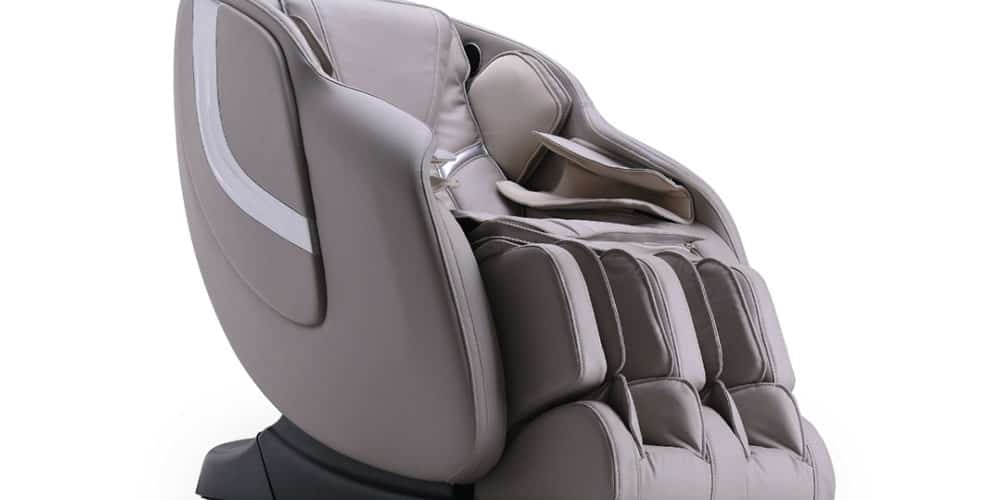
A 2D massage chair uses motorized rollers that travel along a fixed track behind your back to deliver techniques such as kneading, tapping, rolling, and combinations of these movements. It is one of the most established massage-chair systems, designed primarily for everyday relaxation and muscle comfort rather than deep, highly customizable pressure.
The “2D” label describes how the rollers move. In most chairs, the rollers travel up and down the back while working across the left and right sides of the spine. Unlike 3D systems, they generally do not move significantly forward and backward to change how far the rollers press into the body.
Understanding this difference makes it easier to set realistic expectations. A 2D chair can provide a pleasant, repeatable back massage and may include airbags, heat, reclining, and leg massage features. However, its roller pressure and body contouring are usually less adjustable than those of more advanced massage-chair designs.
What “2D” Means in a Massage Chair
The number in a massage-chair description usually refers to the roller system rather than the entire chair. A 2D mechanism is the basic powered roller design used in many entry-level and mid-range massage chairs.
Its rollers commonly perform two main types of movement:
- Vertical movement: The roller carriage travels up and down the massage track, working from the upper back toward the lower back.
- Horizontal working motion: The roller heads work on both sides of the spine, creating movements that imitate broad kneading, tapping, or rolling actions.
The key limitation is depth. In a typical 2D system, the rollers stay on a relatively fixed plane in relation to the chair back. They may feel firmer or gentler depending on the program, roller speed, seat position, padding, and the user’s body shape, but they do not actively extend outward and retract inward in the way a 3D mechanism does.
That does not mean every 2D massage chair feels weak. A chair’s perceived intensity depends on several factors beyond the roller category, including the thickness of the upholstery, the shape of the backrest, the recline angle, and whether the user is sitting directly against the rollers. Still, people looking for deep, targeted pressure through the shoulder blades or lower back may find a 3D design more suitable.
How the Roller System Works
Inside the backrest, a motorized carriage holds the massage rollers. The carriage moves along a track, while gears and motors control the roller pattern, speed, and direction. When a massage program starts, the chair coordinates these movements to create a sequence intended to resemble familiar manual massage techniques.
The massage track guides the roller path
The track is the rail system that determines where the rollers can travel. Depending on the chair, it may cover only the upper and lower back or continue farther down toward the seat area.
Track shape matters because the human spine is not flat. Many massage chairs use a curved path that is intended to follow the natural contour of the back more closely than a straight rail. The exact coverage and fit vary by model, so it is important to look at the manufacturer’s stated massage range rather than assuming every 2D chair reaches the same areas.
A 2D roller system can work on areas such as:
- The upper back and shoulder region
- The muscles alongside the spine
- The mid-back
- The lower-back area
- In some models, the upper glutes or seat area through extended track coverage
The rollers are designed to work beside the spine, not directly on the spinal bones. Proper positioning is important. If your shoulders sit much higher or lower than the chair’s intended range, the massage may land in an uncomfortable place.
Rollers create different massage patterns
A 2D massage chair can offer several styles of massage even though its depth is fixed. These are created by changing the roller motion, timing, and speed rather than by changing how far the rollers project outward.
| Massage style | How the rollers usually move | What to expect |
|---|---|---|
| Kneading | Rotating or circular motions on both sides of the back | A rhythmic, compressing sensation that may feel broad and steady |
| Tapping | Quick, repeated alternating movements | A light percussion-like sensation, often used across the upper or mid-back |
| Rolling | Rollers travel smoothly along the track | A gentler stretching or gliding feeling along the back |
| Kneading and tapping | Two movements are combined or alternated | A more varied session that can feel more active than rolling alone |
| Spot or partial massage | Rollers remain in, or repeatedly work through, a selected region | More focus on one area, when that feature is available |
Names and program behavior are not fully standardized between brands. One chair’s “shiatsu” program may feel very different from another’s, so the underlying features matter more than a program label alone.
Body scanning may improve placement
Some 2D chairs include a body scan or shoulder-position adjustment. The chair uses its roller position and, in some cases, sensors to estimate where your shoulders are before beginning the session. This can help place the roller range more appropriately for your height.
Body scanning is useful, but it is not perfect. If the rollers are landing too high, too low, or directly on an uncomfortable bony area, use any available shoulder-height controls or change your seating position. A pillow behind the head or a thin pad behind the back can also alter how the massage feels, although it may reduce roller contact.
What a 2D Massage Chair Feels Like
A 2D massage chair usually feels like a controlled, repeatable massage along the back rather than a therapist adapting pressure moment by moment. The sensation can range from gentle rolling to fairly firm kneading, but it typically remains closer to the backrest than a 3D roller system.
For many users, this is an advantage. A fixed-depth roller action can feel predictable and less aggressive, particularly for people who prefer relaxation over intense pressure. The chair may be suitable for winding down after desk work, standing for long periods, or general muscle tightness after everyday activity.
Expect the massage to feel different depending on your body shape. Leaner users may feel the rollers more clearly because there is less natural cushioning between the mechanism and the back. Users with broader shoulders, a longer torso, or a pronounced lower-back curve may need to adjust the chair’s position or choose a model with a better body-fit range.
Credit: pcrichard.com
Factors that affect perceived intensity
- Recline angle: Reclining can increase contact between your back and the rollers, making the massage feel stronger.
- Chair padding: Thicker padding may soften roller pressure; thinner padding may make it more noticeable.
- Program selection: Tapping, kneading, and combined programs can feel more intense than a simple rolling mode.
- Speed settings: Faster roller movements may feel more stimulating, but not necessarily deeper.
- Width settings: Where available, these adjust the distance between the rollers to better suit narrower or broader backs.
- Clothing: Thick layers can reduce the sensation, while thin clothing may make the massage feel more direct.
Start with a gentle program and shorter session, especially if you are new to massage chairs. More pressure is not automatically better. A session should feel comfortable, not sharp, numbing, or painful.
2D vs. 3D vs. 4D Roller Systems
Massage-chair terminology can be confusing because manufacturers use similar labels in different ways. The most useful distinction is whether the rollers can actively adjust their depth against the back.
| System | Primary roller movement | Pressure adjustment | Best suited to |
|---|---|---|---|
| 2D | Travel along the back with side-to-side roller action | Usually based on program, speed, recline, and padding rather than active depth control | Users who want a straightforward, predictable massage experience |
| 3D | 2D movement plus forward-and-back roller movement | More direct control over how far rollers press into the back | Users seeking more focused or deeper-feeling massage pressure |
| 4D | Usually builds on 3D movement with changes in speed, rhythm, and timing | May provide a more varied massage pattern, depending on the model | Users who value more complex programs and customization |
There is no universal industry rule that guarantees one chair’s 4D experience is better than every 3D or 2D model. “4D” is often a marketing term for more sophisticated timing and roller control, not a completely separate physical direction of movement. Always review the actual functions offered by the specific chair.
A 2D chair remains a practical choice when your priority is comfort, routine use, simple controls, or a more moderate massage. It may not be the best match if you specifically want deep pressure around the shoulder blades, greater lower-back targeting, or extensive intensity customization.
Features Often Paired With a 2D Roller System
The roller mechanism is only one part of the chair. Many 2D massage chairs combine the back massage with features that support relaxation and change the overall feel of a session.
Air compression massage
Airbags inflate and deflate around areas such as the shoulders, arms, hips, calves, or feet. Unlike rollers, airbags apply broad compression rather than moving pressure along the back. They can make a chair feel more full-body, even if the roller system itself is basic.
Air compression can be pleasant, but it should not feel pinching or overly restrictive. Look for adjustable air intensity if you are sensitive to squeezing pressure or have a larger body frame.
Recline and zero-gravity-style positioning
Reclining changes your weight distribution and may help you feel more supported during a session. Some chairs offer a zero-gravity-style position, where the legs are raised and the body reclines into a more neutral, weight-distributed posture.
This position can also make roller contact feel stronger because your back rests more consistently against the chair. It is useful to test recline slowly if you are unsure how intense the rollers will feel.
Heat
Gentle heat is sometimes included in the lower-back area, seat, or leg sections. It can add warmth and comfort, but it does not turn a massage chair into a medical treatment device. Heat settings vary widely, and people who are sensitive to heat should use the feature cautiously.
Calf and foot massage
Foot and calf sections may use airbags, rotating nodes, rollers, or a combination of these. The experience can range from light compression to a more noticeable pressure under the feet. Because foot mechanisms vary substantially, this is an area worth checking separately from the back-roller description.
Who May Prefer a 2D Massage Chair
A 2D massage chair is often a sensible option for people who want the convenience of regular at-home massage without needing the deepest or most adjustable roller system. It can work well for users who enjoy gentle-to-moderate pressure and prefer a simple routine.
You may prefer this type of chair if you:
- Want a back massage primarily for relaxation and everyday comfort.
- Prefer predictable roller pressure rather than strong, protruding massage nodes.
- Are new to massage chairs and do not yet know how much intensity you enjoy.
- Value features such as reclining, airbags, or heat more than highly adjustable roller depth.
- Have a budget that does not justify paying extra for a more advanced mechanism.
On the other hand, consider comparing 3D options if you often find standard massage chairs too mild, need more control over intensity, or want a stronger sensation in areas where your back curves away from the chair.
Credit: ogawaworldusa.com
How to Choose the Right 2D Massage Chair
Do not choose a chair based on “2D” alone. Two chairs with the same roller category can feel noticeably different because of their track length, seat dimensions, upholstery, airbags, controls, and body-fit range.
Check fit before advanced features
Fit should come before program count. Review the manufacturer’s recommended user-height range, maximum user weight, seat width, shoulder width guidance, and leg-rest adjustment details where provided. A chair that does not fit your torso length or shoulder position will not deliver a satisfying roller massage, regardless of how many automatic programs it has.
If more than one person will use the chair, look for adjustable shoulder positioning, a flexible leg extension, or settings that allow each user to modify the massage area.
Consider the roller track and coverage
Ask where the rollers actually reach. Some chairs focus mainly on the back, while others extend farther toward the seat. Longer coverage may be useful for users who want attention around the lower back and upper glute area, but it should not be confused with foot or calf massage, which requires separate hardware.
Look for useful adjustments
Even without 3D depth control, a well-designed 2D chair may offer enough adjustment for comfortable daily use. Useful options can include:
- Manual or automatic program selection
- Roller speed settings
- Massage width settings
- Spot and partial-area massage
- Shoulder-height adjustment
- Airbag intensity control
- Recline adjustment
- Timer settings
Prioritize controls you will actually use. A chair with fewer, clear settings can be more practical than one with many programs that offer little meaningful difference.
Measure the room and delivery path
Massage chairs are larger than ordinary recliners, especially when fully reclined. Measure the intended floor space, the wall clearance required by the model, and the route through doors, hallways, elevators, or staircases before ordering.
Some chairs are designed to slide forward as they recline, reducing the gap needed behind them. Others require more open space. This detail is model-specific and can make a major difference in a smaller room.
What to Know About a LifeSmart 2D Massage Chair
A LifeSmart 2D massage chair should be evaluated by its individual model specifications rather than the brand name or 2D label alone. Product lines can differ in roller track design, airbag placement, leg massage hardware, recline function, upholstery, controls, and recommended user fit.
When comparing a LifeSmart model with another 2D chair, check the following points in the product manual or official listing:
- Where the back rollers begin and end
- Whether the chair includes body scanning or manual shoulder adjustment
- Available massage techniques and manual controls
- Whether width, speed, and air intensity can be changed
- How the leg rest accommodates different heights
- Required wall clearance when reclining
- Cleaning guidance, warranty terms, and service support in your area
It is also wise to distinguish between rollers and airbags in any feature list. A listing that advertises “full-body massage” may include air compression for the arms and legs while the powered roller mechanism works only along the back. Both features can be valuable, but they create different sensations.
Using a 2D Massage Chair Comfortably and Safely
Start conservatively, particularly during the first few sessions. Choose a lighter setting, sit fully back in the chair, and use a short timer if one is available. You can gradually increase intensity or duration only if the massage remains comfortable.
Stop using the chair if you experience pain, tingling, numbness, dizziness, or unusual discomfort. A massage chair is intended for comfort and relaxation; it should not be used to push through pain or to self-treat a potentially serious problem.
People who are pregnant, have a pacemaker or other implanted medical device, take blood-thinning medication, have recent surgery or injury, have reduced sensation, or have a medical condition affecting bones, circulation, or nerves should check with a qualified clinician before using a massage chair. Follow the manufacturer’s safety instructions as well, since contraindications can vary by model and feature.
Credit: pcrichard.com
Care and Maintenance Basics
Regular care helps a 2D massage chair remain comfortable and reduces unnecessary wear on the upholstery and moving parts. Unplug the chair before cleaning, and follow the manufacturer’s instructions for its specific materials.
- Wipe the exterior with a soft cloth suitable for the upholstery type.
- Avoid harsh cleaners, excessive moisture, and abrasive tools.
- Keep the track area and moving sections free of small objects, pet hair, and debris.
- Do not allow children or pets to play around the moving leg rest or reclining mechanism.
- Use a stable electrical outlet and avoid damaged cords or overloaded extension setups.
- Arrange service through the manufacturer or an authorized provider if the chair makes unusual noises, stops moving, or displays a fault indicator.
Do not attempt to open the roller mechanism or lubricate internal components unless the manufacturer specifically instructs you to do so. Massage chairs contain motors, wiring, and moving assemblies that may require professional service.
Frequently Asked Questions
Is a 2D massage chair good enough for daily use?
Yes, a 2D chair can be a good daily-use option if its fit, intensity, and controls suit you. It is especially appropriate for people who want a consistent, moderate massage for relaxation. Daily use should remain comfortable, and the chair’s recommended session limits should be followed.
Can a 2D roller system massage the neck?
Most 2D roller systems focus on the back and upper shoulder area rather than the neck itself. Some chairs have a headrest, neck pillow, or airbags near the shoulders, but true neck coverage depends on the model’s roller range and design. Check the stated massage area before buying if neck comfort is a priority.
Why do the rollers feel uneven on one side of my back?
Your seated position, shoulder alignment, spinal curve, and muscle tension can all change how the rollers feel from side to side. Reposition yourself, adjust the shoulder setting if available, and try a different recline angle. If the movement feels mechanically irregular or makes unusual sounds, stop using the chair and contact the manufacturer.
Does a 2D chair use more space than a regular recliner?
Usually, yes. The chair needs room for its larger frame, leg rest, and recline movement. The exact footprint depends on the model, including whether it has space-saving recline technology. Measure both the chair’s upright dimensions and its fully reclined clearance requirements.
Can I make a 2D massage chair feel less intense?
In many cases, yes. Select a gentler program, reduce speed, sit slightly less firmly against the backrest, use a more upright position, or place a thin cushion or folded blanket between your back and the chair. Avoid adding thick padding that interferes with safe seating or the chair’s moving parts.