
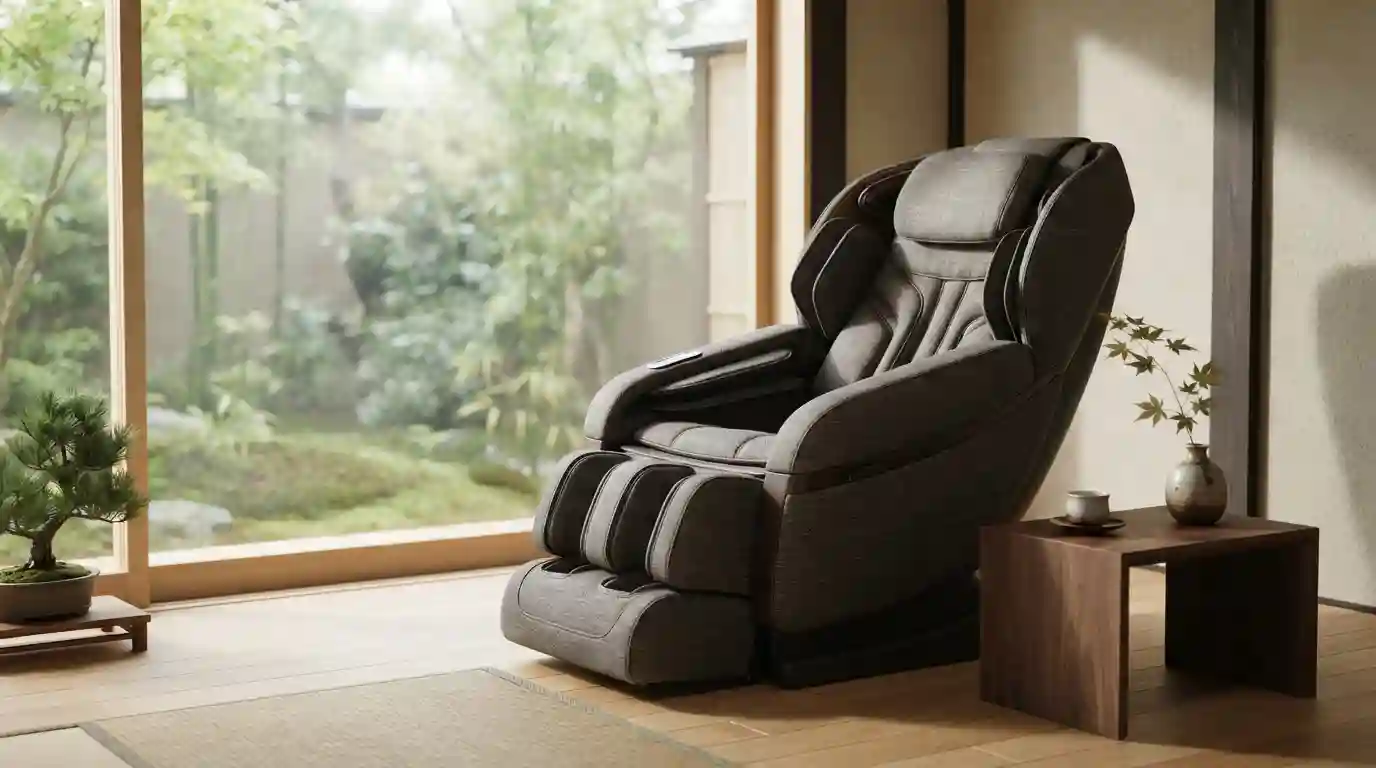
Japanese massage chair brands are widely associated with precise roller systems, thoughtful body-scanning features, and a long-standing focus on home wellness equipment. The category includes brands that sell primarily in Japan as well as companies with an international presence, so the experience can vary considerably by model and market.
Comparing Japanese massage chair brands requires more than looking at the number of massage programs or whether a chair has a zero-gravity recline. The meaningful differences are found in massage mechanism design, pressure control, chair fit, materials, repair support, and how well the chair suits daily use in a real home.
Brands such as Fujiiryoki, Family Inada, Panasonic, and Thrive have each taken different approaches to massage technology. Understanding those approaches makes it easier to separate useful features from marketing language and choose a Japanese massage chair that fits your priorities.
Why Japanese Massage Chair Brands Have a Strong Reputation
Japan has been an important market for automated massage chairs for decades. Japanese manufacturers helped develop many features that are now common across the wider industry, including body scanning, adjustable massage intensity, reclining positions, heated areas, and multi-part air compression systems.
The reputation of Japanese massage chairs is not based on one universal design standard. Instead, it reflects the emphasis many established brands place on controlled movement, compact engineering, and massage programs designed around specific body regions. Japanese domestic models also tend to reflect the space limits of many Japanese homes, where chair footprint, quiet operation, and ease of storage can matter as much as maximum intensity.
That said, a Japanese brand name does not automatically guarantee that every chair is made in Japan or that it will be the best fit for every buyer. Manufacturing location, available features, service arrangements, and model design can differ by region. Always evaluate the individual chair rather than relying on country association alone.
The Major Japanese Massage Chair Brands
| Brand | Known For | Typical Strengths | Points to Check |
|---|---|---|---|
| Fujiiryoki | Long history in massage chair development | Detailed automatic programs, body scanning, refined roller control | Model availability and local service support vary outside Japan |
| Family Inada | Premium, full-body massage chair designs | Stretch-focused programs, air-cell coverage, advanced body-contouring concepts | Large chairs may need substantial floor space and delivery access |
| Panasonic | Consumer electronics engineering and compact designs | User-friendly controls, approachable designs, broad home-wellness product experience | Massage chair lineups differ widely by country |
| Thrive | Massage devices and accessible home massage products | Practical designs, simpler controls, options beyond high-end full-size chairs | Feature depth may be more limited than premium flagship chairs |
Fujiiryoki
Fujiiryoki is one of the best-known names in the Japanese massage chair market and is often associated with sophisticated full-body massage chairs. Its products commonly emphasize automatic body detection, varied massage techniques, and programs that target areas such as the neck, shoulders, back, waist, calves, and feet.
A typical Fujiiryoki design philosophy is to make roller movement feel controlled rather than aggressively forceful. Depending on the model, the chair may adjust the roller position after assessing the user’s shoulder height and body shape. This can help the massage mechanism better align with the upper back, although the result still depends on the person’s height, posture, and how they sit in the chair.
Fujiiryoki chairs are often a strong match for buyers who value a broad set of automated routines and fine-tuning options. Before buying, check whether the model has manual controls for roller position, width, speed, air pressure, and recline. Automatic programs are convenient, but manual adjustment is valuable when one area needs gentler or more focused attention.
Family Inada
Family Inada is known for high-end massage chairs with a strong focus on full-body coverage. The brand has developed chairs that combine roller massage with air compression, stretching movements, reclining systems, and foot or calf massage functions.
Its premium-oriented models often aim to create a more enveloping experience. Rather than treating the back as the only massage zone, these chairs may use airbags or air cells around the shoulders, arms, hips, legs, and feet. This approach can be appealing to people who prefer a whole-body routine over a chair that concentrates mainly on the spine and shoulder area.
The trade-off is that advanced full-body designs can be physically large, heavy, and more complex. A buyer should measure the planned location carefully, including the room needed behind and in front of the chair when it reclines. It is also wise to confirm doorway, hallway, and stair clearance before ordering.
Panasonic
Panasonic has long produced personal-care and wellness products, including massage chairs and smaller massage devices. Depending on the market, its massage chair range may include compact models, conventional upright chairs, and more feature-rich reclining designs.
Panasonic’s key advantage is often usability. Controls may be designed for straightforward operation, and some models are aimed at households that want a massage feature without making a large, complex chair the center of the room. This can make the brand worth considering for users who prioritize an approachable interface and a less intimidating ownership experience.
However, Panasonic product availability varies significantly between countries. A chair sold in Japan may not have the same voltage, warranty, language settings, or repair support as a model officially sold elsewhere. Imported units can create practical complications even when the chair itself is well built.
Thrive
Thrive, associated with Daito Denki, is another Japanese name in home massage equipment. The brand is particularly relevant for shoppers who are comparing full-size massage chairs with smaller massage devices, massage recliners, or simpler chair-based options.
Not every buyer needs a flagship chair with an extensive airbag system and multiple body scans. Thrive can be useful to consider when the priority is basic comfort, a smaller footprint, simpler operation, or a lower level of feature complexity. A less elaborate chair may also be easier for some household members to use consistently.
When comparing Thrive with more premium Japanese massage chair brands, focus on the actual massage coverage. Check whether the chair provides rollers along the upper and lower back, air compression for the legs or arms, foot massage components, adjustable recline, and enough control over intensity for your comfort level.
Massage Technology: What Actually Separates One Chair From Another
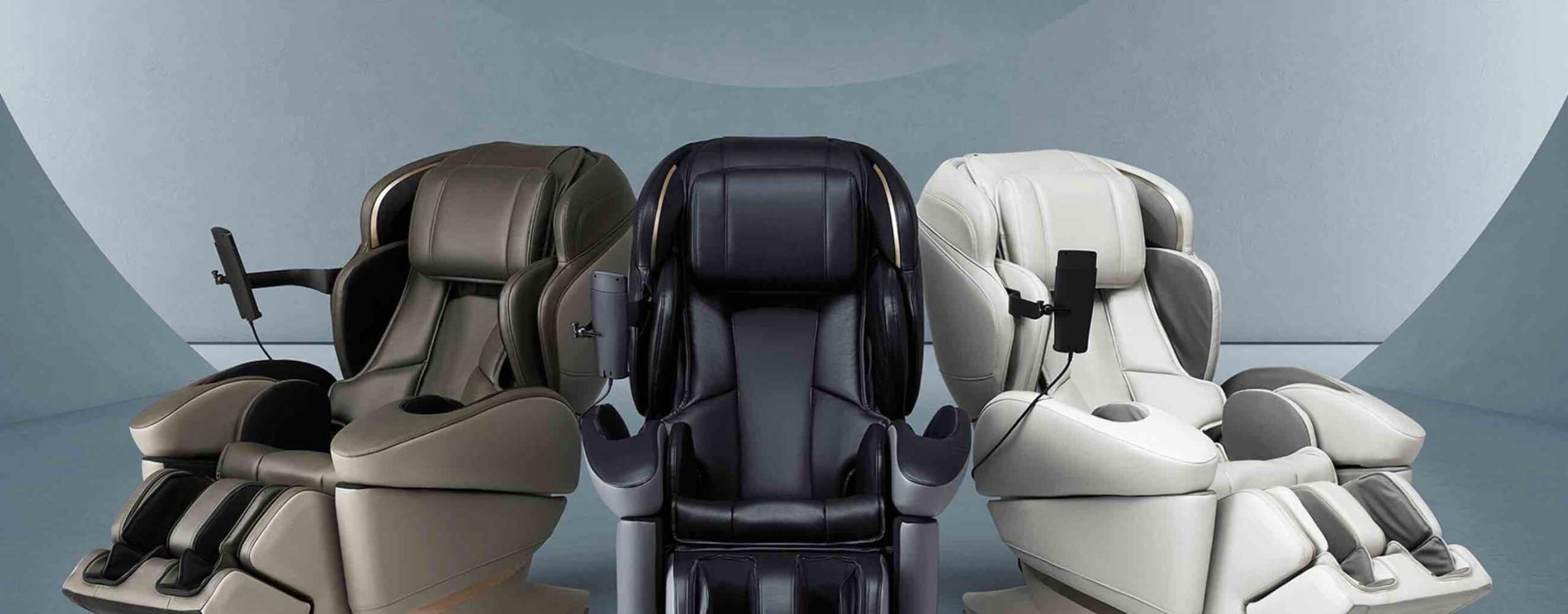
The technology names used in massage chair marketing can sound similar across brands, but they do not always describe identical systems. A chair should be judged by what the mechanism does, how adjustable it is, and whether it suits the user’s body—not solely by the label attached to it.
Credit: massagechairs.com
Roller tracks and massage reach
The roller track is the path followed by the massage mechanism inside the backrest. Shorter tracks generally focus on the upper and middle back. Longer tracks extend farther down the back and may continue toward the seat area.
A longer track can provide broader coverage, but it is not automatically better. Roller shape, range of motion, pressure, speed, and shoulder-position accuracy all influence the experience. Some people prefer a focused upper-back massage, while others value a program that continues through the lower back and gluteal area.
Terms such as 2D, 3D, and 4D are commonly used in the category, but they are marketing terms rather than a universal technical standard. In general:
- 2D rollers move up and down and side to side along the track.
- 3D rollers add forward-and-back movement, allowing the rollers to extend farther toward or away from the body.
- 4D rollers usually refer to changes in roller rhythm, speed, depth, or movement pattern in addition to three-dimensional motion.
The most useful question is whether the chair lets you reduce roller depth when needed. Strong protrusion may feel satisfying to one person and uncomfortably intense to another, especially around the shoulder blades or lower back.
Body scanning and shoulder positioning
Many Japanese massage chairs use a body scan before beginning an automatic program. The chair may estimate shoulder position and adjust the starting point of the rollers. Some models also allow manual shoulder-position correction after the scan.
This adjustment matters because people of the same height can have different torso lengths. If the rollers begin too high, they may press into the neck. If they begin too low, the chair may miss the upper trapezius and shoulder region that many people want to target.
Do not assume a body scan removes the need for user input. If a chair offers a shoulder-position adjustment, use it. This small step can make a larger difference than selecting between two similarly named automatic programs.
Air compression systems
Air compression uses inflatable chambers around parts of the body, such as the shoulders, arms, hips, calves, or feet. These chambers inflate and deflate in sequences to create a squeezing, holding, or rhythmic compression sensation.
Air systems are also used for stretching programs. For example, a chair may stabilize the legs or shoulders while changing the recline position. The experience can feel more comprehensive than roller massage alone, but it should remain comfortable. Excessively tight compression can be unpleasant, particularly for users who are sensitive to pressure or have circulation-related concerns.
Foot and calf massage
Foot massage designs vary greatly. Some chairs use airbags around the calves, while others include rollers, rotating nodes, textured surfaces, or combinations of these elements under the feet. A foot unit should be evaluated for both reach and comfort.
People with larger feet or longer legs should check whether the ottoman extends far enough. A footrest that is too short may force the knees upward or leave the calves poorly positioned. Conversely, users with shorter legs should make sure they can sit back fully without their feet floating above the massage surfaces.
Heat and recline functions
Heat is usually intended to add warmth and comfort, not to provide medical treatment. It may be built into the lumbar area, seat, calves, or feet, depending on the model. The practical questions are whether the heat level is comfortable, whether it can be turned off independently, and whether the chair has a timer.
Zero-gravity or weightless-style recline positions raise the legs and recline the back to distribute body weight more evenly. Many users find this position comfortable during a massage because it can reduce the feeling of pressure from the rollers. Still, recline range matters more than the label. Test whether the head, neck, knees, and lower back feel supported in the position you would actually use.
Build Quality: How to Evaluate It Without Relying on Brand Reputation Alone
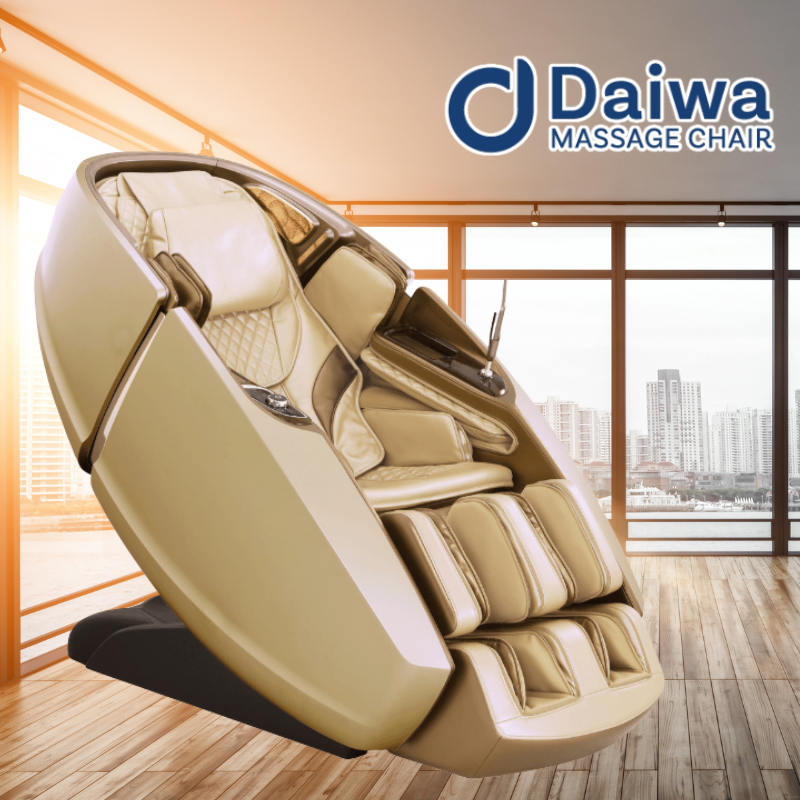
Build quality in a massage chair is about more than upholstery. The internal mechanism, frame, motors, air pump system, wiring, controls, and moving joints all affect long-term ownership. Japanese brands may have strong engineering histories, but quality still varies by product tier and individual model.
Credit: themodernback.com
Frame stability and moving parts
A massage chair should feel stable when reclining, lifting the leg rest, and running a more vigorous program. Excessive wobble, unusual clicking, inconsistent roller movement, or strained motor noise can indicate a problem, though no powered chair will be completely silent.
Pay attention to transitions between positions. The backrest, footrest, and reclining system should move smoothly rather than jerk abruptly. If possible, try the chair at different recline angles because some issues only become noticeable when the chair is fully extended.
Upholstery and contact surfaces
Most massage chairs use synthetic upholstery rather than natural leather. The quality of that material affects how the chair feels, how easily it cleans, and how it may wear over time. Look at high-contact areas such as the seat, shoulder pads, arm channels, and foot compartments.
Removable or washable foot pads can be practical in households where several people use the chair. Covers that are too thick may soften the massage feel, while thin covers can make rollers or foot nodes feel more pronounced. Neither approach is universally better; comfort preference should guide the choice.
Controls and software usability
A sophisticated chair can become frustrating if its controls are difficult to understand. A good interface should make it clear how to start and stop a program, adjust intensity, reposition the rollers, change recline, and return the chair to its upright position.
Remote controls with physical buttons can be easier to use than app-only systems for many people, especially when lying back in the chair. An app can be useful for saved routines or guided programs, but it should not be the only practical way to operate essential functions.
Service, parts, and warranty support
Service support is one of the most important differences between buying from an authorized local retailer and importing a chair independently. Massage chairs contain specialized components, and a fault may require a trained technician rather than a general furniture repair service.
Before purchasing, ask who handles in-home service, whether replacement parts are available locally, what the warranty covers, and whether labor, travel, and shipping are included. Confirming this information before delivery is more useful than assuming a respected brand will provide identical support in every country.
Key Differences Between Japanese Domestic and Export Models
A Japanese massage chair sold for the domestic market can differ from an export model carrying the same brand name. These differences are not necessarily signs of lower or higher quality; they often reflect regional regulations, electrical requirements, consumer preferences, and distribution arrangements.
- Power compatibility: Japanese domestic units may be designed for Japan’s electrical system. Do not assume a plug adapter alone makes an imported chair safe or suitable.
- Language and controls: Displays, manuals, voice prompts, and remote labels may be in Japanese.
- Warranty coverage: A manufacturer warranty may apply only in the country where the chair was originally sold.
- Physical dimensions: Domestic Japanese models may favor compact room dimensions, while export models may be designed around different body-size ranges.
- Program selection: The available massage routines and features can vary between regional versions.
For most buyers outside Japan, an officially imported model with local warranty and service support is usually the lower-risk choice. A direct import may appear attractive, but the potential savings can disappear if installation, power conversion, repairs, or replacement parts become difficult.
How to Compare Japanese Massage Chairs Before Buying
A good comparison starts with your body, room, and intended use. The chair with the longest feature list is not always the chair you will enjoy using regularly.
- Measure your space. Include the chair’s upright footprint, full recline clearance, and access route from the delivery entrance to the room.
- Check body-size fit. Look for the supported height range, seat width, shoulder fit, calf length, and footrest extension. If possible, have each regular user try the chair.
- Test the strongest setting. You can usually make a strong chair gentler, but a chair with insufficient depth or pressure may not meet your needs.
- Test the gentlest setting too. A quality chair should be usable on days when you want a lighter massage rather than an intense session.
- Review manual adjustments. Confirm that you can control roller location, intensity, air pressure, speed, width, and recline where relevant.
- Assess foot and calf comfort. This area is often overlooked, yet it can determine whether the chair suits your height and leg length.
- Verify local support. Obtain clear warranty and service information from the seller before committing.
Practical Limitations and Safety Considerations
Massage chairs are designed for relaxation and temporary comfort, not for diagnosing or treating medical conditions. A chair cannot replace assessment or care from a qualified health professional when pain is severe, persistent, unexplained, or accompanied by symptoms such as weakness, numbness, chest discomfort, dizziness, or swelling.
People who are pregnant, have implanted medical devices, circulation concerns, recent surgery, fractures, significant osteoporosis, or other health conditions should seek advice from an appropriate clinician before using a massage chair. The same caution applies to anyone taking medication or managing a condition that affects sensation, bruising, or blood clotting.
Start with a short session at a low setting, especially when using a new chair. Stop if the massage causes pain, numbness, dizziness, skin irritation, or discomfort that does not settle promptly. A good massage chair should be adjustable enough to feel relaxing rather than something that must be endured.
Credit: themodernback.com
FAQ
Are all Japanese massage chair brands manufactured in Japan?
No. A Japanese brand may design, develop, source, or distribute products through facilities in more than one country. Manufacturing location can also vary by model. Check the specific chair’s product documentation rather than assuming its country of manufacture from the brand name.
Which Japanese massage chair brand is best for deep tissue-style pressure?
There is no universal best brand because roller depth and perceived pressure vary by model and user body shape. Look for chairs with adjustable roller protrusion, manual spot massage, shoulder-position controls, and multiple intensity levels. Trying the chair in person is especially useful if strong massage pressure is a priority.
Do Japanese massage chairs work well for taller users?
Some do, but fit is model-specific. Taller users should pay close attention to shoulder scan range, backrest length, calf section depth, footrest extension, and head support. A chair that feels comfortable for one tall user may not fit another with different torso and leg proportions.
How long should a quality massage chair last?
Service life depends on usage frequency, maintenance, environment, and the availability of repair parts. Rather than relying on a general lifespan estimate, evaluate the warranty, the seller’s repair process, and whether the brand has established parts support in your area.
Is a full-body air compression system necessary?
Not necessarily. Air compression can add arm, leg, hip, and stretching functions, but some users mainly want roller massage for the neck, shoulders, and back. Choose a full-body system if you enjoy the enveloping pressure and have room for a larger chair; otherwise, a simpler design may be a better fit.