
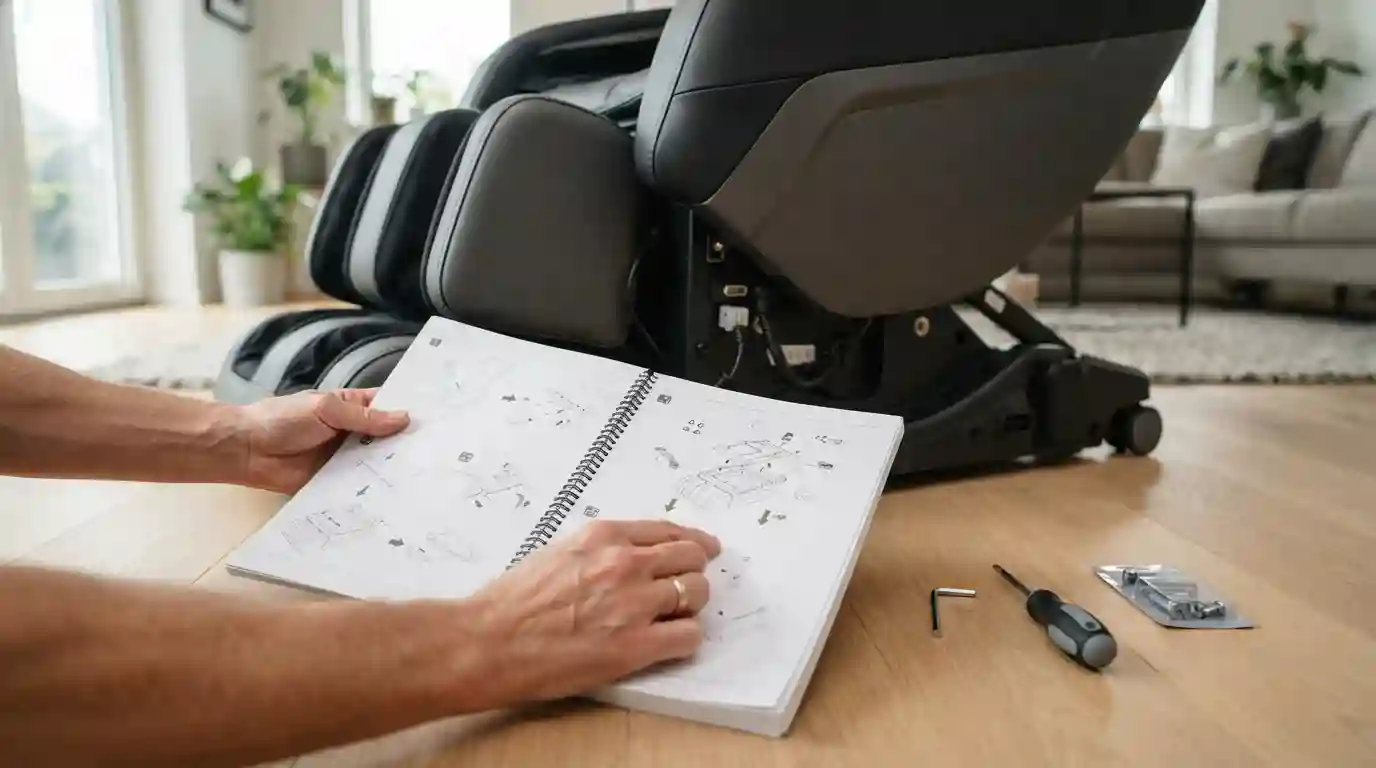
A massage chair manual is more than a quick-start leaflet. It explains how to position, operate, clean, and troubleshoot a chair safely while protecting its motors, rollers, airbags, upholstery, and electronic controls.
Because features vary by model, the manual supplied with your chair always takes priority over general advice. Use it to confirm assembly steps, electrical requirements, weight limits, remote functions, error messages, and any maintenance instructions specific to your unit.
This guide covers the practical information most owners need: setting up a massage chair correctly, understanding common controls, keeping it in good condition, and resolving simple problems before contacting customer support or a qualified technician.
Before You Set Up the Chair
Unpack and install a massage chair slowly. These chairs are heavy, contain moving parts, and may arrive partly assembled. Rushing the process can damage the chair, scratch flooring, pinch a cable, or create a safety risk.
Check the delivery area and box contents
Before removing packaging, inspect the carton for obvious damage such as crushed corners, punctures, wet areas, or torn straps. Take photographs if the box appears damaged, especially if the chair was delivered by a carrier. Report serious shipping damage according to the seller’s or manufacturer’s instructions before fully installing the chair.
After unpacking, compare the included items with the parts list in the manufacturer’s massage chair manual. Depending on the model, the package may include:
- The main chair body
- Arm panels, side panels, or shoulder sections
- A remote control and remote holder
- Power cord and, in some cases, a power adapter
- Legrest or footrest components
- Small hardware, covers, or installation tools
- A quick-start guide, warranty information, and full user manual
Do not discard packing materials until the chair has been assembled and tested. Small fasteners and accessories can be hidden in foam inserts or protective sleeves.
Choose a suitable location
A massage chair needs more room than its upright footprint suggests. Reclining models shift backward, forward, or both, while zero-gravity chairs may slide away from the wall as they recline. Check the manufacturer’s required wall clearance before deciding where the chair will sit.
Place the chair on a flat, stable surface. Thick or uneven rugs can interfere with a moving base or make a chair feel unstable. If the chair will sit on hardwood, tile, or another easily marked floor, use a suitable protective mat that does not slide beneath the chair.
Keep the chair away from moisture, direct water exposure, radiators, fireplaces, and prolonged direct sunlight. Heat and sun can dry or fade upholstery, while damp conditions can affect electrical components and encourage odor or mildew.
Plan for safe electrical power
Use the power source specified in the product documentation. The outlet should be properly grounded where required and easy to reach so that the chair can be unplugged during cleaning, storms, extended periods of nonuse, or service.
- Do not use a damaged power cord or loose wall outlet.
- Avoid routing the cord under the chair, under rugs, or across walkways.
- Keep the cord clear of reclining hinges, rollers, and the moving footrest.
- Do not overload an extension lead, power strip, or shared outlet.
- If the manual warns against extension cords, follow that instruction.
Never attempt to modify a plug, bypass grounding, or use an adapter that does not match the chair’s electrical requirements.
How to Assemble and Position a Massage Chair
Assembly differs significantly among massage chair designs. Some are delivered nearly complete, while others require arm sections, a calf massager, side covers, or a remote bracket to be attached. Follow the model-specific sequence in the manual rather than forcing parts into place.
Use the recommended assembly process
- Clear enough floor space to lay out parts without placing pressure on the remote, cables, or upholstery.
- Keep the chair disconnected from electrical power during assembly.
- Attach removable sections in the order shown by the manufacturer.
- Connect harnesses gently, matching plugs by shape, label, or color where applicable.
- Make sure wires are routed through the intended channels and are not trapped between panels.
- Tighten screws only as directed. Overtightening can strip threads or crack plastic trim.
- Check that every cover, zipper, hook-and-loop flap, or cable guard is properly secured.
A connector should normally fit without excessive force. If a cable will not connect, stop and recheck the orientation. Forcing an electrical plug can bend pins or damage the socket.
Allow clearance for moving sections
Before switching the chair on, inspect the area around the backrest, armrests, footrest, and base. Remove boxes, pets’ toys, loose blankets, and other objects that could block movement. The chair should not touch a wall, side table, curtain, or floor lamp when it reclines.
Also check below and behind the footrest. On many models, the leg section extends outward before lowering or retracting. A blocked footrest can trigger unusual noises, interrupted movement, or damage to a mechanism.
Perform the first test cycle
Once assembly is complete, plug in the chair and switch it on according to the manual. Before sitting down, run a brief test to observe the backrest, footrest, and any automatic return function. Listen for scraping, repeated clicking, or grinding noises. Make sure no wires are pulled tight as the chair moves.
If the chair has body scanning, it may move its rollers briefly at the start of a program. This is normal on many models. However, stop use if the chair makes harsh mechanical sounds, emits a burning smell, loses power repeatedly, or moves unevenly.
Understanding Massage Chair Controls
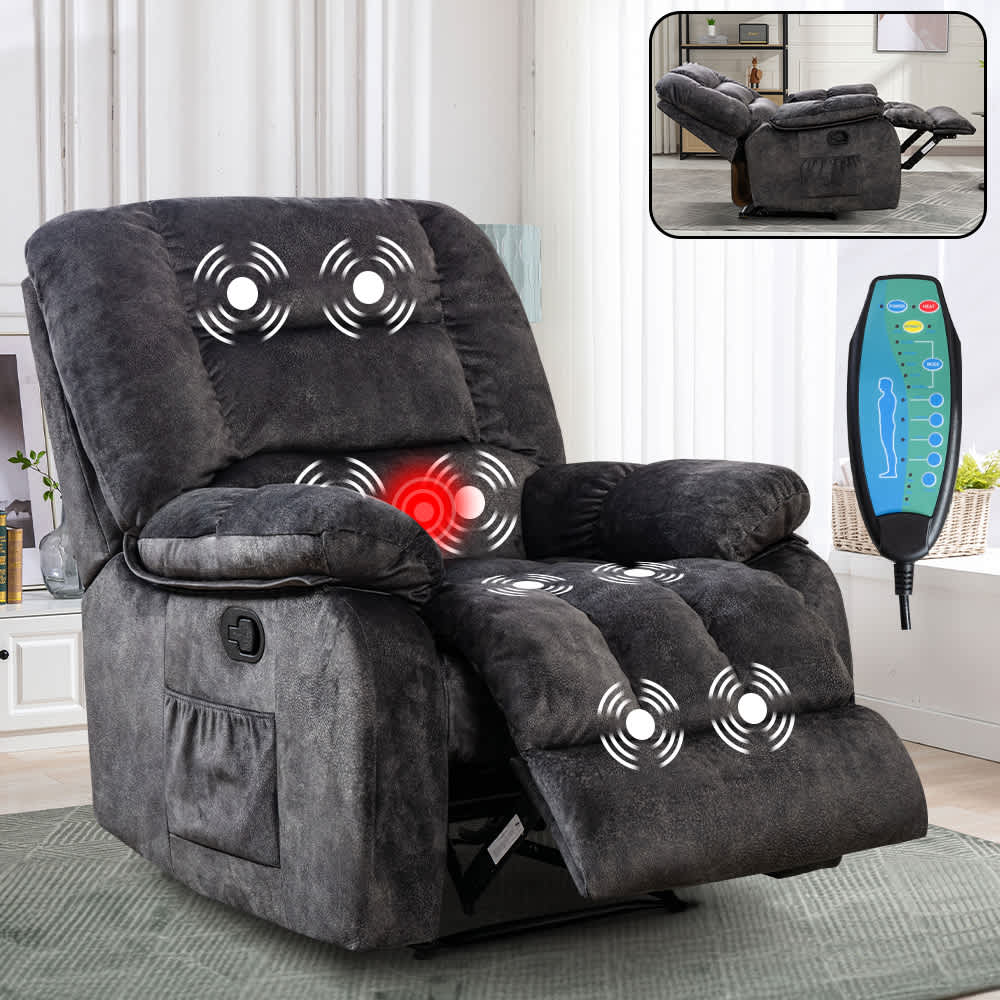
Most chairs use a wired remote, a touchscreen controller, control buttons on an armrest, or a combination of these. Labels are not identical across brands, but the functions usually fall into a few categories.
| Control or setting | What it usually does | Practical use |
|---|---|---|
| Power | Turns the chair or remote system on and off | Use the main power switch as instructed when the chair will not be used for an extended period. |
| Auto program | Starts a preset massage routine | A simple option when you do not want to adjust each massage setting manually. |
| Manual mode | Lets you select massage style, zone, speed, width, or intensity | Useful for focusing on a preferred area within the chair’s available settings. |
| Recline or zero gravity | Adjusts the chair’s backrest and legrest position | Use only when the surrounding area is clear. |
| Air intensity | Changes the pressure of airbags in the arms, legs, shoulders, or seat | Start low, particularly when using the chair for the first time. |
| Heat | Activates heating pads in selected areas | Use for comfort, following the time limits and precautions in the manual. |
| Timer | Sets or displays the session length | Helps prevent unintentionally long sessions. |
Credit: lowes.com
Massage techniques and zones
Roller-based chairs often include massage styles such as kneading, tapping, rolling, shiatsu-style movements, or combinations of these patterns. These names describe motion patterns, not medical treatments. The exact feel depends on the roller mechanism, padding, selected intensity, and your body shape.
Common massage zones include the neck, shoulders, back, waist, hips, calves, feet, arms, and hands. A chair may allow whole-back massage or targeted work in upper-back, lower-back, or fixed-point areas. Some remotes let you move the roller position up or down manually.
Body scanning is designed to estimate shoulder position and body contours so rollers begin in a more suitable location. If the rollers feel too high or too low, look for shoulder adjustment buttons during or immediately after the scan. Do not assume every chair can fit every height or body type equally well.
Start with gentle settings
When using a chair for the first time, choose a short automatic program or low manual setting. Keep the intensity low, especially for air compression, foot rollers, and deep roller pressure. You can increase settings gradually over later sessions if the chair remains comfortable.
More intensity is not always better. A setting that feels pleasant for one person may feel uncomfortably strong for another. Clothing thickness, body weight, muscle sensitivity, and seating position all affect the experience.
Use recline and leg adjustments carefully
Reclining can distribute your weight differently and may make roller pressure feel stronger or lighter. Before reclining, sit fully back in the seat, place your feet correctly in the footwell or calf section, and ensure hands, clothing, and objects are away from hinges.
If the calf or footrest length is adjustable, extend it gently rather than pulling or forcing it. Some units use spring-loaded, sensor-based, or manually sliding mechanisms. Refer to the massage chair manual if the footrest does not move as expected.
Safe and Comfortable Use
Massage chairs are designed for comfort and relaxation, but they are not a replacement for medical diagnosis or treatment. Stop a session if it causes pain, numbness, dizziness, skin irritation, or increased discomfort.
Who should seek medical advice first
People with certain health conditions may need guidance from a qualified healthcare professional before using a massage chair. This can include people who are pregnant, have implanted medical devices, recent surgery or injury, severe circulation problems, a blood-clotting condition, osteoporosis, unexplained pain, or significant nerve-related symptoms.
Children and people who cannot operate the controls safely should not use a massage chair without appropriate supervision. Keep pets and children away from the chair while it is operating, reclining, or returning to its upright position.
Build a sensible routine
Use session lengths recommended by the manufacturer. If the chair includes an automatic timer, treat it as a helpful limit rather than a reason to extend use repeatedly. Taking breaks is sensible if you are new to massage chairs or are using a stronger program.
Wear comfortable clothing that does not have sharp items, bulky objects, or loose cords. Empty pockets before sitting down. Keys, pens, tools, belt hardware, and large wallets can damage upholstery or create uncomfortable pressure points.
Routine Massage Chair Maintenance
Regular care helps the chair stay clean, quiet, and comfortable. Most maintenance is simple, but the chair should be switched off and unplugged before cleaning or inspecting any area near moving parts.
Credit: walmart.com
Clean upholstery gently
Check the care section of the manufacturer’s massage chair manual before using any product on the upholstery. Many chairs use synthetic leather or similar materials that can be damaged by harsh chemicals, alcohol-heavy cleaners, abrasive pads, or excessive water.
For routine cleaning, use a soft dry cloth or a cloth lightly dampened with water and mild soap if the manufacturer permits it. Wipe again with a clean damp cloth to remove residue, then dry the surface thoroughly. Do not spray liquid directly onto the chair, remote, seams, control panel, or speaker openings.
Clean the foot area more often than the rest of the chair, particularly if it is used without socks. Allow all surfaces to dry completely before operating the chair.
Inspect cables, upholstery, and moving areas
Every few weeks, inspect the chair while it is switched off. Look for:
- Frayed, pinched, loose, or discolored power cables
- Loose connectors behind removable cushions or side panels
- Tears, cracking, peeling, or stretched upholstery
- Objects caught under the footrest or base
- Unusual gaps, loose trim, or exposed fasteners
Do not remove motor covers or open the chair’s internal housing unless the manufacturer specifically instructs you to do so. Internal repairs may expose electrical parts, affect warranty coverage, or create a risk of injury.
Protect the chair during nonuse
If the chair will not be used for a long period, return it to its normal upright position, switch it off, and unplug it if the manual recommends doing so. Keep it in a dry indoor environment. A breathable furniture cover can reduce dust, but avoid tightly sealing the chair in plastic where moisture could be trapped.
Common Problems and Basic Troubleshooting
Many apparent faults have a simple cause, such as a switched-off outlet, a loose remote connection, an obstructed footrest, or an activated safety feature. Start with the least invasive checks and avoid dismantling the chair.
| Problem | Checks to try | When to stop and seek support |
|---|---|---|
| The chair will not turn on | Check the wall outlet, power cord connection, main power switch, and remote power button. Confirm any power strip is on. | If the cord is damaged, the outlet trips, or the chair still has no power after basic checks. |
| The remote does not respond | Check that its cable is fully connected and not pinched. Restart the chair according to the manual. | If the remote display remains blank or controls fail after a proper restart. |
| The chair stops while reclining | Remove obstructions around and beneath the chair. Return it to an upright position if possible, then restart. | If movement is jerky, one side moves differently, or a loud mechanical noise occurs. |
| Massage feels uneven or rollers seem misplaced | Reposition yourself fully against the backrest, restart body scanning, and adjust shoulder height if available. | If rollers scrape, strike the frame, or cannot complete a normal program. |
| Airbags do not inflate | Check program settings and confirm air massage is enabled. Inspect accessible air hoses only if the manual permits. | If there is a persistent leak sound, loose internal hose, or repeated error message. |
Reset the chair only as instructed
Some chairs can be reset by switching them off, unplugging them for a brief period, and reconnecting power. Others have a dedicated reset procedure. Follow the instructions for your model, and do not repeatedly cycle power if the chair smells hot, trips a breaker, or shows signs of electrical damage.
Understand normal operating sounds
Low motor noise, air-pump sounds, gentle clicking during mode changes, and roller movement may be normal. The manual may describe expected sounds for your chair. New, sharp, grinding, rattling, or repeated knocking noises are different and should be investigated.
Record any error code exactly as it appears on the remote display. Note what the chair was doing when the code appeared, such as reclining, scanning, inflating airbags, or starting a program. This information can help manufacturer support identify the issue.
When to Contact a Technician or Manufacturer Support
Stop using the chair and contact authorized support if you notice a burning smell, smoke, sparks, damaged wiring, water exposure, repeated circuit-breaker trips, uncontrolled movement, or a major change in motor noise. Unplug the chair if it is safe to do so, and do not try to operate it again until it has been assessed.
You should also seek support for torn internal wiring, a stuck footrest that cannot be safely returned, broken structural components, persistent error codes, or a chair that runs but no longer performs a normal massage cycle. Keep your proof of purchase, serial number, model number, and a clear description of the problem available.
For warranty repairs, use the service route specified by the manufacturer or retailer. Unauthorized repairs may affect coverage, especially when internal motors, control boards, airbags, or power components are involved.
Credit: lowes.com
Frequently Asked Questions
Can I use a massage chair every day?
Daily use may be suitable for some people when sessions are comfortable and within the manufacturer’s recommended limits. Start conservatively and reduce frequency or intensity if you feel sore, numb, or uncomfortable afterward.
Should a massage chair be unplugged when it is not in use?
For short gaps between uses, follow the normal standby guidance in your manual. For cleaning, travel, electrical storms, or extended nonuse, unplugging is often sensible if the manufacturer allows it.
Why does the massage feel stronger on one side of my back?
Your sitting position, body shape, clothing, and shoulder scan position can change how roller pressure feels. Sit centered with your back against the cushion, restart the scan if available, and try a lower intensity setting.
Can I put a massage chair on carpet?
Usually, yes, if the carpet provides a stable, level base and does not obstruct moving parts. Check that the chair does not rock and that its recline and footrest have adequate clearance.
Where can I find the correct manual for my chair?
Look for the model number on the chair’s label, packaging, purchase records, or warranty card. Then use the manufacturer’s official support site or contact its customer service team to request the matching manual.