
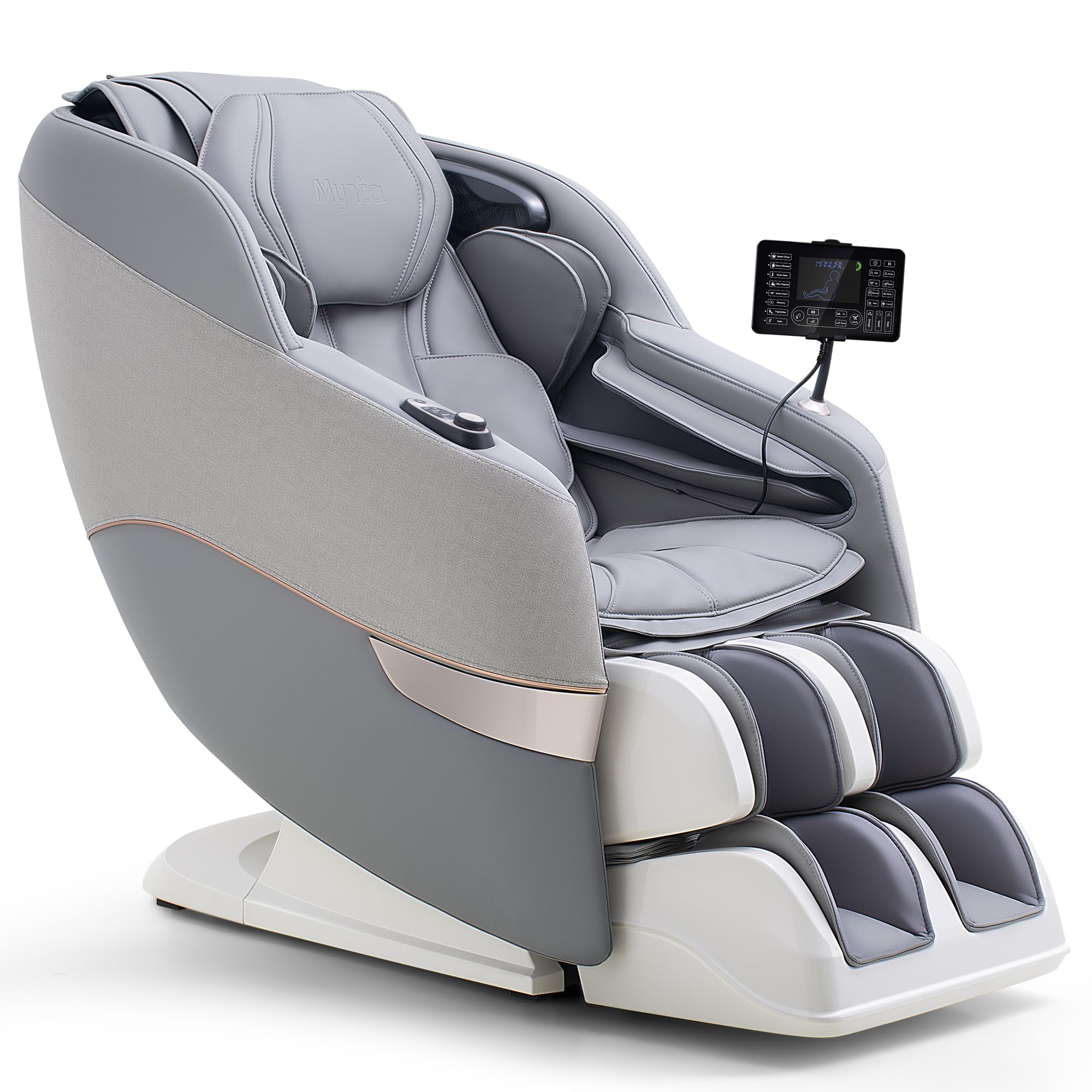
3D massage chairs use rollers that move not only up and down and side to side, but also forward and backward away from the chair track. That extra depth movement allows the chair to vary how closely the rollers press against the user’s back, creating a massage that can feel more targeted than a basic fixed-depth design.
For buyers, the appeal of 3D massage chairs is usually stronger control over massage intensity and better contact around the shoulders, mid-back, and lower back. However, “3D” is not a guarantee that every chair will suit every body or deliver deep pressure comfortably. The track shape, roller range, chair fit, air-cell design, programs, and adjustment options all matter.
This guide explains how a massage chair 3D mechanism works, which features make a meaningful difference, and where these chairs have practical limitations.
What Makes a Massage Chair “3D”?
A 3D massage chair has a roller mechanism that can extend outward from its track and retract inward. In simple terms, its rollers have three directions of movement:
- Vertical movement: rollers travel up and down the back track.
- Horizontal movement: rollers move across the back to perform techniques such as kneading, tapping, and rolling.
- Depth movement: rollers move forward toward the body or backward toward the chair.
The third direction is what separates 3D massage chairs from conventional 2D models. A 2D chair’s rollers generally travel along a fixed track at a relatively fixed distance from the user. A 3D mechanism can change that distance during a program or in response to an intensity setting.
Depending on the model, the depth control may be described as roller extension, protrusion, depth, 3D intensity, or massage strength. These terms are related, but manufacturers do not always use them in exactly the same way. One chair’s highest 3D setting may feel moderate, while another may feel very forceful.
How the 3D Roller Mechanism Works
Inside the backrest, a motorized massage unit travels on a track. The unit contains rollers designed to press, rotate, tap, or glide against the back through the chair upholstery. In a 3D massage chair, an additional mechanism changes the rollers’ forward position as they move along that track.
During a session, the chair may extend the rollers for a deeper kneading motion, pull them back for gentler rolling, or alternate their depth as part of a programmed sequence. This variation is intended to create a less uniform sensation than rollers that remain at one fixed distance.
Body scanning and roller positioning
Many 3D massage chairs begin with an automatic body scan. The chair uses roller movement, pressure sensing, or both to estimate where the user’s shoulders and back contours are located. It then sets the massage range accordingly.
This feature can improve alignment, but it is an estimate rather than a perfect measurement. If the rollers start too high, too low, or do not reach the preferred area, look for manual shoulder-position or massage-zone controls. Those adjustments are often more useful than relying only on the automatic scan.
How depth changes the massage feel
Depth adjustment affects pressure, but it is not the only factor that determines intensity. A chair can feel strong because of firm rollers, thin padding, a narrow roller path, aggressive programs, or a backrest shape that holds the body close to the mechanism.
Conversely, a 3D chair with generous padding may provide a gentler experience even at a higher depth setting. For that reason, shoppers should treat 3D depth as one part of the overall pressure system rather than as a simple “deep massage” guarantee.
3D, 2D, 4D, and Other Massage Chair Terms
Massage chair terminology can be confusing because some labels describe physical movement while others are largely marketing shorthand. The distinctions below are useful, but individual implementations vary by manufacturer.
| Term | Typical meaning | What it may mean for the user |
|---|---|---|
| 2D | Rollers move vertically and horizontally along a fixed-depth track. | Often adequate for gentle rolling, kneading, and tapping, but with less control over roller pressure. |
| 3D | Rollers also move forward and backward from the track. | Allows more depth variation and, on suitable settings, more focused pressure. |
| 4D | Usually refers to 3D-style depth movement combined with changing roller speed, rhythm, or timing. | May create a more varied massage pattern, but it is not a universal technical standard. |
| SL track | A track that follows the back and continues toward the seat area. | Can extend roller coverage from the upper back toward the glutes; it does not by itself indicate roller depth. |
A 4D label does not automatically make a chair better than a well-designed 3D massage chair. The important questions are whether the roller motion feels comfortable, whether the chair fits the intended user, and whether the controls allow useful adjustment.
Key Features to Look for in 3D Massage Chairs
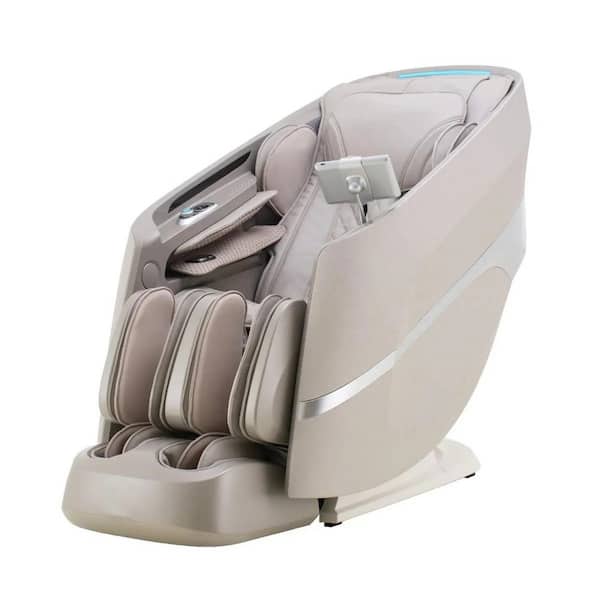
The 3D mechanism is the headline feature, but a chair’s usefulness depends on how well the rest of the system supports it. The following features deserve attention when comparing models.
Credit: homedepot.com
Adjustable 3D intensity
The most practical 3D massage chairs offer multiple depth or intensity levels rather than a single fixed setting. This lets different users choose a gentler or firmer feel and makes the chair more adaptable over time.
Check whether the depth setting can be changed during manual programs as well as automatic routines. Some chairs offer extensive control only in certain modes. Also note whether “intensity” changes roller depth, air compression, speed, or all of them. Separate controls are easier to fine-tune.
Track design and massage coverage
The track determines where the rollers can travel. Common designs include:
- S-track: follows the natural curve of the spine and concentrates on the back.
- L-track: extends beyond the lower back into the seat area.
- SL-track: a term often used for a long track that follows spinal curvature and continues under the seat.
A longer track can provide more coverage, but length alone is not enough. Consider whether you want focused upper-back work, lower-back coverage, or roller movement into the glute area. People who dislike pressure near the tailbone or hips may prefer the ability to limit the massage zone.
Massage techniques and manual control
Most chairs combine roller techniques such as kneading, tapping, rolling, shiatsu-style pressure patterns, and combinations of these movements. The names are less important than the control available to the user.
Useful manual options often include:
- Full-back, upper-back, lower-back, or spot massage selection
- Roller width adjustment in applicable modes
- Speed adjustment for tapping or rolling
- Independent roller-depth control
- The ability to pause or reposition the rollers
- Memory settings for preferred programs, where offered
A broad set of automatic programs can be convenient, but manual controls are especially valuable when one area needs more attention than another or when a preset feels too intense.
Air compression for shoulders, arms, legs, and feet
Rollers primarily address the back and sometimes the seat area. Air cells or airbags provide compression around areas the rollers cannot reach directly, such as the shoulders, arms, calves, ankles, and feet.
Air compression can add a secure, enveloping feel to a massage session, but stronger is not necessarily better. Look for adjustable air intensity, particularly around the shoulders and calves. Excessive compression can feel restrictive, and a narrow arm compartment may not suit every user.
Recline and zero-gravity positioning
Many massage chairs recline to distribute body weight more evenly against the backrest. “Zero gravity” is a common label for a reclined position that elevates the legs and may reduce the sense of pressure on the back. It is a comfort position, not a medical claim or a standardized chair design.
For 3D rollers, recline can materially change the experience. As body weight settles into the chair, roller contact may feel stronger. A chair that feels mild while upright can become much more intense when reclined. Test or review the available intensity controls with recline in mind.
Leg rest adjustment and foot massage design
A chair can have excellent back rollers but still be uncomfortable if the leg section does not fit. Some models use extendable or spring-loaded ottomans to accommodate different leg lengths. Others have a more fixed range.
Foot massage systems vary widely. They may use airbags, rollers, textured pads, or a combination. Textured or roller-based foot units can feel vigorous, especially without socks. The ability to turn the foot rollers off is a worthwhile feature for people who prefer compression only.
Controls, programs, and ease of use
Touchscreen remotes, handheld controllers, armrest buttons, and app controls can all work well, but simple controls are often more important than elaborate menus. A user should be able to start, stop, recline, reduce intensity, and select a massage area without navigating through multiple screens.
Voice control, Bluetooth speakers, ambient lighting, and similar extras may improve convenience or atmosphere. They should not outweigh core concerns such as body fit, roller adjustment, build quality, and service support.
Who May Prefer a 3D Massage Chair?
A 3D model may be a good fit for someone who wants more control over back-massage pressure than a basic roller chair provides. It can also suit households where users have different preferences, provided the chair offers enough adjustment range.
3D massage chairs are often worth considering for people who:
- Prefer a more substantial kneading or pressing sensation around the back.
- Want to reduce roller pressure on some days and increase it on others.
- Use targeted upper-back or lower-back programs rather than only full-body routines.
- Want a chair with more flexible manual settings.
- Find fixed-depth rollers either too light or inconsistent in contact.
They may be less suitable for users who strongly prefer a very gentle massage, have a low tolerance for pressure, or want the simplest possible chair. A well-padded 2D chair with good recline and air compression can be a better choice than a poorly fitted or overly aggressive 3D model.
Important Limitations of 3D Massage Chairs
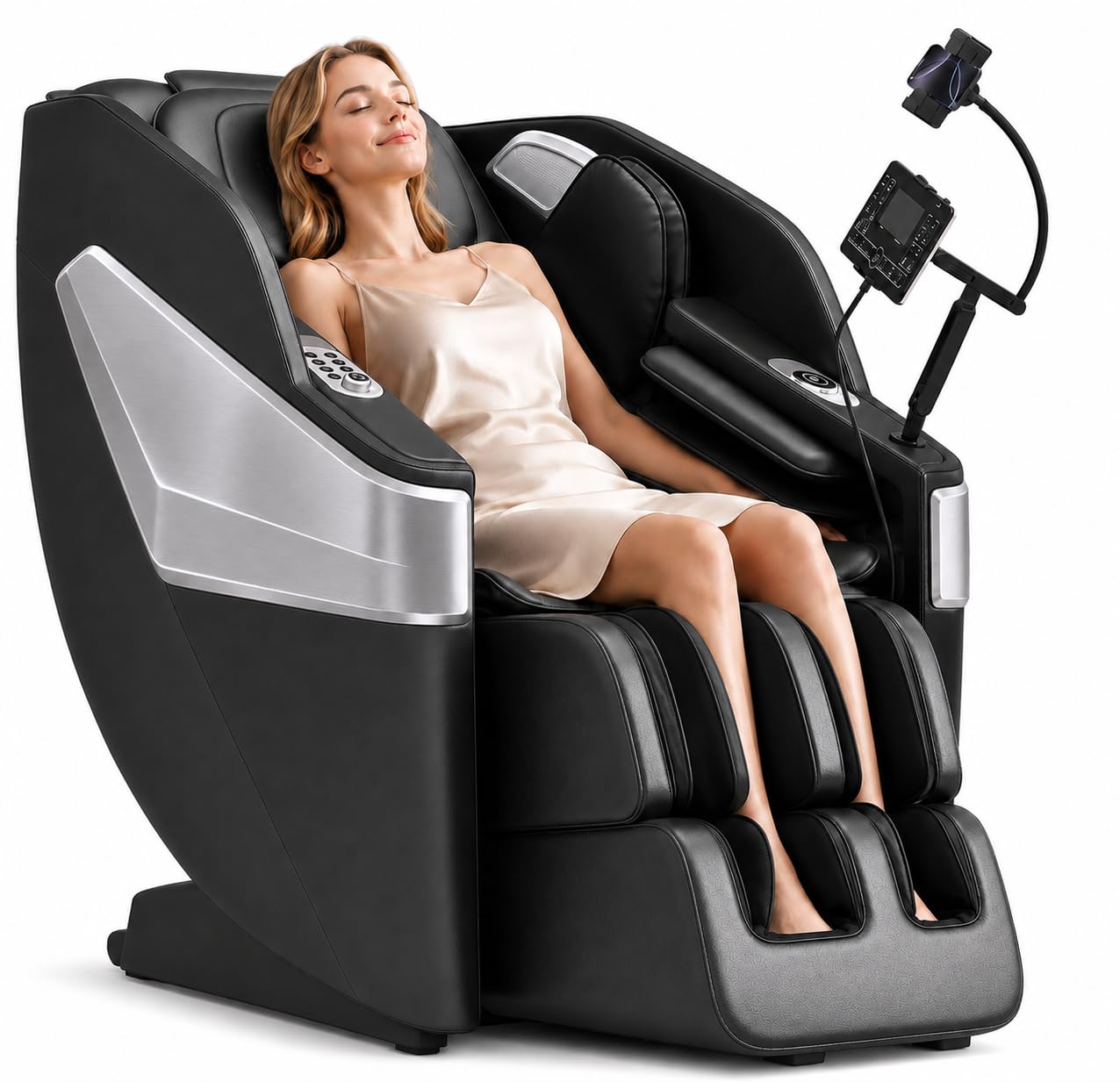
The extra roller movement is useful, but it does not eliminate the limitations of mechanical massage. Understanding these trade-offs helps set realistic expectations.
Credit: amazon.com
Depth is not the same as precision
A 3D mechanism can alter pressure, but it cannot assess muscle tension, pain source, or individual anatomy in the way a trained professional might. The rollers follow programmed paths and a limited scanning process. They may not contact every area evenly, especially around shoulder blades, the neck, or an unusually curved spine.
Fit has a major effect on performance
Massage chairs are built around a target height and body-shape range. A user who is much shorter or taller than that range may find that the shoulder rollers stop in the wrong place, the neck area is missed, or the leg rest feels awkward.
Before buying, verify the manufacturer’s recommended user-height range and consider seat width, shoulder width, leg-rest extension, and maximum supported user weight. These specifications are model-specific, so they should be checked in the current product documentation rather than assumed from the 3D label.
Higher intensity can become uncomfortable
Deep roller extension may feel satisfying to one person and unpleasant to another. Pressure may be especially noticeable along the spine, near the shoulder blades, or in areas with little natural padding. Thin clothing can also make the massage feel more direct.
Start at a low setting, particularly with a new chair or a new program. Use a blanket or additional pad only if the chair manufacturer allows it and it does not interfere with safe operation. Avoid trying to “push through” sharp pain, numbness, or lingering discomfort.
Programs can be repetitive
Even sophisticated chairs use programmed sequences. Automatic routines may spend too long in an area a user does not enjoy or combine roller and air intensity in a way that is difficult to adjust. Manual modes help, but they may not provide the same choreography as the preset programs.
It is sensible to evaluate whether the chair lets you control the areas and techniques you actually use rather than paying primarily for a long list of program names.
Size, weight, and placement remain practical barriers
Full-size 3D massage chairs are substantial pieces of furniture. They require a suitable floor area, access through doorways and hallways, and enough clearance for reclining. Some models use a space-saving recline system that slides forward as the backrest lowers, but they still need room and should not be pressed against a wall without checking the manufacturer’s clearance guidance.
Plan the delivery route as carefully as the room location. Measure door openings, corners, elevators where relevant, and the intended space before ordering.
They are not medical treatment devices
A massage chair may support relaxation and temporary comfort for some users, but it should not be viewed as a replacement for medical evaluation, physical therapy, or treatment for an injury or health condition. People who are pregnant, have a recent injury or surgery, use implanted medical devices, have circulation concerns, or have conditions affecting sensation should ask a qualified clinician whether massage-chair use is appropriate for them.
How to Choose the Right Model
Compare 3D massage chairs based on the experience they can provide for your body and room, not just the number of features on the product page. A practical buying process is to prioritize fit, adjustment, and support first.
- Define the preferred pressure level. Decide whether you want gentle daily relaxation, firm kneading, or flexible settings that cover both.
- Check the user-fit guidance. Confirm height range, shoulder accommodation, seat dimensions, leg-rest design, and supported weight.
- Review roller controls. Look for adjustable depth, targeted zones, and easy changes to speed and technique.
- Consider the track and leg system. Choose coverage that suits your preferences rather than assuming longer is always better.
- Measure the installation space. Include recline clearance and the route from delivery point to room.
- Read warranty and service terms. Ask who handles in-home service, what components are covered, and whether installation is included or available.
- Use a trial opportunity when possible. If trying a chair in person, test more than one intensity level and recline position. Spend enough time checking shoulder alignment, leg comfort, and control usability.
It is also helpful to distinguish features you will use regularly from features that only sound impressive. For many owners, easy intensity adjustment, a comfortable seat, sensible shoulder positioning, and reliable controls matter more than entertainment extras.
Care and Everyday Use Tips
Regular, basic care can help preserve a massage chair’s upholstery and moving parts. Follow the model’s manual because cleaning materials and maintenance requirements differ by upholstery type and manufacturer.
- Keep the chair on a stable, level surface and avoid blocking its ventilation areas.
- Use the chair within its stated user limits and avoid allowing children to play on moving sections.
- Wipe the upholstery with materials approved in the care instructions; harsh cleaners may damage the finish.
- Keep liquids, loose items, and cables away from moving rollers, the leg rest, and recline mechanisms.
- Stop using the chair and seek service if it makes unusual noises, moves unevenly, or shows visible damage.
- Use shorter, comfortable sessions instead of treating maximum depth as the default setting.
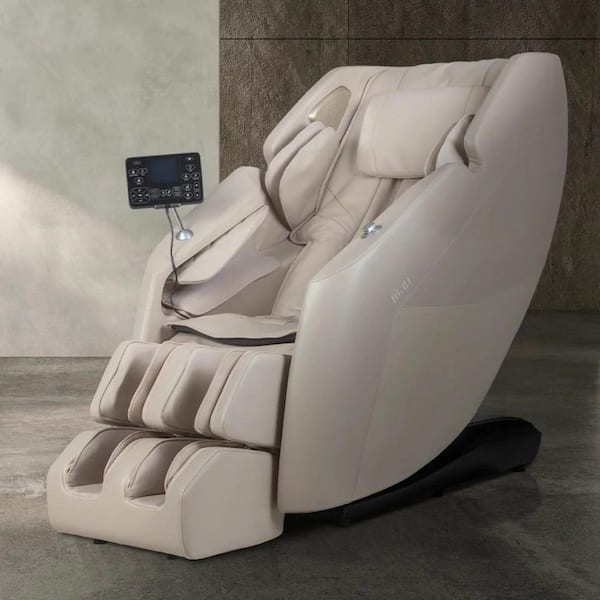
For households with multiple users, save or note preferred settings if the chair supports memory functions. This makes it easier to return to a comfortable depth and recline position without repeatedly adjusting from scratch.
Credit: homedepot.com
Frequently Asked Questions
Do 3D massage chairs use more electricity than 2D models?
Power use depends on the specific chair, motor system, heaters, speakers, and program settings rather than the 3D label alone. Check the manufacturer’s electrical rating and operating instructions for the model you are considering.
Can I use a 3D massage chair every day?
Many people use massage chairs regularly if the sessions remain comfortable and follow the manufacturer’s guidance. Start conservatively, avoid excessive intensity, and stop if use causes pain, tingling, numbness, bruising, or symptoms that persist.
Will a 3D chair massage my neck?
Some models include neck and upper-shoulder coverage, but roller reach varies considerably. Neck comfort depends heavily on height, shoulder position, headrest design, and the chair’s adjustment range. Do not assume neck massage is included without checking the model details.
Are 3D massage chairs noisy?
They produce some mechanical sound from rollers, motors, airbags, and reclining parts. Noise levels vary by design and program. If quiet operation matters, try the chair in person or seek current manufacturer information and independent demonstrations for the exact model.
Is a longer massage chair track always better?
No. A longer track can increase coverage into the seat area, but the best choice depends on whether that pressure feels comfortable and whether the rollers align correctly with your back. Good fit and useful controls are more important than track length alone.