
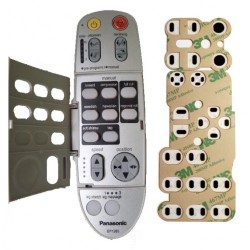
Panasonic massage chair repair usually starts with identifying whether the problem is caused by power, controls, moving parts, air compression, or a sensor. Many issues are simple, such as a loose plug, incorrect recline position, blocked roller track, or a remote that needs resetting. Others involve electrical parts or mechanical assemblies that should be inspected by a qualified technician.
Because Panasonic massage chairs vary by model and age, the safest approach is to use the owner’s manual for your specific chair before attempting any repair. Error messages, reset procedures, fuse locations, and access panels can differ significantly between models.
This guide explains common faults, practical troubleshooting steps, repair limits, and when professional Panasonic massage chair repair is the better option.
Start With Safety and Basic Checks
A massage chair combines household electricity, motors, gears, heaters, airbags, pumps, sensors, and moving mechanisms. Always treat it as an electrical appliance with pinch-point hazards.
- Turn the chair off using its main power switch.
- Unplug it from the wall outlet before inspecting cables, moving parts, or connections.
- Wait for the chair to stop completely before checking the backrest, footrest, or roller area.
- Keep hands, hair, clothing, pets, and children away from moving components.
- Do not remove covers or touch internal circuit boards unless you are trained to work on electrical equipment.
- Do not use the chair if it has a damaged power cord, burning smell, smoke, visible fluid leak, or repeated electrical shutdown.
If the chair is still covered by a manufacturer or retailer warranty, opening the cabinet or attempting an unapproved repair may affect coverage. Contact the seller, Panasonic support channel for your region, or an authorized service provider first.
Common Panasonic Massage Chair Faults at a Glance
| Symptom | Possible Cause | Safe First Action |
|---|---|---|
| Chair will not turn on | Outlet issue, switched-off power button, loose cord, tripped protection device, internal electrical fault | Test the outlet and confirm all power connections |
| Remote or controller does not respond | Loose connector, damaged cable, frozen control system, failed controller | Power-cycle the chair and inspect the external controller cable |
| Rollers do not move | Program setting, obstruction, track issue, motor or sensor fault | Stop use, reset the chair, and check for visible obstructions |
| Backrest or footrest will not recline | Blocked mechanism, damaged linkage, actuator issue, position sensor fault | Remove obstructions and avoid forcing the chair manually |
| Airbags do not inflate | Air hose disconnection, pump issue, valve fault, torn airbag | Check accessible hoses and listen for pump operation |
| Massage feels weak, uneven, or noisy | Loose component, worn gear, roller mechanism wear, motor strain | Stop if noise is new or severe; arrange an inspection if it continues |
| Heat function does not work | Settings issue, thermal protection, wiring or heating element fault | Confirm the selected program and discontinue use if overheating occurs |
| Error display or repeated stopping | Sensor, motor, control board, or safety-protection issue | Record the message and consult the model-specific manual or service provider |
Chair Will Not Power On
A chair that appears completely dead may have a simple power supply problem, but it can also have an internal fuse, transformer, control board, or wiring fault. Start with external checks rather than taking the chair apart.
Check the outlet and power path
- Make sure the wall outlet works by testing it with another known working device.
- Check whether a circuit breaker or ground-fault outlet has tripped.
- Confirm that the chair’s main power switch is in the on position. Some models place this switch near the lower rear or side of the chair.
- Push the power plug fully into the outlet without using a loose adapter or overloaded extension lead.
- Inspect the visible power cord for cuts, crushed areas, exposed wiring, or heat damage.
- Check whether the controller is securely connected if your model uses a detachable remote cable.
If the outlet works and the chair still shows no sign of power, do not repeatedly switch it on and off. An internal electrical problem may be present. A technician can determine whether the failure involves a fuse, power supply, wiring harness, switch, or electronic control board.
Do not bypass a fuse or safety device
Some appliances use fuses or thermal protection to reduce fire and shock risk during an electrical fault. Never replace a fuse with a higher-rated one, bridge a fuse holder, or bypass a thermal cutout. Even if the chair powers on afterward, the underlying fault may damage components or create a safety hazard.
Remote Control Problems and Unresponsive Programs
If the chair powers on but the remote does not start a massage program, the issue may be limited to the controller, cable, connector, or software state. First, make sure the chair is not in the middle of returning to its upright position or completing a previous program.
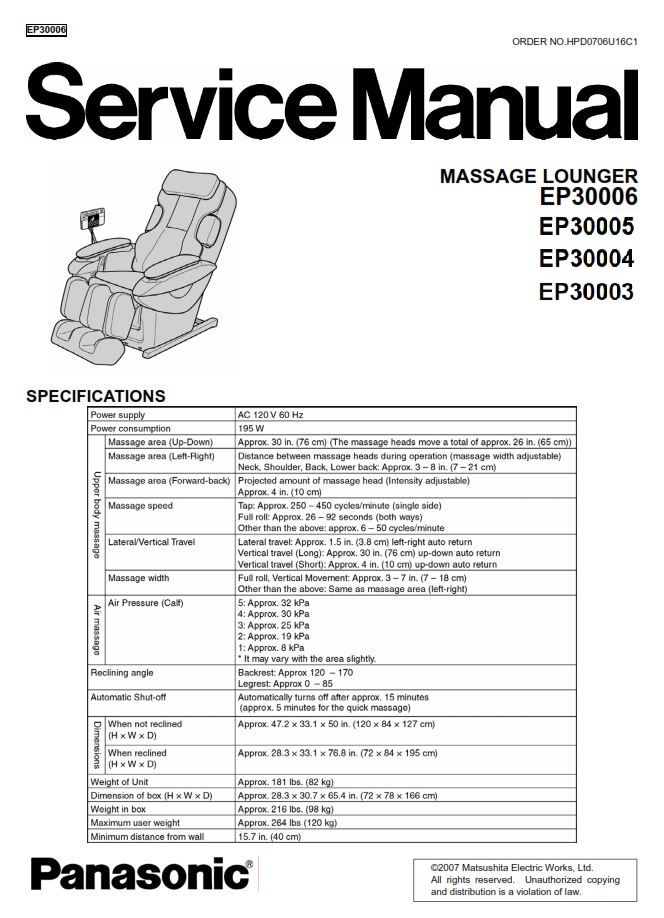
Credit: pinterest.com
Try a basic reset
For many massage chairs, a basic power reset is the safest first step. Turn off the main switch, unplug the chair, wait briefly, reconnect the plug, and turn the chair back on. This can clear a temporary control lockup.
Do not assume every Panasonic model has the same reset button or reset sequence. Use the instructions supplied with your chair when a manual specifies a particular procedure.
Inspect the controller connection
Look at the controller cable where it enters the chair and where it connects to the remote. A cable can become pinched when the chair reclines, is moved, or is placed close to a wall. Check for obvious bends, crushed insulation, loose plugs, or connector damage.
A controller that lights up but sends no commands may still have an internal fault. Similarly, a blank controller screen does not automatically mean the remote has failed; the chair’s power supply or control board may be the real cause.
Rollers Will Not Move or Stop Mid-Massage
The roller mechanism is one of the most complex parts of a massage chair. Depending on the model, it may travel along a track and perform kneading, tapping, rolling, or other programmed movements. If the rollers fail to move, stop in one location, or make a harsh sound, stop the session and investigate cautiously.
Check simple causes first
- Confirm that a massage program has been selected and is not paused.
- Check whether the intensity or massage zone has been set in a way that limits movement.
- Remove cushions, blankets, clothing, or objects that may be caught near the backrest or seat.
- Allow the chair to complete its return cycle before trying another program.
- Power-cycle the chair once after checking for obstructions.
Do not press on the rollers, pull them by hand, or force the backrest upholstery open to reach the mechanism. Roller assemblies rely on motors, gears, tracks, belts or drive components, and position sensors. Forcing a stuck assembly can turn a minor problem into a more expensive repair.
When roller noise indicates a repair need
A low mechanical hum during operation can be normal. New grinding, repeated clicking, loud knocking, slipping, squealing, or a motor sound without roller movement is not normal. These symptoms may point to worn gears, a jammed track, a loose mounting point, drive motor trouble, or a sensor that cannot confirm the roller position.
Continued use can place extra strain on the motor and control system. Arrange professional diagnosis if the noise persists after checking for external obstructions.
Recline, Footrest, and Legrest Faults
Panasonic massage chairs often use powered recline mechanisms, and some include extending legrests or adjustable foot sections. These systems must move freely and detect their position accurately. A chair placed too close to a wall, rug edge, table, or other furniture may be unable to complete its motion.
Check clearance before assuming a mechanical failure
Move objects away from the rear, sides, and front of the chair. Check below the footrest and behind the backrest for toys, cables, rugs, or other items that could block travel. Also make sure the chair is on a stable, level surface.
If the footrest extends but will not retract, avoid sitting in the chair while trying to operate it. Remove any external obstruction, then use the normal return or upright command. Do not manually push a powered footrest closed unless the model documentation specifically permits it.
Likely internal causes
When clearance is not the issue, possible causes include a failed recline motor or actuator, stripped gear, disconnected linkage, damaged wiring, or position sensor problem. These repairs generally require access to the chair’s lower structure and should be handled by a service professional.
Transporting a massage chair can also affect moving assemblies. If the problem started after a move, mention that detail when booking service. It helps the technician focus on possible cable, connector, frame, or linkage displacement.
Airbag and Air Compression Problems
Air compression systems use an electric pump, valves, hoses, and inflatable chambers. Depending on the chair design, airbags may be located around the shoulders, arms, hips, calves, feet, or seat. A fault may affect one zone or the entire system.
Symptoms of an air system fault
- Airbags do not inflate at all.
- Only one side or one body area inflates.
- Compression feels much weaker than usual at the same setting.
- You hear a pump running, but the airbags remain flat.
- Air releases continuously or a chamber deflates too quickly.
What you can check safely
First, confirm that the chosen massage program includes air compression and that the air intensity is not set to its lowest level. Then inspect accessible hoses and external connectors only if they can be reached without removing protective covers. A hose that has visibly slipped from a fitting may explain a loss of compression.
If you hear the pump but no pressure develops, there may be a disconnected hose, air leak, failed valve, or torn chamber. If there is no pump sound during an air massage program, the cause may be the pump itself, its wiring, the control board, or a safety condition detected by the chair.
Do not patch airbags with random adhesives or substitute tubing that does not match the original system. Poor repairs can restrict airflow, create leaks, or interfere with the chair’s intended operation.
Heat Function Not Working or Getting Too Hot
Heat is usually controlled separately from the main massage mechanism, so a chair can massage normally while the warming function fails. Confirm that heat is enabled in the selected program or settings before assuming a fault.
If the chair does not warm after the appropriate function is selected, the issue could involve the heating pad, wiring, thermostat, temperature sensor, or control circuitry. A professional should inspect internal heating components.
Stop using the heat feature immediately if you notice excessive heat, hot spots, burning odor, discoloration, or damaged upholstery. Do not cover the chair with thick blankets while heat is operating, and do not use a malfunctioning heating feature as a workaround for a separate chair fault.
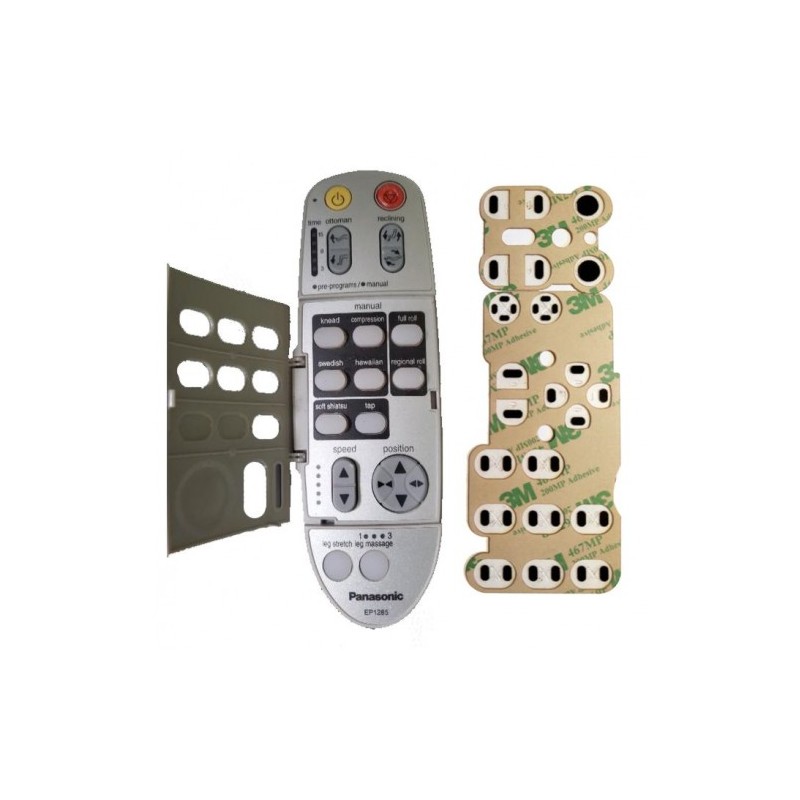
Credit: buttonworx.com
Error Messages, Beeps, and Automatic Shutdowns
Some Panasonic chairs use indicator lights, beeps, or display messages to report operating conditions. The exact meaning depends on the model, so avoid relying on generic error-code lists found online. A code that applies to one chair may not apply to another.
Record the information before resetting
Before turning the chair off, note the exact message, number, light pattern, or sequence of beeps. Also record what the chair was doing when the issue occurred: reclining, starting rollers, inflating airbags, operating heat, or returning upright.
This information can make Panasonic massage chair repair faster because it helps distinguish a motor overload from a communication, sensor, or power problem.
Repeated shutdowns should not be ignored
An occasional stop after a long session may be related to a protective limit, depending on the chair design. However, repeated shutdowns during normal use can indicate overheating, motor strain, wiring trouble, a blocked mechanism, or an electronic fault. Allow the chair to cool, check for obvious obstructions, and avoid repeated restart attempts if the problem returns.
Cleaning and Maintenance That Can Prevent Faults
Routine care cannot prevent every breakdown, but it can reduce avoidable stress on upholstery, tracks, controls, and air components. Always follow the cleaning instructions for your specific model, especially where synthetic leather, fabric panels, touchscreen controllers, and heated areas are concerned.
- Vacuum dust and small debris from seams, the seat, and around accessible moving areas using a soft attachment.
- Wipe approved surfaces with a soft cloth and a cleaner suitable for the upholstery material.
- Keep drinks, oils, sprays, and cleaning liquids away from the remote, power switch, and electrical connections.
- Do not allow pets to chew cables or scratch airbag and upholstery areas.
- Leave adequate room around the chair for recline and footrest movement.
- Use the chair within its stated user-size and weight guidance.
- Do not move the chair by pulling the controller, footrest, arm sections, or power cord.
A chair that is rarely used can also develop issues if stored in damp, very hot, or dusty conditions. Keep it in a dry indoor area and inspect the cord, upholstery, and controls before returning it to service after long storage.
When to Call a Professional Repair Service
Professional service is appropriate when troubleshooting points to internal electronics, motors, gear systems, pumps, sensors, heating parts, or damaged wiring. It is also the safest route for heavy chairs that require partial disassembly to reach components.
Contact a qualified repair provider if you notice any of the following:
- A burning smell, smoke, sparks, or repeated tripped breaker.
- Visible power-cord damage or loose internal wiring.
- Grinding, loud knocking, or motor strain from the roller or recline mechanism.
- A stuck backrest, footrest, or roller carriage that does not recover after a basic reset.
- Persistent error messages or shutdowns.
- Air leaks, failed airbags, or pump problems that cannot be explained by an accessible loose hose.
- Heat that is excessively hot, uneven, or accompanied by odor.
What to provide when requesting Panasonic massage chair repair
Have the model number, serial number, purchase date if available, and a clear description of the fault ready. The model label is often located on the rear, underside, or lower frame, but placement varies. Photos or a short video of the symptom can be useful, provided you can capture it safely.
Ask whether the service provider can obtain genuine or compatible replacement parts for your specific model. Older chairs may have limited parts availability, which can affect whether repair is practical. A technician should explain the diagnosed fault, parts required, labor involved, and whether the repair is likely to restore reliable operation before work begins.
Repair or Replace: Making a Practical Decision
The best choice depends on the chair’s age, condition, fault type, and availability of parts. A repair is often worthwhile when the chair is otherwise in good condition and the issue is isolated, such as a controller cable, switch, hose connection, or single mechanical component.
Replacement may make more sense when a chair has multiple failures, severely worn upholstery, recurring electronic faults, major frame damage, or unavailable proprietary parts. Consider the cost of collection, transport, diagnosis, parts, and labor rather than looking only at the price of one component.
Also consider fit and use. If the chair never suited your height, shoulder width, leg length, room clearance, or comfort preferences, spending heavily on a major repair may not be the most useful long-term decision.
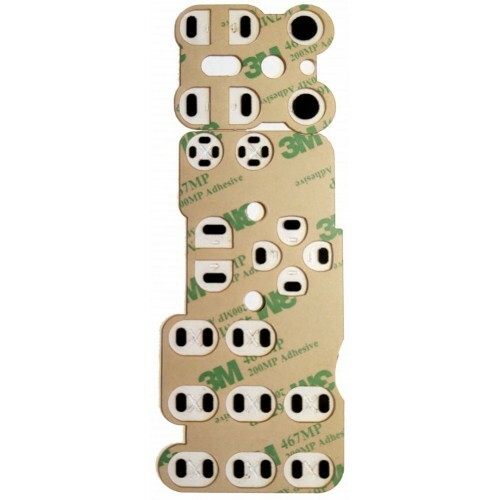
Credit: ebay.com
Frequently Asked Questions
Can I use a Panasonic massage chair after the massage rollers stop working?
It is best not to use the chair until the cause is known. A roller fault can place strain on the motor or track assembly, and a chair that is making unusual mechanical noise may worsen with continued use.
Why does my massage chair work for a few minutes and then stop?
The chair may be detecting an obstruction, motor load, overheating condition, or sensor problem. Let it cool, check room clearance and visible obstructions, then try one normal cycle. If it stops again, arrange a diagnosis rather than repeatedly restarting it.
Is it safe to plug a massage chair into an extension cord?
Use the power arrangement recommended in the chair’s manual. If an extension lead is necessary, it must be suitable for the appliance load, in good condition, and not placed where it can be crushed or become a trip hazard. A direct wall connection is generally preferable.
How can I find the correct replacement remote for my chair?
Identify the exact model and serial information first. Controller compatibility can be model-specific, even between similar-looking chairs. Confirm the part number and connector type with an authorized parts source or qualified repair provider before ordering.
Can a massage chair be repaired at home?
Basic external checks, cleaning, and a manufacturer-approved reset may be suitable for owners. Internal repairs involving mains electricity, capacitors, motors, pumps, heating systems, or structural mechanisms should be left to a trained technician.