
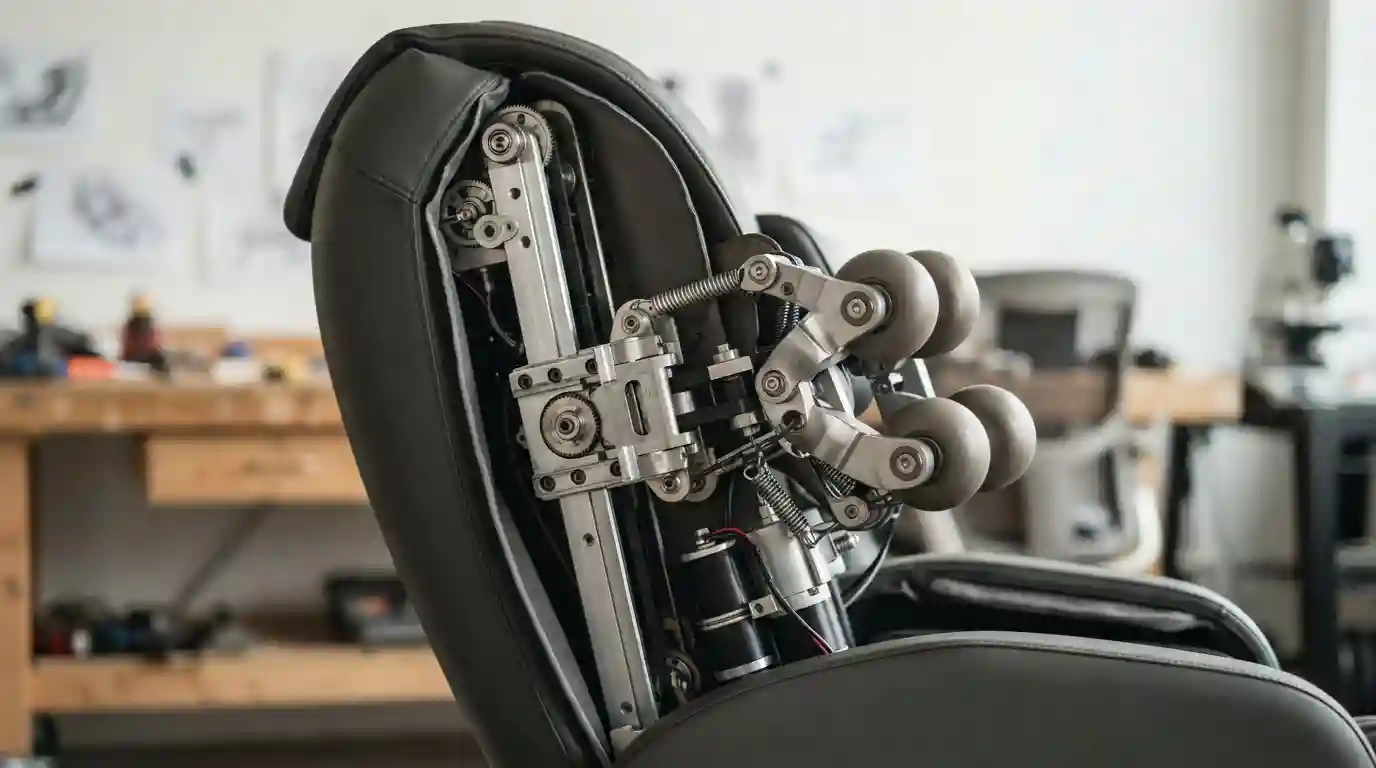
In a 2D vs 3D vs 4D massage chair comparison, the biggest differences are how far the rollers can move away from the backrest and how naturally the massage motions can change speed and rhythm. These labels describe the chair’s roller system, not the overall quality of every massage feature.
A 2D chair moves rollers up and down and side to side. A 3D chair adds forward and backward travel, allowing the rollers to reach farther into the back. A 4D chair usually builds on 3D movement by varying roller speed, pauses, and timing to create a less mechanical feel.
The best option depends on what you find comfortable. Deeper movement can feel more targeted, but it is not automatically better for every body type, sensitivity level, or daily use. Understanding what each system actually does makes it easier to compare massage chairs beyond marketing labels.
What 2D, 3D, and 4D Mean in a Massage Chair
Massage chair “dimensions” refer to the directions in which the massage rollers can travel. Rollers are the moving parts inside the chair back that perform techniques such as kneading, tapping, rolling, and shiatsu-style pressure.
The terminology is useful, but it is not perfectly standardized across every manufacturer. In particular, 4D massage can mean slightly different things depending on the brand. It generally does not mean the chair has four physical axes of roller movement. Instead, it usually describes a 3D roller system with more advanced control over speed, rhythm, pressure transitions, and pauses.
| Roller Type | Primary Movement | What It Changes Most | Typical Massage Feel |
|---|---|---|---|
| 2D | Up/down and side to side | Coverage across the back | Consistent, surface-level to moderate pressure |
| 3D | 2D movement plus forward/backward extension | Roller depth and intensity | More targeted and potentially deeper |
| 4D | 3D movement plus variable speed and rhythm control | Timing, pacing, and realism of techniques | More nuanced, less repetitive movement |
2D Massage Chairs: Simple Roller Coverage
A 2D massage chair uses rollers that move vertically along the back and horizontally across it. The vertical path lets the chair work from the upper back toward the lower back, while side-to-side movement helps the rollers follow the general width of the spine.
The rollers stay at a relatively fixed distance from the user. They may feel stronger or weaker based on the chair’s program, padding, body position, and selected intensity, but they do not actively extend outward to press deeper into the muscles.
How a 2D massage feels
A 2D roller system often feels steady and predictable. It can provide pleasant kneading and rolling across the back, especially for people who prefer moderate pressure or want a relaxing massage without intense focal pressure.
Because the roller depth is limited, 2D chairs can feel gentler than comparable 3D or 4D models. That can be an advantage for users who are new to massage chairs, have a low tolerance for strong pressure, or simply want frequent relaxation sessions.
Strengths of 2D roller systems
- Usually easier to tolerate for users who prefer light to moderate massage pressure.
- Often simpler to operate, with fewer depth and timing adjustments to manage.
- Can provide broad back coverage for routine relaxation.
- May be a practical choice when advanced roller depth is not a priority.
Limitations to consider
- Rollers may not feel as precise around tight areas near the shoulders or lower back.
- People who enjoy firm massage may find the pressure too mild.
- Fixed-depth rollers may make less consistent contact on body shapes with more pronounced curves.
- Adding cushions can soften the massage, but it cannot create the forward extension of a 3D system.
3D Massage Chairs: Adjustable Roller Depth
The main difference in a 2D vs 3D massage chair comparison is roller depth. A 3D system can move forward and backward in addition to moving up/down and side to side. This outward movement lets the rollers extend farther from the chair back and apply more direct pressure.
Manufacturers may describe this adjustment as roller depth, protrusion, extension, intensity, or depth control. These settings are important because not everyone wants the same level of pressure. On a well-designed chair, reducing the depth should make the massage more gentle, while increasing it should make kneading and shiatsu-style programs feel more substantial.
Why forward roller movement matters
Human backs are not flat. The shoulders, mid-back, waist, and lower back all sit at different distances from the chair. A 3D system can better maintain contact as it travels along those contours. It can also reach into areas that may feel underworked by fixed-depth rollers.
This does not guarantee that every 3D chair will fit every user well. The chair’s body scan, roller track, padding, seat angle, and the user’s height all influence the result. Still, depth adjustment gives the user more control over the massage experience than a basic 2D setup.
Who may prefer a 3D chair
- Users who regularly prefer firm kneading or focused back pressure.
- People who want the option to switch between gentle and stronger sessions.
- Users who find fixed rollers too light around the shoulders, lumbar area, or upper back.
- Households where different people have different pressure preferences.
Potential drawbacks of 3D massage
More depth can become uncomfortable when it is set too high, particularly around the shoulder blades, spine, neck area, or lower back. A deeper setting is not necessarily a more effective setting. The useful setting is the one that feels comfortably firm without sharp, pinching, or painful pressure.
People with a smaller frame may also need to pay closer attention to shoulder position and body scanning. If the rollers do not align well with the body, extra depth can make the mismatch more noticeable. Adjustable shoulder width, manual roller-position controls, and adequate padding can matter as much as the 3D label.
4D Massage Chairs: Depth Plus Changing Speed and Rhythm
In most cases, a 4D massage chair has the same forward-and-backward roller capability found in a 3D chair. The key difference is that the rollers can change their speed, timing, pauses, and transitions more dynamically during a massage program.
This is the central point in the 3D vs 4D massage chair decision: 3D primarily adds adjustable depth, while 4D aims to make that depth feel more variable and deliberate. Rather than moving at one steady tempo, the rollers may slow down, speed up, pause briefly, or alter their pressure pattern during kneading and tapping sequences.
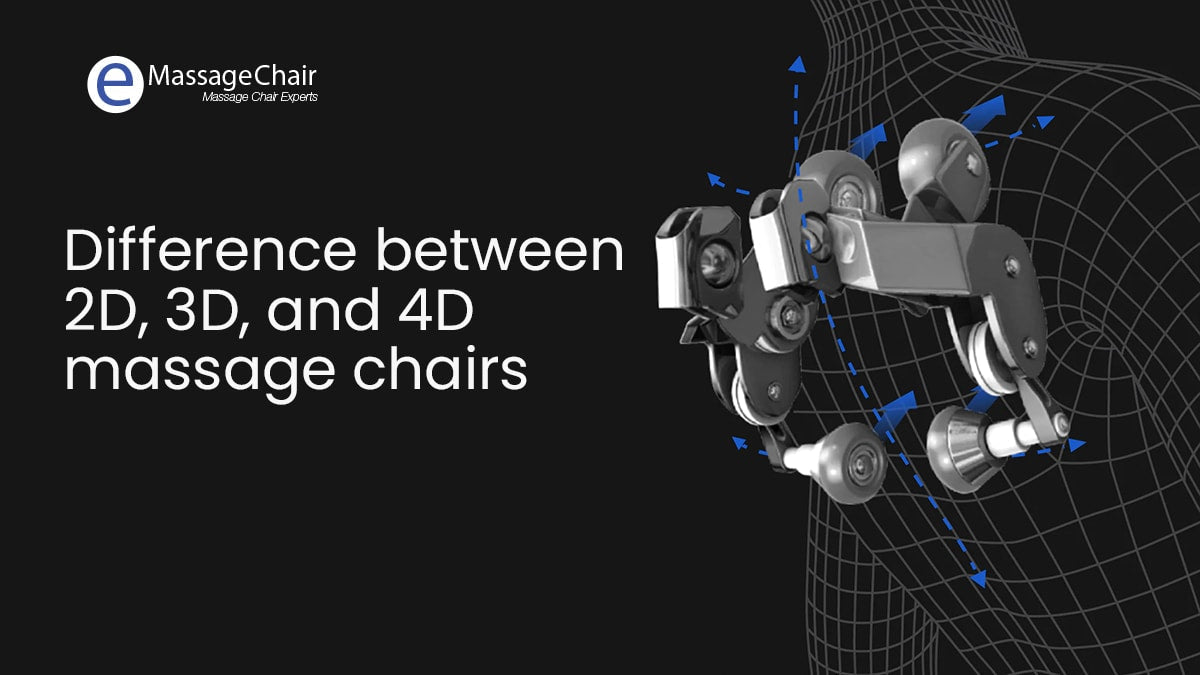
Credit: emassagechair.com
How 4D massage can feel different
A basic roller program may repeat the same movement at a steady rate. A more advanced 4D program can introduce changes in tempo that make the massage feel less uniform. For example, rollers may press, hold briefly, release, and then resume kneading at a different speed.
For some users, these variations feel closer to a hand-guided massage style. Others may prefer a steady, predictable 3D program. The value of 4D is therefore partly personal: it is about the character of the massage, not simply maximum pressure.
The difference between 3D and 4D massage chair systems
The difference between 3D and 4D massage chair systems is usually not another physical direction of movement. Both commonly provide roller extension for deeper pressure. A 4D model typically adds more sophisticated software control over how quickly and rhythmically the rollers move through a technique.
Because manufacturers use “4D” differently, check the product details rather than relying on the label alone. Look for information about adjustable roller speed, depth levels, massage programs, manual technique controls, and whether the chair allows changes during a session.
What to verify before paying more for 4D
- Whether roller depth is adjustable independently from speed and intensity.
- How many manual controls are available for kneading, tapping, roller position, and speed.
- Whether the chair has programs you would actually use, rather than a long list of unfamiliar names.
- Whether the body scan and shoulder alignment work for your height and build.
- How much cushioning sits between you and the rollers.
- Whether the chair offers a comfortable low-intensity setting as well as a strong one.
Roller Depth, Speed, and Feel Compared
Roller depth and roller speed are separate controls, although they work together. Depth affects how far the rollers press outward. Speed affects how quickly the rollers move or repeat a technique. A chair can feel intense because of deep extension, fast tapping, firm air compression, thin padding, or a combination of these factors.
| Feature | 2D | 3D | 4D |
|---|---|---|---|
| Vertical roller travel | Yes | Yes | Yes |
| Side-to-side roller movement | Yes | Yes | Yes |
| Forward/backward roller extension | Generally no | Yes | Yes |
| Depth adjustment | Limited or indirect | Usually available | Usually available |
| Variable speed and pause patterns | Basic, model-dependent | Often available | Usually more advanced |
| Best suited to | Gentle, straightforward relaxation | Users wanting adjustable pressure | Users wanting depth and more varied massage pacing |
Depth is not the same as intensity
It is tempting to assume that 4D is always stronger than 3D and 3D is always stronger than 2D. In practice, the experience depends on the individual chair. A heavily padded 4D chair at a low depth setting may feel gentler than a lightly padded 2D chair. Strong air cells around the shoulders or calves can also make a session feel intense even if the back rollers are mild.
When comparing models, treat roller technology as one part of the comfort equation. The best chair is one that lets you control pressure rather than forcing you into a single idea of “deep massage.”
Rhythm can matter more than maximum force
For many people, massage comfort comes from changes in pace rather than force alone. Slower kneading can feel calming, while faster tapping may feel more stimulating. Brief pauses can prevent a program from feeling like a constant mechanical loop.
This is where 4D systems can stand out. Their appeal is often the ability to combine depth with varied pacing. However, a good 3D chair with well-designed programs may still feel excellent, especially if you prefer direct controls and consistent pressure.
Other Features That Affect the Massage More Than the Label
Choosing between 2D, 3D, and 4D rollers matters, but the roller designation should not be the only buying criterion. A premium roller system cannot fully overcome poor fit, awkward controls, or a track that does not cover the areas you want massaged.
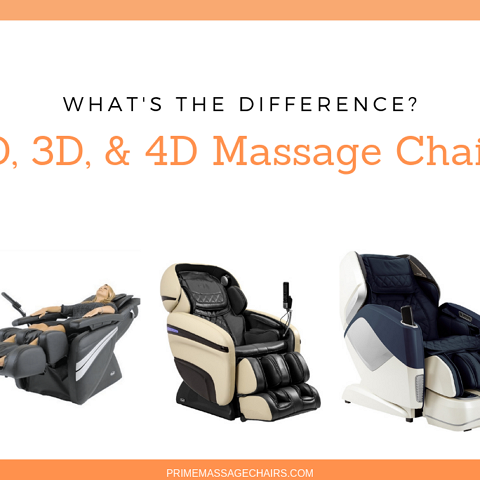
Credit: primemassagechairs.com
Roller track length and shape
The roller track determines how far the back massage can travel. Some chairs focus mainly on the back, while others continue farther down toward the glutes or upper hamstrings. A longer track may offer more coverage, but it does not automatically improve the quality of shoulder or lumbar massage.
Consider where you want attention most often. Users focused on the neck-to-lower-back area may value precise upper-body alignment over extra track length. Those who enjoy glute massage may prefer a chair whose roller track reaches farther below the lumbar region.
Body scanning and shoulder fit
Many massage chairs scan the user’s back before starting a program. This can help the rollers locate the shoulders and follow the user’s general shape. Scanning is useful, but it is not flawless. Manual shoulder adjustments are valuable when the automatic position feels too high or too low.
Body-size fit is especially important with 3D and 4D rollers because deeper extension makes roller placement more noticeable. Before buying, check the manufacturer’s stated user-height guidance, seat dimensions, and any information about shoulder-width adjustment. Avoid assuming one chair will fit every adult equally well.
Air compression and leg massage
Airbags or air cells can apply compression around the shoulders, arms, hips, calves, and feet. These features are separate from the back roller system. A chair with basic 2D rollers may still provide a satisfying full-body session if its air compression and leg features suit your preferences.
Likewise, a 4D chair may not be the right choice if you dislike strong calf compression or find its footwell too restrictive. Evaluate the entire massage design, not just the headline roller technology.
Recline position and space requirements
Reclining changes how your body rests against the rollers and can affect perceived pressure. Some people prefer a more upright massage for focused back contact, while others find a reclined position more comfortable for longer sessions.
Measure the chair’s footprint in both upright and fully reclined positions. If the model uses a sliding or space-saving recline mechanism, confirm how much clearance it needs behind and in front of the chair. A chair that does not fit the room properly is not a practical upgrade, regardless of roller type.
How to Choose Between 2D, 3D, and 4D
Start with the massage feel you want most often, not the most advanced name on a product page. If possible, test a chair for more than a few minutes or buy from a seller with clear return terms. Short demonstrations can make strong rollers seem impressive, but daily comfort matters more than a brief first impression.
- Choose 2D if you want a simpler, generally gentler back massage and do not need adjustable roller extension.
- Choose 3D if adjustable depth is important and you want the option of firmer, more targeted back pressure.
- Choose 4D if you value 3D depth plus changing speed, pauses, and a more varied massage rhythm.
For shared use, prioritize a chair with a wide adjustment range. Independent depth, speed, air-pressure, and roller-position controls can be more useful than a large number of automatic programs. A household with one person who likes light massage and another who prefers firm pressure will benefit from flexibility.
Comfort and Safety Considerations
A massage chair is intended for relaxation and comfort; it should not be treated as a substitute for medical diagnosis, treatment, or professional care. Stop using the chair if it causes pain, numbness, dizziness, bruising, or worsening symptoms.
People who are pregnant, have implanted medical devices, circulatory concerns, recent injuries or surgery, osteoporosis, neuropathy, or other health conditions should review the chair manufacturer’s warnings and ask an appropriate healthcare professional whether massage-chair use is suitable for them. The same caution applies when taking medications that affect sensation or bleeding risk.
Even for healthy users, begin with shorter, lower-intensity sessions. Increase depth or speed gradually only if the massage remains comfortable. With 3D and 4D chairs in particular, avoid assuming that the deepest setting is the most beneficial.
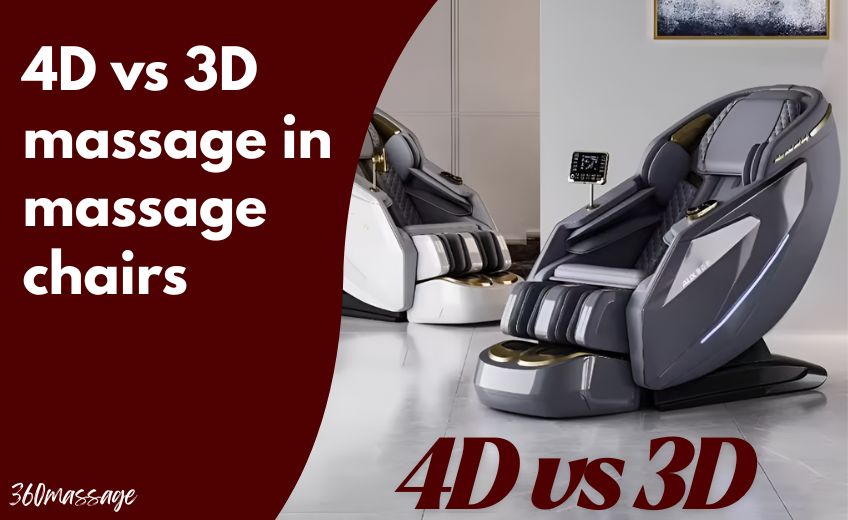
Credit: 360massage.com
Frequently Asked Questions
Is a 4D massage chair worth the extra cost?
It can be worthwhile if you notice and enjoy changes in roller speed, pauses, and massage rhythm. If your main goal is deeper pressure, a well-fitted 3D chair may provide the adjustment you need without paying for more elaborate program control.
Can a 2D massage chair still give a strong massage?
Yes. Padding thickness, roller design, recline angle, massage technique, and air compression all affect perceived strength. A 2D chair does not have active forward roller extension, but it can still feel firm depending on its design and settings.
Do 3D and 4D rollers massage the neck?
It depends on the chair’s roller track and shoulder-position range. Some models reach the upper back and neck area more effectively than others. Check whether the chair offers adjustable roller position and whether its stated fit range suits your height.
Will deeper roller settings work better for tight muscles?
Not necessarily. A setting that feels comfortably firm may be preferable to one that creates pain or excessive soreness. Use depth as a comfort control, and reduce it if the rollers feel sharp, overly forceful, or poorly aligned.
What should I compare besides roller technology before buying?
Check body-size fit, roller track coverage, recline space, air compression, foot and calf fit, controls, cushioning, available intensity adjustments, maintenance requirements, warranty terms, and return policies. These factors often have as much influence on long-term satisfaction as the 2D, 3D, or 4D label.