
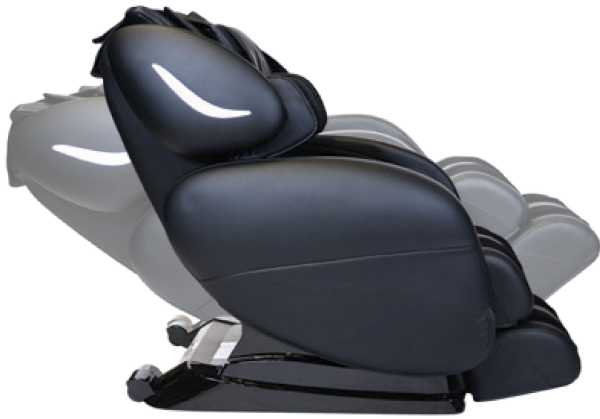
Massage chair dimensions matter as much as massage features. A chair may look compact in a showroom or product photo, yet need considerably more floor space once it reclines, extends its footrest, and leaves room for a person to get in and out comfortably.
Before buying, measure the chair’s upright footprint, its fully reclined length, the clearance behind and in front of it, and every doorway or hallway it must pass through. This avoids the two common problems: a chair that overwhelms the room and one that cannot be delivered into the intended space.
There is no single standard massage chair size. Compact models, full size massage chair designs, and zero-gravity models can have very different footprints, so the manufacturer’s dimensions for the exact model should always guide the final decision.
Why Massage Chair Dimensions Are More Than Width and Depth
A listed width, height, and depth usually describe a massage chair in its upright position. That is useful, but it does not tell the whole story. The practical space requirement changes when the chair reclines, the legrest extends, the armrests move, or the user sits in it.
To plan accurately, think about massage chair dimensions in four ways:
- Upright footprint: The floor area occupied when the chair is not reclined.
- Reclined footprint: The total front-to-back space required at the chair’s maximum recline and footrest extension.
- Operating clearance: Open space around the chair for recline movement, access to controls, cleaning, and safe entry and exit.
- Delivery path: The narrowest doors, turns, hallways, elevators, stairs, and landings between the delivery point and the room.
A chair can technically fit in an empty corner yet still be inconvenient if it blocks a walkway each time it reclines. Plan for how the room is used, not simply whether the chair can be placed inside it.
Typical Massage Chair Size Ranges
Dimensions vary by manufacturer, design, and features. Chairs with extensive airbag systems, larger arm modules, long legrests, or a more substantial frame are usually wider or deeper than simpler models. Check the product manual or official specification sheet rather than relying on a category average.
| Chair category | Common space characteristics | Best suited to |
|---|---|---|
| Compact or space-saving model | Narrower body and shorter upright depth; may use wall-hugging recline technology | Apartments, bedrooms, offices, and smaller living areas |
| Mid-size massage chair | Moderate width and a more substantial reclined length; often includes leg massage and multiple massage zones | Most living rooms, dedicated relaxation corners, and larger bedrooms |
| Full size massage chair | Broad arm sections, taller backrest, extended legrest, and potentially significant recline space | Dedicated wellness rooms, larger living rooms, and homes with straightforward delivery access |
“Full size” is not a precise measurement standard. It generally describes a larger, feature-rich chair rather than a specific width or depth. A full size massage chair may provide more room for taller or broader users, but it can also create more demanding doorway and layout requirements.
Measure the Space the Chair Will Occupy
Start with the intended location, not the chair. Use a tape measure to record the usable floor area and note obstructions such as baseboards, radiators, low windowsills, outlets, shelves, and nearby furniture.
Measure the upright footprint
Measure the available width and depth where the chair will sit. Compare this with the manufacturer’s upright width and depth, then allow extra room at the sides. A tight fit may make armrests difficult to use, prevent access to side controls, and make the chair feel visually crowded.
Side clearance is especially important for models with arm massage compartments. The chair may fit between two pieces of furniture, but users still need room to sit down, stand up, and move their arms without hitting a wall or table.
Measure the fully reclined length
Next, find the chair’s dimensions when fully reclined. Some manufacturers list a separate “reclined dimensions” measurement. Others provide the chair’s maximum length or a recommended room space requirement.
Measure from the wall behind the chair to the nearest object in front of it. This may be a coffee table, media console, fireplace hearth, bed, or walkway. The available distance should accommodate the chair’s reclined length without forcing furniture to be moved for every massage session.
Allow room for the person using it
Product dimensions describe the chair, not the full space occupied by a reclining person. A user’s legs and feet may extend beyond the end of the footrest, especially when the footrest is raised. Leave enough open area in front for comfortable movement and avoid placing hard-edged furniture directly in the path of the legrest.
Also consider the approach to the chair. A person should be able to walk to it and turn to sit down without squeezing between furniture. This is particularly relevant for older adults or anyone who benefits from a stable, uncluttered route.
Recline Clearance: Wall-Hugging vs. Conventional Chairs
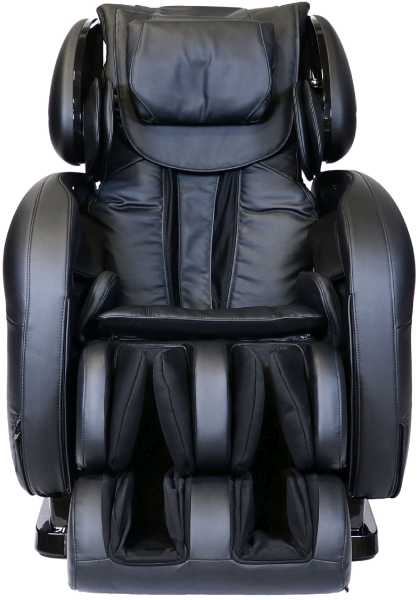
Recline clearance is the empty space needed behind a massage chair for it to move into its reclined position. This requirement can be one of the biggest differences between models with similar upright massage chair size.
Credit: infinitymassagechairs.com
Conventional recline designs
On a conventional chair, the backrest often moves backward as the chair reclines. The chair may therefore need a meaningful gap from the wall. The exact clearance is model-specific, and guessing can lead to scuffed walls, limited recline, or a chair that must sit awkwardly far into the room.
Do not assume that a chair with a “zero gravity” program needs little rear clearance. Zero gravity describes a reclined body position intended to distribute weight comfortably; it does not automatically describe the chair’s wall clearance design.
Wall-hugging and space-saving designs
Many modern massage chairs use a sliding or forward-moving recline mechanism. As the chair reclines, its base moves forward, reducing the amount of empty space required behind it. These designs are often called wall-hugging, space-saving, or space-saver chairs.
They can be a practical choice in smaller rooms, but “wall-hugging” does not mean the chair can touch the wall. It still requires the manufacturer’s stated gap for safe operation. Measure that rear clearance from the furthest point of the chair, including any headrest or rear shell that projects backward.
Check the space in front as well
A wall-hugging chair saves room behind the chair, but it may move forward as it reclines. This shifts the space requirement toward the front. If a coffee table is close to the chair, a space-saving model may still be a poor fit unless the table can be repositioned.
The best layout considers the chair’s entire movement path. If possible, mark the upright and reclined footprint on the floor with painter’s tape. This makes it easier to see whether the chair will interfere with foot traffic, cabinet doors, or other seating.
How to Check Doorway, Hallway, and Elevator Fit
A massage chair that fits the room can still fail the delivery test. The delivery path must be measured from the exterior entrance all the way to the final location. One narrow interior door, tight corner, or staircase landing can be enough to stop a large chair.
Measure the clear opening, not the door frame
Measure the actual open passage between the door and the opposite side of the opening. The decorative frame size is not the relevant measurement. Also account for hinges, handles, door closers, trim, and thresholds that reduce usable space.
If the door can safely be removed, the clear opening may increase, but this should be confirmed before delivery. Never assume a delivery team will remove doors or disassemble building features unless that service has been arranged.
Compare the chair’s shipping dimensions
The assembled massage chair dimensions are not always the dimensions that matter for delivery. Some chairs arrive in multiple cartons, while others may be delivered as one large main body with separate components. Look for:
- Carton dimensions for every box
- The largest carton’s width, height, and depth
- Whether the chair can be partially disassembled for delivery
- The dimensions of the heaviest or least flexible component
- Manufacturer or retailer delivery restrictions
A chair may fit through a doorway when tilted, but that does not mean it can safely negotiate a turn or staircase. Delivery professionals need room to maneuver while carrying a bulky, heavy item. The tightest point on the route is usually more important than the front door.
Do not overlook turns and landings
Measure hallway width, but also measure the length and width of any landing or turn. A long rectangular carton may pass through a wide hallway and still be unable to rotate around a corner.
For apartments and upper floors, check elevator door width, elevator interior depth, ceiling height, and building rules. Some buildings require delivery appointments, protective coverings, or use of a service elevator. Confirm these details before scheduling delivery, not after the chair has arrived.
Room Layout Considerations That Are Easy to Miss
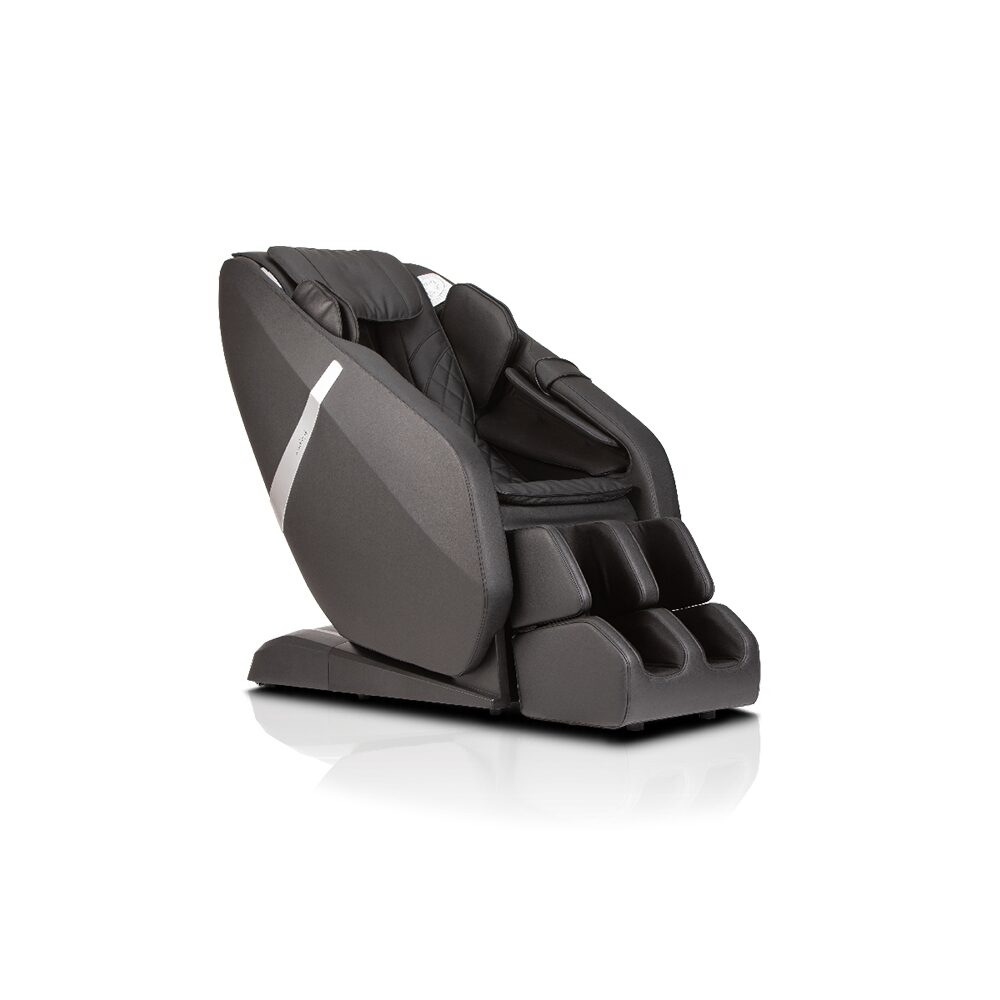
The right dimensions are not only about avoiding contact with walls. A massage chair should work with the room’s traffic pattern, power access, and everyday furniture arrangement.
Credit: furnitureforlife.com
Walkways and daily use
Do not place a chair where its reclined position blocks a main route through the room. This often happens when a chair is set near an entry, between a sofa and television, or beside a dining area. Consider how the room functions when someone is using the chair, not just when it is upright.
If the chair will be used frequently, leave a clear approach from the room entrance. A chair that requires moving a side table or stepping around a footrest is less likely to be used comfortably.
Power outlet location
Massage chairs require a nearby suitable electrical outlet. The power cord should reach without being stretched across a walkway or trapped beneath the chair’s moving mechanism. Avoid relying on an extension cord unless the manufacturer specifically permits it and the setup is appropriate for the chair’s electrical requirements.
Check where the plug is located on the model. A close wall can make the outlet inaccessible after installation, even if the chair itself has enough rear clearance.
Flooring and surface protection
A heavy chair can leave marks or dents on some flooring, particularly soft carpet, vinyl, or wood. A suitable protective mat may help distribute pressure and make the chair easier to reposition, provided it does not interfere with stability or the chair’s movement.
Make sure the floor is level. An uneven surface can affect how stable the chair feels and may make a sliding recline mechanism operate less smoothly. Follow the manufacturer’s placement instructions if they specify flooring or ventilation requirements.
Heat, sunlight, and moisture
Keep the chair away from damp locations and avoid placing it directly against a heat source. Strong sunlight can also affect the appearance of upholstery over time. These are not strictly dimension issues, but they can determine whether the most convenient empty corner is actually an appropriate installation spot.
Match Chair Size to User Fit
A larger chair is not automatically more comfortable, and a compact model is not automatically too small. Body fit depends on the seat shape, shoulder position, legrest range, and the massage track’s coverage as much as overall exterior size.
When comparing models, look for the manufacturer’s recommended user height range, maximum supported weight, and any guidance about shoulder width or leg length. These specifications are model-dependent and should not be estimated from photos.
For a shared household, prioritize adjustment range. An extendable ottoman or adjustable legrest can be useful when users differ in height. Adjustable massage intensity, shoulder position detection, and seat positioning may also improve comfort, but they do not replace choosing a chair that physically fits the intended users.
Consider the chair’s entrance height too. A very low seat may be harder for some people to stand up from, while a high or deeply contoured seat may not suit shorter users. If possible, assess the chair’s seated dimensions and entry design before purchase.
A Practical Measuring Process Before You Order
- Choose the intended location. Identify the wall or corner where the chair will normally sit.
- Measure usable width and depth. Exclude obstacles such as cabinets, radiators, doors, and furniture that cannot move.
- Find the exact model specifications. Record upright dimensions, fully reclined dimensions, rear clearance, and recommended installation space.
- Mark the footprint on the floor. Use painter’s tape or sheets of cardboard to visualize both upright and reclined positions.
- Test the route around it. Walk through the room as though the chair is occupied and fully reclined.
- Measure the full delivery path. Include exterior doors, interior doors, halls, corners, stairs, elevator openings, and landings.
- Check packaging details. Compare the largest box or component with the tightest delivery point.
- Confirm installation requirements. Review outlet access, flooring, assembly needs, and delivery service terms.
Keep a written list of measurements and compare them directly with the manufacturer’s documentation. This is more reliable than trying to judge scale from online images, which can make a large chair appear smaller than it is.
Common Space-Planning Mistakes
- Using only upright dimensions: This overlooks the extended footrest and reclined position.
- Assuming all zero-gravity chairs are wall-hugging: Recline position and wall clearance are separate design features.
- Measuring only the front entrance: Interior doors, corners, elevators, and stair landings are frequent obstacles.
- Forgetting carton size: The shipping box may be larger or less maneuverable than the assembled chair.
- Placing furniture too close in front: A coffee table can block the footrest even when rear clearance is adequate.
- Ignoring power access: A chair should not require a cord across a busy path.
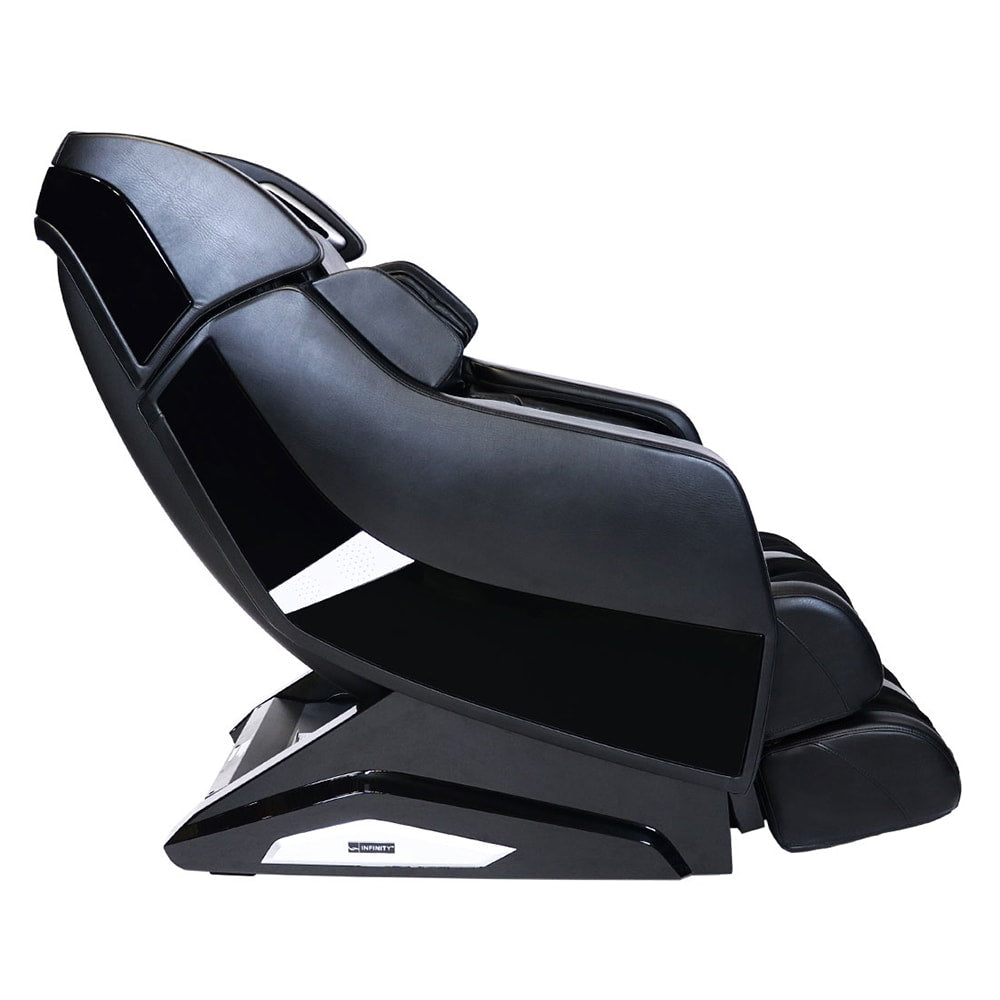
- Buying based on exterior size alone: The chair also needs to suit the people who will use it.
Credit: emassagechair.com
Frequently Asked Questions
Can a massage chair be placed on carpet?
Yes, many massage chairs can be placed on carpet if the surface is level and stable. Deep, soft carpet may make a heavy chair harder to move and can create pressure marks. Check the manufacturer’s instructions and consider a stable protective mat if it suits the chair and flooring.
How much space should be left beside a massage chair?
Leave enough side space for users to enter and exit comfortably, use any side controls, and avoid striking nearby furniture with the armrests. The required amount varies with the chair’s design, so use the manufacturer’s recommended installation clearance where available.
Will a massage chair fit through a standard home door?
Some models will, especially when shipped in separate boxes, but it should never be assumed. Compare the clear doorway opening and any tight turns with the dimensions of the largest carton or component being delivered.
Can I put a massage chair close to a window?
It may fit physically, but avoid locations where the chair blocks window access, rests against curtains, receives prolonged direct sunlight, or sits near condensation and drafts. Also make sure the recline movement will not contact the wall or window area behind it.
Is it better to choose a compact massage chair for a small room?
A compact model can be a sensible choice when floor space or delivery access is limited, particularly if it uses a space-saving recline mechanism. Still, compare user-fit guidance, reclined dimensions, and the chair’s front clearance before deciding; the smallest upright chair is not always the most space-efficient when reclined.