
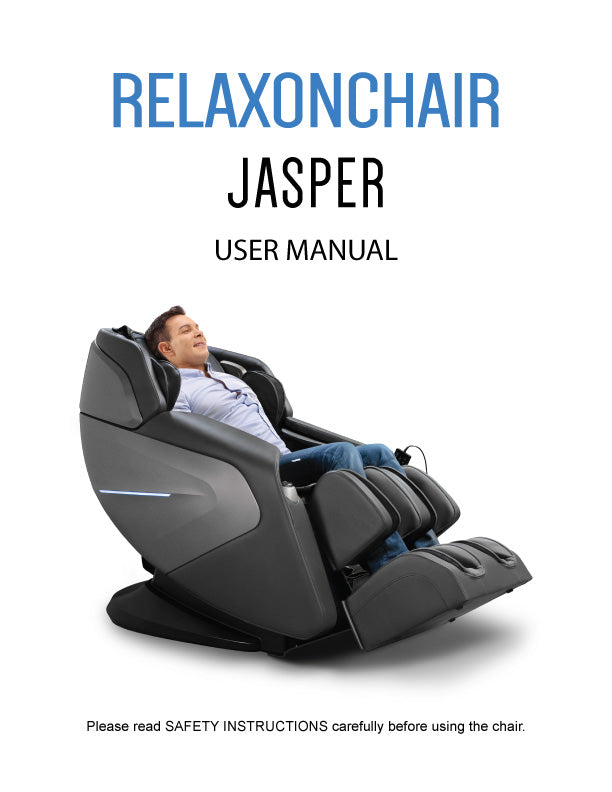
A real relax massage chair manual is most useful when it helps you do more than find the power button. The right instructions should show you how to place the chair safely, connect it correctly, use its massage programs, identify common faults, and keep moving parts in good condition.
Real Relax makes several massage chair models, and their remotes, recline systems, roller tracks, airbag layouts, and error messages can differ. Always treat the manual supplied with your exact chair as the final authority for model-specific wiring, weight limits, assembly steps, and fault codes. This guide explains the setup and care steps that apply to most full-size Real Relax massage chairs without assuming features your model may not have.
If the chair will not start, does not recline, or displays an unfamiliar code, begin with the simple checks below before attempting repairs. Massage chairs contain motors, sensors, air pumps, and control boards; forcing a mechanism or opening electrical components can create a larger problem.
Before You Set Up the Chair
Choose the chair’s permanent location before unpacking all components. A massage chair needs more clearance than an ordinary recliner because the backrest and footrest move during recline. Some models use space-saving slide-forward recline, while others need substantial room behind the backrest.
Check the model manual for the recommended wall clearance. If that information is unavailable, test the chair’s full recline movement slowly after installation and make sure it cannot touch a wall, table, lamp, curtain, or other furniture.
Prepare a safe location
- Use a level, stable floor that can support the chair and the person using it.
- Keep the chair indoors in a dry area away from direct moisture, splashing water, and high humidity.
- Leave room around the sides for access to the power switch, power cord, remote, and any side controls.
- Keep children, pets, toys, and loose objects away from the chair’s moving backrest and footrest.
- Avoid placing the chair directly over a floor vent or close to a radiator, fireplace, or other strong heat source.
- Protect delicate flooring with a suitable furniture mat if needed. The chair’s weight and repeated movement can mark soft floors or carpet.
Inspect the delivery before plugging in
Before assembly, look for visible shipping damage. Check the upholstery, arm panels, footrest, remote, power cord, plugs, and accessory boxes. Do not operate the chair if the power cord is cut, pinched, loose, or damaged, or if you see cracked plastic around electrical connections.
Keep packaging until you confirm that the chair operates normally. Large massage chairs can be difficult to repack, and original protective materials may be needed if a return or service claim becomes necessary.
How to Assemble a Real Relax Massage Chair
Assembly varies by model. Some Real Relax chairs arrive nearly complete, while others require armrest installation, footrest connection, remote-holder attachment, or headrest placement. Do not rely on photos from another model, even if the chair looks similar.
Work with at least one other adult. Massage chairs are heavy, awkward to move, and easy to damage if lifted by the footrest, armrests, or remote holder. Lift from the chair’s main frame or designated handholds only.
Follow the component order in your model manual
A typical assembly process may include the following steps:
- Place the main chair body upright in its intended location, leaving enough working room around it.
- Remove protective wrapping carefully. Do not cut deeply near upholstery, cables, air hoses, or zippers.
- Install removable arm sections or side panels if included. Align mounting brackets fully before securing them.
- Connect any labeled wire plugs and air hoses between the chair body and attached sections. Match labels, shapes, and connector directions.
- Attach the footrest or calf-massage section if it was shipped separately. Make sure both sides are seated evenly.
- Fit the head pillow, back pad, remote holder, or other soft accessories as directed.
- Check that no cable, hose, packing material, or upholstery flap is trapped in a moving joint.
- Connect the chair to power only after all required assembly connections are complete.
Connecting wires and air hoses correctly
Many massage chairs use small plugs for controls and air hoses for compression airbags. These connections are important: a loose air hose can prevent an arm, leg, or shoulder airbag from inflating, while a partly connected wire may cause a remote or motor function to fail.
- Use only connectors that are clearly intended to mate with one another.
- Align pins and notches before applying pressure. Never force a connector.
- Push air hoses in straight until they are secure; do not sharply bend or crush them.
- Route cables through the clips, channels, or openings provided by the chair design.
- Before fitting a cover or side panel, confirm no hose or wire is caught between metal parts.
If an attachment will not sit flush, stop and check alignment. Tightening screws against a misaligned bracket can strip threads, warp a panel, or interfere with the chair’s moving parts.
Power Connection and First Startup
Once the chair is assembled, locate the main power switch. It is commonly positioned near the rear or lower side of the chair, close to the power cord connection. Make sure the switch is off before inserting the plug.
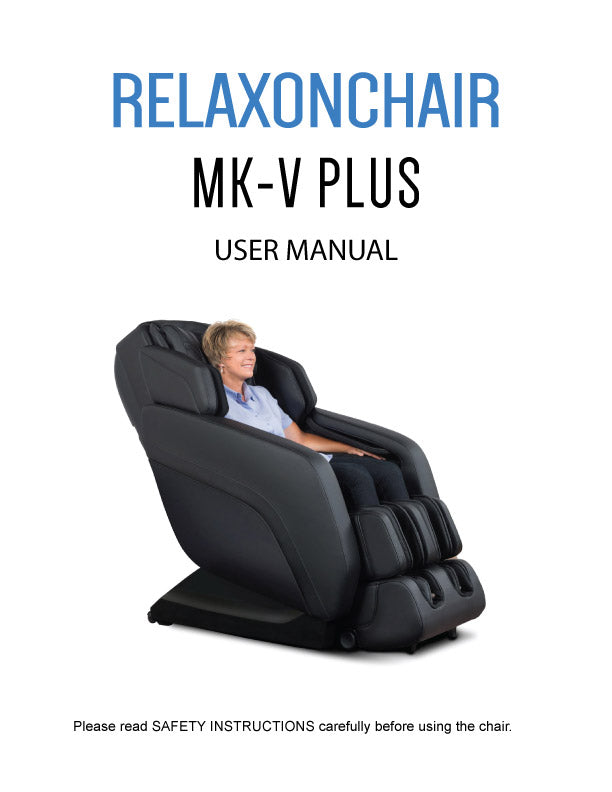
Credit: relaxonchair.com
Use the correct electrical supply
Use the power requirements printed on the chair’s rating label and in its specific manual. Do not assume that a chair purchased in one region is compatible with another region’s voltage or plug type. An incorrect power supply can damage the chair and may create an electrical hazard.
- Plug the chair directly into a properly grounded wall outlet when possible.
- Avoid overloaded outlets, damaged extension cords, and loose adapters.
- Do not run the cord under rugs, beneath the chair base, or through a path where it can be stepped on.
- Keep the cord away from moving mechanisms and check it after repositioning the chair.
- Turn off and unplug the chair before cleaning, moving it, or inspecting connections.
Run a basic function check
After powering on the chair, start with a short manual or automatic massage session. Stay near the chair during this first test. Watch and listen for smooth movement from the backrest, footrest, rollers, and airbags.
A normal startup may include motor noise, air-pump sound, and brief roller movement as the chair calibrates or finds its starting position. Stop the chair immediately if you hear loud grinding, repeated knocking, a sharp scraping sound, smell overheating plastic, or see smoke.
Test one function at a time when possible:
- Power on and off
- Backrest recline and return
- Footrest extension and retraction
- Massage rollers or vibration, if included
- Air compression zones
- Heat function, if your model has one
- Remote buttons and shortcut controls
Understanding the Controls
Remote layouts differ, but most Real Relax massage chair controls fall into a few main groups. If button labels on your chair do not match the descriptions below, use the model manual rather than guessing.
| Control group | What it usually does | Practical use |
|---|---|---|
| Power | Starts or stops the massage system | Use it to end a session before switching off main power. |
| Auto programs | Runs a preset sequence of roller, air, recline, or vibration functions | Useful when you want a simple session without adjusting each setting. |
| Manual massage modes | Selects techniques such as kneading, tapping, rolling, or combinations when available | Lets you choose a massage feel and target area more precisely. |
| Intensity and speed | Adjusts the strength or pace of rollers, airbags, or vibration | Begin at a low setting, especially during the first few sessions. |
| Air massage zones | Activates airbags around areas such as shoulders, arms, hips, calves, or feet | Turn off an uncomfortable zone rather than tolerating excessive pressure. |
| Recline or zero-gravity position | Moves the chair into a selected seating or reclined position | Confirm that the chair has adequate clearance before using it. |
| Heat | Activates warming pads in supported areas | Use only for comfort and follow time limits in the model manual. |
Start with a lower intensity
More pressure is not always more comfortable. The best starting point is usually a gentle roller setting, low air compression, and a short session. Increase settings gradually only if the massage feels comfortable.
Body position also changes the feel of the chair. Sitting farther back may place rollers closer to the spine, while a thick pillow can reduce roller pressure. If the chair includes shoulder-position adjustment or a body scan, use that feature to improve alignment before increasing intensity.
Use recline features carefully
Recline can change how your weight rests against the rollers and airbags. Keep your arms, hands, and legs within the chair’s intended support areas. Do not let children climb onto the chair or sit behind it while it is moving.
Before returning upright, check that no blanket, cable, pet, or object is caught under the footrest or behind the backrest. A blocked mechanism may stop unexpectedly or strain a motor.
Massage Chair Safety and Comfortable Use
A massage chair is designed for relaxation and comfort, not as a replacement for medical evaluation or treatment. Stop using the chair if it causes pain, numbness, dizziness, skin irritation, or worsening discomfort.
People who are pregnant, have a pacemaker or other implanted medical device, have circulation concerns, recent surgery, bone or joint conditions, or other health concerns should ask a qualified clinician whether massage-chair use is appropriate. This is especially important before using strong compression, heat, or intense roller settings.
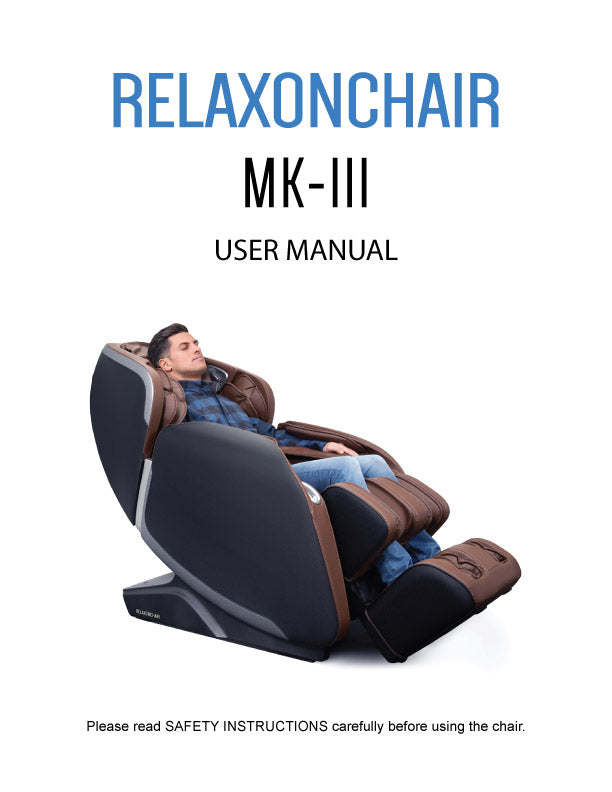
Credit: relaxonchair.com
Good habits for regular use
- Wear comfortable clothing without bulky objects, sharp accessories, or items in back pockets.
- Remove jewelry or loose items that could catch in arm or hand massage areas.
- Do not use the chair while asleep, intoxicated, or unable to respond to discomfort.
- Keep sessions within the duration recommended by the chair’s manual.
- Allow the chair to finish and return to a stable position before getting out.
- Use the headrest and cushions as intended; altering padding can change roller contact.
Error Checks When the Chair Will Not Work Properly
Not every problem is an electronic failure. Many common issues come from an unplugged cord, switched-off power supply, blocked moving part, loose connection after assembly, or a remote setting that has not been selected correctly.
For a chair that shows a code on its display, write the code down exactly and consult the manual for your model. Do not guess at the meaning of an error code based on another Real Relax chair, because code definitions can differ by control system.
Start with these safe checks
- Stop the current massage program and turn the chair off using its main power switch.
- Unplug the chair from the wall outlet.
- Wait briefly, then inspect the visible power cord, plug, remote cable, and accessible connectors.
- Remove any obstruction around the backrest, footrest, and chair base.
- Check whether an accessory panel, armrest, or footrest connection became loose.
- Reconnect power securely and restart the chair only if there is no visible damage.
- Test a single function rather than starting the most complex automatic program first.
Common symptoms and likely checks
| Symptom | Checks you can make safely | When to stop and seek service |
|---|---|---|
| Chair has no power | Confirm the wall outlet works, the main switch is on, and the power cord is fully inserted. | Stop if the cord, plug, outlet, or chair connection is hot, damaged, or sparking. |
| Remote does not respond | Check its cable connection, look for visible pinching, and restart the chair from the main switch. | Seek service if the cable is damaged or the display remains blank after a correct power check. |
| Backrest or footrest will not move | Remove obstructions and confirm the chair has enough clearance. Check whether the chair is in a program that limits manual movement. | Stop if you hear grinding, repeated clicking, or see uneven movement. |
| One airbag area does not inflate | Check for a loose or sharply bent accessible air hose after unplugging the chair. | Arrange service if hoses appear split, the pump sounds abnormal, or the issue continues after reconnection. |
| Rollers feel uneven or stop early | Restart the chair, remove thick cushions, and try a basic program while seated correctly. | Stop if rollers scrape, jam, or move outside their normal track. |
Do not attempt these repairs at home
Do not open the chair’s motor housing, control box, transformer area, pump assembly, or internal roller mechanism unless you are an authorized technician following the manufacturer’s instructions. Internal repairs can expose you to electrical hazards and may affect warranty coverage.
Contact the seller, Real Relax support, or a qualified service provider when the chair repeatedly shuts down, reports an unresolved fault code, leaks air, has damaged wiring, moves erratically, or makes harsh mechanical noises. Have the model number, serial number, purchase details, and a clear description of the issue ready.
Cleaning and Routine Care
Regular care helps preserve upholstery and reduces the chance that dust, spills, or trapped objects affect moving parts. Always switch off and unplug the chair before cleaning.
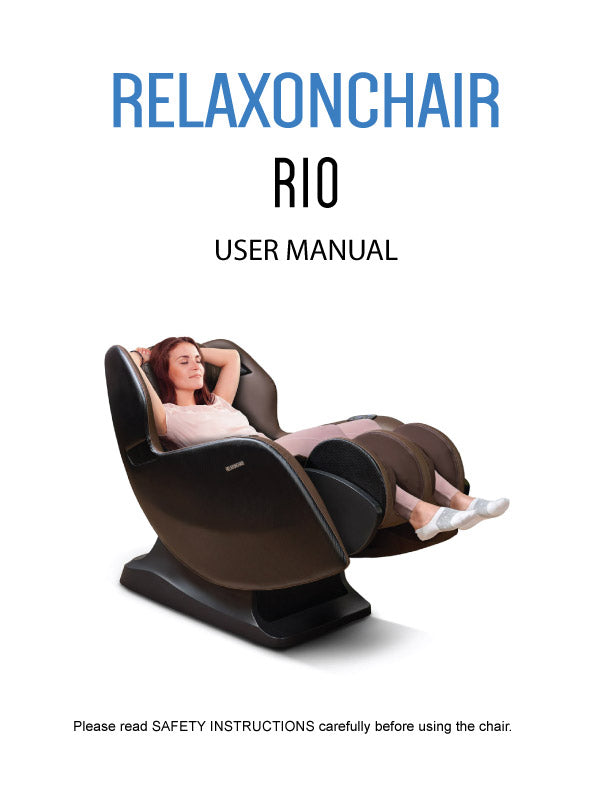
Credit: relaxonchair.com
Clean upholstery gently
For routine cleaning, use a soft dry cloth or a cloth lightly dampened with water and mild soap. Wipe gently, then allow the surface to dry completely before use. Test any cleaner on a small hidden area first.
- Do not soak the upholstery or spray liquid directly onto the chair.
- Avoid bleach, alcohol-heavy cleaners, abrasive powders, and harsh solvents unless the model manual specifically permits them.
- Clean spills promptly so they do not reach seams, switches, remote controls, or electrical parts.
- Use a soft brush or vacuum attachment around seams and under cushions if the manual permits it.
Inspect the chair periodically
Every so often, check the power cord, remote cable, visible air hoses, fasteners, and upholstery seams. Look under and behind the chair for dust buildup or objects that could interfere with movement. If you move the chair, inspect again before operating it.
Do not lubricate rollers, motors, tracks, or hinges with household oil or spray lubricant unless the manufacturer specifically instructs you to do so. The wrong product can attract dirt, damage materials, or interfere with sensors.
Protect the chair when not in use
Turn off the main power switch after use if recommended by your model manual, particularly if the chair will not be used for an extended period. Unplug it during electrical storms, before moving it, and when cleaning. Keep pets from scratching or chewing upholstery and cables.
FAQ
Where can I find the model number for my Real Relax massage chair?
The model number is commonly printed on a product label near the rear or underside of the chair, close to the power connection or base. Check the purchase paperwork and original packaging as well. Use this number when downloading instructions or contacting support.
Why does the chair make a hissing sound during a massage?
A soft hissing or pumping sound is often normal when the air compression system fills or releases airbags. It is not normal if the sound is unusually loud, continuous, accompanied by weak inflation, or paired with a visible loose or damaged hose.
Can I move the massage chair by pushing on the footrest?
No. The footrest is a moving component and is not a safe lifting or pushing point. Follow the moving instructions in the model manual, use the chair’s frame or designated handling points, and have another adult help.
What should I do if the upholstery starts peeling or cracking?
Clean the surface only with approved gentle products, keep the chair away from strong sun and heat, and avoid harsh cleaners. If peeling begins during the warranty period, document it with photos and contact the seller or manufacturer before applying repair products.
Is it safe to leave the chair plugged in all the time?
Follow the guidance in your specific manual. If the chair is not being used for a long period, will be cleaned or moved, or may be exposed to a storm-related surge, switching it off and unplugging it is the safer approach.